REVIEW · PARIS
Sports, fun and educational discovery of Paris
Book on Viator →Operated by Paris Running Tours · Bookable on Viator
Running Paris beats buses for me. This private, guided running tour turns big-name Paris landmarks into a logical route, with story stops that make each view feel earned instead of random. You move at a comfortable pace and learn why places like the Louvre, the Seine bridges, and Île de la Cité matter.
I love the hassle-free pickup. The guide meets you right in your hotel lobby or at the bottom of your apartment building anywhere inside Paris, so you start running with less hassle. I also love the photo follow-up: there’s a camera on the run for pictures you want, then you get those photos later using Dropbox.
One consideration: you’ll want moderate fitness. It’s not a couch-to-Paris plan. You’re out for about 2 to 3 hours, and most stops are quick and outside-focused rather than deep, ticketed museum time.
In This Review
- Key hits before you lace up
- How pickup in Paris actually changes your morning
- What the pace feels like (and who it suits)
- Louvre Museum area: quick stops and the kind of context that sticks
- Jardin des Tuileries: history plus a green, running-friendly break
- Place de la Concorde: turning a photo spot into a story stop
- Palais Garnier: opera views without needing opera tickets
- Down to the Seine: running along the river for site spotting
- Île de la Cité: the “center of it all” run
- Musée d’Orsay: learning the building as much as the art
- Champs-Élysées and Hôtel des Invalides: grand avenues with guide-led meaning
- Palais-Royal: a calmer, elegant stretch to reset
- Pont Neuf: the oldest bridge lesson in three minutes
- Petit Palais: a quick inside moment if it’s open
- Value check: what you’re paying for at $104.52 per person
- Practicalities you’ll thank yourself for
- Who should book this Paris running tour?
- Should you book this Paris running tour?
- FAQ
- Is this tour private?
- How long is the Paris running tour?
- Do you get picked up from your hotel or apartment?
- What language is the tour offered in?
- Do you enter the museums during the run?
- What fitness level do you need?
- What happens if the weather is bad?
- Is water and a camera included?
Key hits before you lace up
- Private tour for your party: just your group, not a mixed crowd.
- Hotel or apartment pickup: meet right where you’re staying.
- Learn while you run: history and context built into the route.
- Photo capture + Dropbox delivery: you don’t have to play photographer.
- Mostly outside stops: easy to keep moving and see a lot fast.
How pickup in Paris actually changes your morning
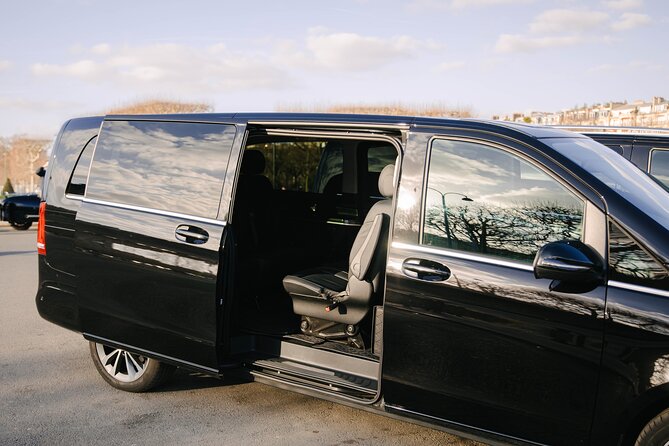
Paris can feel like a puzzle when you’re trying to fit sightseeing between transit lines. This tour solves a big chunk of that by meeting you at your place. You’ll be picked up in the lobby of your hotel or at the bottom of your building if you’re in an apartment. Any location inside Paris works, and the hours run from early morning (5:00 AM) until evening (8:00 PM).
That matters because a running tour only works if the schedule stays tight. Fewer “where do we meet?” moments mean more time for views, photo stops, and guide stories. It also makes the start feel simple if you’re jet-lagged or traveling with someone who hates morning logistics.
You can also read our reviews of more tours and experiences in Paris.



What the pace feels like (and who it suits)
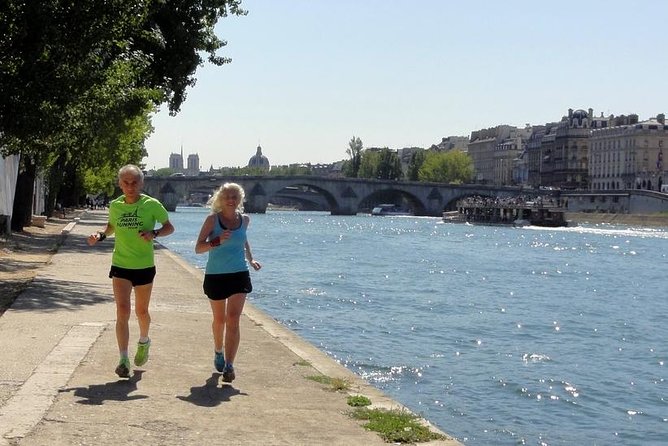
This is aimed at people with moderate physical fitness. You’re not sprinting across Paris. You’re moving steadily enough to keep momentum through iconic districts, plus you’ll pause at short stops to absorb what the guide is pointing out.
A real advantage here is flexibility. In one tour experience, the guide (JC) kept an easy pace so a non-runner could still enjoy the stories and scenery. That doesn’t mean the tour turns into a slow stroll, but it does suggest the guide understands mixed abilities and can set a comfortable running rhythm.
If you enjoy:
- doing active things while sightseeing,
- learning details you’d miss if you were just walking,
- and getting a structured route instead of wandering,
…this is a strong match.
If you want lots of inside museum time, plan something else in addition. This run is about seeing and understanding more than sitting for long periods.
Louvre Museum area: quick stops and the kind of context that sticks
The run starts near the Louvre Museum area. You’ll spend around 5 minutes here, focusing on what the Louvre is, how it developed over time, and the major facts you can connect to what you see around you. Even without a full deep-ticket museum visit, the guide’s approach helps you build a mental map fast.
Then you shift right into the next part of the day rather than turning it into a “stand in line and sit down” experience. That’s a smart move for first-timers: you get a strong orientation to Paris’s most famous cultural landmark before you head out to the streets and gardens that surround it.
Possible downside: if your only priority is entering the Louvre galleries, this tour won’t satisfy that. The focus is on learning and key passages and courtyards rather than doing the full museum circuit.
Jardin des Tuileries: history plus a green, running-friendly break
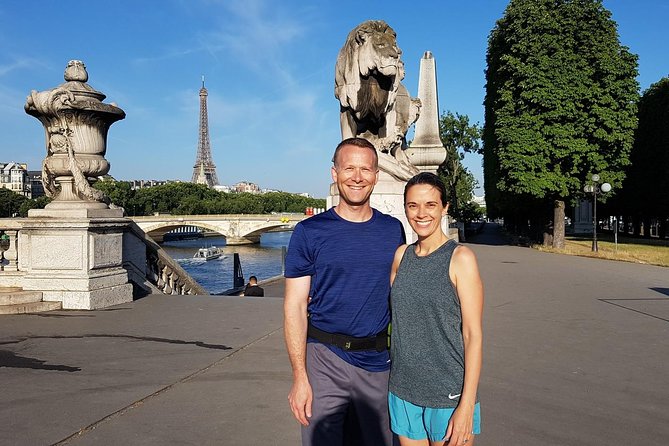
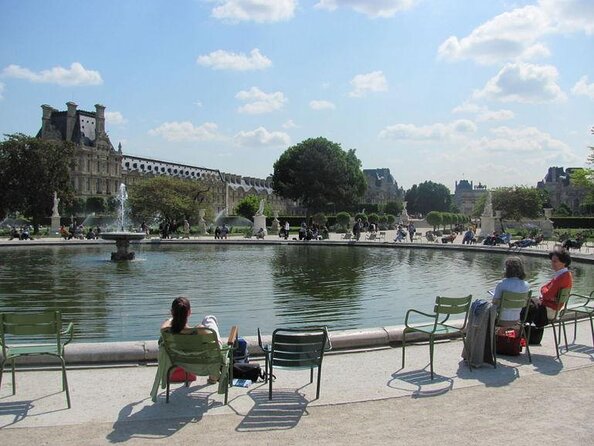
A few minutes later, you’re at Jardin des Tuileries, where the theme stays educational but the environment shifts. You’ll learn about the “castle” context and how the Tuileries garden fits into the story of Paris, then you’ll run through the park area.
This stop works for two reasons:
1) It gives your body a break from city sidewalks while you keep moving.
2) It adds “background scenery” so the rest of the route feels connected instead of pieced together.
Practical tip: if it’s warm, pay attention to hydration early. Bottled water is included, and the tour prioritizes keeping you comfortable.
Place de la Concorde: turning a photo spot into a story stop
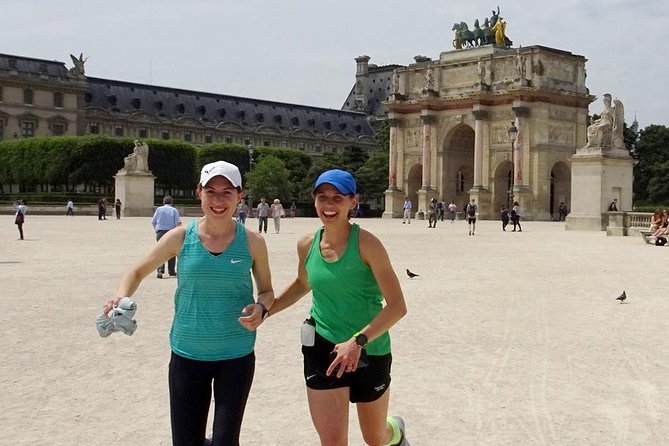
At Place de la Concorde, the tour leans into storytelling. You’ll spend about 7 minutes learning the major events tied to this square, then you’ll have time to take pictures and enjoy the space.
This is one of those Paris locations where it’s easy to think, I’ve seen it on postcards. The guide helps you see it as a place with multiple layers of meaning—how public space in Paris changes over time and why this square is a big deal historically.
Why it’s valuable: this is the kind of context that makes later stops more meaningful. Once you understand the square’s role, you start to notice patterns in how Paris uses major spaces.




Palais Garnier: opera views without needing opera tickets
Next is Palais Garnier, around 5 minutes. You’ll admire views on the opera and learn about the major changes made during the 19th century.
Even if you never buy an opera ticket, this stop is still worth it. The building is part of the city’s visual identity, and the guide’s explanation gives you a clearer sense of why it looks the way it does and how Paris built cultural grandeur into architecture.
Consideration: this is a fast-photo-and-learn moment. You won’t get a long, detailed interior tour here.
Down to the Seine: running along the river for site spotting
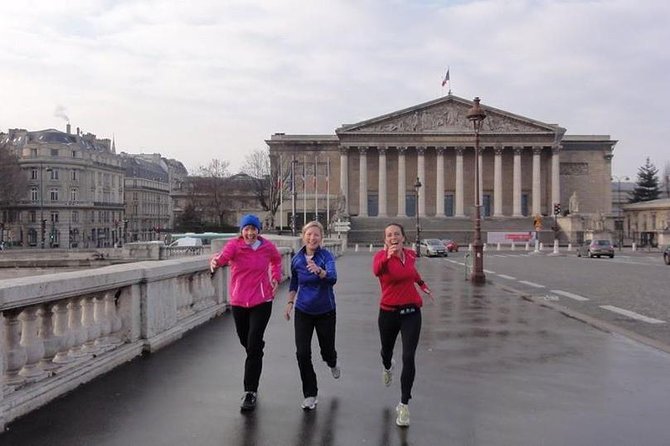
After Palais Garnier, you’ll run along the river and take in sites along the way. Expect “a lot of information” while moving, not just a static lecture. This part is built for people who like momentum—seeing Paris in motion, catching views, then hearing how it all fits together.
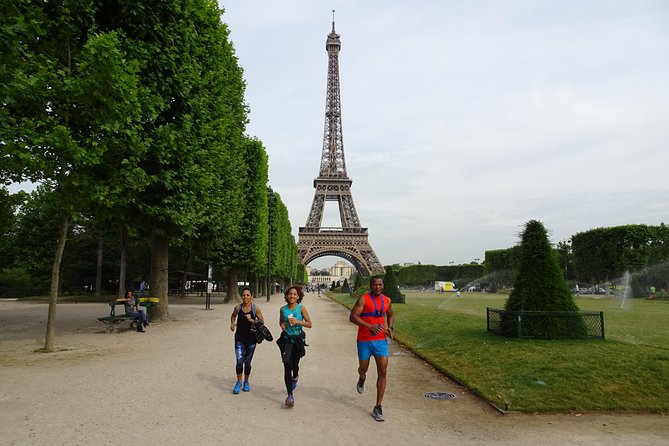
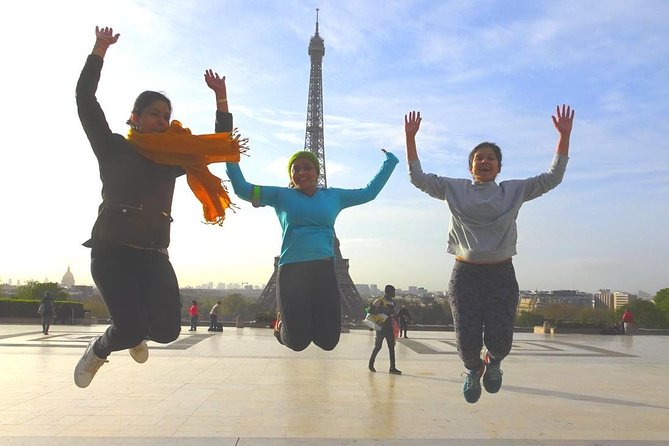
The route also ties into Eiffel Tower viewing. Depending on where you’re running and the tailor-made path, you might see the Eiffel Tower very closely or from farther off. Either way, the guide uses the sight lines to help you understand where you are in Paris’s geography.
Why this matters: Eiffel Tower viewing often becomes either a hit-or-miss photo quest or a full-day mission. This approach gives you tower moments inside a larger sightseeing arc.
Île de la Cité: the “center of it all” run
One of the main educational blocks comes at Île de la Cité (about 15 minutes). You’ll run along the central island and make multiple learning stops tied to major landmarks, including:
- Conciergerie
- Sainte-Chapelle
- Palais de Justice
- Notre-Dame
- Marché aux fleurs
- Hôtel-Dieu
- Préfecture de Police
You’ll also likely get perspective on why this island is such a core part of Paris’s story, not just a cluster of famous buildings.
What I like here: quick time at many stops beats the all-or-nothing problem. If you only visit one building on the island, you miss how the pieces relate. This route pushes you to connect the dots.
Possible drawback: because you’re running and moving, the stops are shorter. If you want a long, slow, inside-and-every-detail day at Sainte-Chapelle or Notre-Dame, you’ll want separate plans for that.
Musée d’Orsay: learning the building as much as the art
Next you’ll reach Musée d’Orsay, roughly 5 minutes. You’ll admire the building and learn its history.
This stop is ideal for people who like architecture and context. You get the “why” before the “what”—so when you later visit, the building doesn’t feel like a random landmark. It feels like a conversion of purpose over time.
Champs-Élysées and Hôtel des Invalides: grand avenues with guide-led meaning
You’ll run on the Champs-Élysées and learn as you go. Then you’ll also learn about the historical Hôtel des Invalides. The exact flow depends on your tailored-made route, but the theme is consistent: Paris’s big ceremonial spaces and important institutions.
This is where the tour starts to feel less like a “list of monuments” and more like a guided walk through the way Paris signals power, culture, and national identity.
Palais-Royal: a calmer, elegant stretch to reset
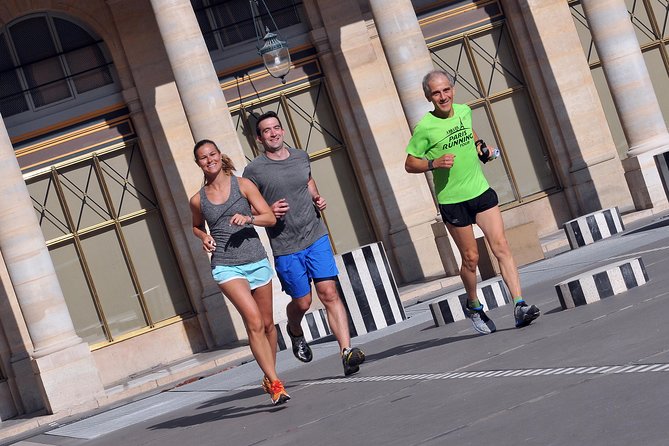
The run continues to Domaine National du Palais-Royal. You’ll spend about 10 minutes admiring historical courtyards, gardens, and galleries.
Depending on your route, you may also pass by a beautiful park. Even if the tour doesn’t go inside long, the architecture and outdoor spaces give you a breather from the heavy traffic-feeling parts of central Paris.
Why it works on a run: Palais-Royal tends to feel more “composed” visually. You can enjoy the details without feeling like you’re constantly battling the city’s roar.
Pont Neuf: the oldest bridge lesson in three minutes
At Pont Neuf, you’ll get about 3 minutes. The focus is the oldest bridge of Paris, and the guide uses the moment to frame how bridges connect neighborhoods and eras.
Three minutes sounds short, but it’s perfect for this kind of tour. You learn a key fact, take photos, and keep moving. This is where the run rhythm stays intact.
Petit Palais: a quick inside moment if it’s open
Finally, there’s a possible short visit of Petit Palais, about 10 minutes, but only if it’s opened. If it is, you’ll get to see the beautiful building in a bit more detail than a pure exterior stop.
Practical note: because this depends on whether it’s open, don’t count on an interior visit every time. Plan your expectations around the outdoor viewing and guide context.
Value check: what you’re paying for at $104.52 per person
At $104.52 per person, the price starts to make sense when you look at what’s bundled:
You’re not just getting a “route.” You’re getting:
- private guiding for your party,
- pickup from your hotel or apartment,
- bottled water for hot weather,
- a camera taken along so you can be in the photos,
- photos delivered by Dropbox,
- and maps plus historical pictures handed to you at the end.
If you were to assemble this yourself—find a running guide, coordinate pickup points, and then pay for photo help—you’d spend time and money. Here, the tour turns your morning into a single paid service with lots of small value add-ons.
Also: the sights you see are major names. Even without entering most interiors, you get a smart “greatest hits with context” overview across multiple districts in a short window.
Practicalities you’ll thank yourself for
A few small details improve the experience a lot:
- You’ll have a guide carrying maps and historical pictures, then you get those documents at the end. That’s useful later when you want to walk back and explore on your own.
- There’s water included, which matters more than it sounds during a run.
- The tour uses mobile tickets, which usually cuts down friction when you arrive.
And since the tour requires good weather, it’s smart to check forecasts. If it’s canceled due to poor weather, you’ll be offered a different date or a full refund.
Who should book this Paris running tour?
Book it if you want:
- an active way to see central Paris in about 2 to 3 hours,
- a guide to connect landmarks with stories,
- hotel/apartment pickup so the start is easy,
- and photo help plus a water-and-documents package.
It’s also a great fit for mixed groups, especially if not everyone is a runner. In at least one experience with JC, the pace was kept easy enough for a non-runner to enjoy the tour.
Skip it if you:
- want a long, inside-only museum day,
- prefer totally relaxed sightseeing with no movement requirement,
- or can’t handle moderate physical activity.
Should you book this Paris running tour?
My take: this is a strong “first Paris orientation” choice if you like doing one structured, guided active thing early in your trip. The route hits big, recognizable landmarks—Louvre area, Tuileries, Concorde, Palais Garnier, Île de la Cité, Musée d’Orsay, Eiffel Tower views, Champs-Élysées, and Palais-Royal—while still staying readable and manageable in a few hours.
If your main goal is to spend hours inside famous museums, you’ll need separate ticket plans. If your goal is to understand Paris fast while getting fresh air, lace up.
FAQ
Is this tour private?
Yes. It’s a private tour/activity, so only your group participates.
How long is the Paris running tour?
It lasts about 2 to 3 hours.
Do you get picked up from your hotel or apartment?
Yes. The guide meets you at your place in the lobby of your hotel or at the bottom of your building if you are in an apartment, anywhere inside Paris.
What language is the tour offered in?
The tour is offered in English.
Do you enter the museums during the run?
Most stops are for seeing sights, not entering. There may be a short visit to Petit Palais only if it is open.
What fitness level do you need?
The tour is designed for people with a moderate physical fitness level.
What happens if the weather is bad?
This experience requires good weather. If it’s canceled due to poor weather, you’ll be offered a different date or a full refund.
Is water and a camera included?
Yes. Bottled water is included, and a camera is used to take photos you want, which are sent to you afterward via Dropbox.