REVIEW · BONNIEUX
Provençal escape : discover the villages of the Luberon
Book on GetYourGuide →Operated by Vivement Provence · Bookable on GetYourGuide
The best part of this private Luberon tour is its range. In one day, you move from Lourmarin’s galleries and Renaissance château to the stone lanes of Gordes, the ochre cliffs of Roussillon, and a tasting of olive oil served at the Élysée Palace. I especially like the private vehicle and flexible pickup, plus the chance to see several famous villages without arranging a complicated driving route yourself.
I also like the human touch. Guides such as Michel, Nathalie, and Francois have been praised for careful driving, clear English, local knowledge, humor, and help with family photos. The main consideration is time: five villages, Sénanque Abbey, and an olive oil tasting make for a full day, and choosing the abbey may shorten time at Roussillon and Cadenet.
In This Review
- Key points at a glance
- Why this Luberon route works so well
- Starting from Marseille or Aix-en-Provence
- Lourmarin: galleries, lanes, and the Friday market
- Bonnieux and its wide Luberon views
- Gordes: the famous stone village
- Sénanque Abbey and the lavender setting
- Roussillon and the ochre cliffs
- Cadenet and Bastide de Laval olive oil
- What the $411 price buys you
- Language, accessibility, and timing
- Who should book this Luberon day?
- Should you book this Luberon tour?
- FAQ
- Where does the tour start and finish?
- How long does the experience last?
- Is this a private tour?
- Which villages are included?
- Can I visit the Lourmarin market?
- Is Sénanque Abbey always included?
- What tastings are included?
- Is lunch included?
- Which languages are available?
- Is the tour wheelchair accessible?
Key points at a glance
- Lourmarin on Friday: Time your visit well for the Provençal market, galleries, cafés, and Renaissance château.
- Five classic Luberon stops: You see Lourmarin, Bonnieux, Gordes, Sénanque, and Roussillon in one private outing.
- A flexible private ride: Pickup and drop-off are available in Marseille, Aix-en-Provence, and surrounding areas.
- A strong photo route: Expect hilltop views at Bonnieux and Gordes, lavender-field scenery near Sénanque, and ochre formations at Roussillon.
- Olive oil with a local finish: End at Bastide de Laval in Cadenet for an artisanal tasting, with wine tastings also included.
- A full but adjustable day: The advertised duration is seven hours, though the actual outing can run from six to nine hours.
Why this Luberon route works so well
The Luberon is not one single sight. It is a collection of hill villages, farm roads, stone houses, markets, vineyards, olive groves, and broad views. That makes a guided day useful: you can cover ground while someone else handles the roads and timing.
This route gives you a good cross-section. Lourmarin feels artistic and polished. Bonnieux offers height and views. Gordes delivers the famous postcard setting. Sénanque adds a quiet architectural stop, while Roussillon brings a completely different palette with red and orange earth.
You are not simply checking off villages. Each stop has its own character, and the changes in scenery help keep the day interesting. The tradeoff is that you will not have endless free time in any one place. This is a sampler of the Luberon, not a slow village stay.
The experience costs $411 per person. That is a serious price, but it covers private transportation, a live guide, and tastings, with pickup included from Marseille or Aix-en-Provence and nearby areas. For a couple, family, or small private group that values convenience, the price can make sense. If you are comfortable driving narrow roads and planning several stops yourself, a rental car may cost less.
You can also read our reviews of more tours and experiences in Bonnieux.


Starting from Marseille or Aix-en-Provence
You can begin and end in Marseille or Aix-en-Provence, and pickup can be arranged at your accommodation in those cities or nearby areas. That flexibility matters because the Luberon is best reached by road, and a hotel pickup saves you from finding a meeting point.
The ride is by van or car. Past guide teams have included Michel and Nathalie, who worked together to adjust the schedule for a family group, and Francois, who was praised for calm driving, humor, enthusiasm, and excellent English. Your exact guide depends on availability, but the experience is designed around a personal, private format rather than a large coach.
The day is listed as seven hours, with actual timing ranging from six to nine hours. That range is important. Road conditions, photo stops, village crowds, the Friday market, and the decision to visit Sénanque Abbey can all affect how long you spend at each place.
Wear comfortable shoes. The villages are built on hills, and your time on foot will include stone lanes, slopes, and uneven surfaces. Sunglasses, a sun hat, and sunscreen belong in your day bag.
Lourmarin: galleries, lanes, and the Friday market
Lourmarin is a graceful first stop, with picturesque streets, art galleries, and a magnificent Renaissance château. The village gives you an easy introduction to the Luberon because it combines architecture, shopping, and a relaxed Provençal feel.
You have about 75 minutes here. That is enough for a walk through the center, a look at the galleries, and time to absorb the setting. It is not enough for a lengthy château visit, an extended meal, and a serious shopping session, so decide what matters most before you arrive.
Friday is the especially appealing day to visit. The Provençal market adds food, local goods, and more street activity to the village. If the market is part of your timing, you may want to use your free time there rather than trying to see every gallery.
Lourmarin is also a good place to take photos without needing a long hike. I would ask your guide where to focus your time, especially if you are traveling with children or anyone who tires quickly. The village is attractive, but the limited schedule means a little planning helps.
Bonnieux and its wide Luberon views
Bonnieux is a perched village with medieval streets and broad views over the Luberon. The stop lasts about an hour, which gives you time to walk, take photographs, and enjoy the setting without turning the visit into a major climb.
This is one of the places where the private format helps. Your guide can point out the best viewpoints and adjust the walking pace to your group. Cindy, who traveled with a friend, especially valued the photo stops built into the day, and that is a useful clue for anyone bringing a camera.
Bonnieux is less about a single headline monument and more about position. You come here for the feeling of looking across the region from above, along with the old village streets. The walk may be tiring in warm weather, so bring water even though it is not listed as a required item.
If you want a long café stop, you may need to give up some walking time elsewhere. With so many stops packed into one day, Bonnieux works best as a scenic pause rather than a full morning visit.
Gordes: the famous stone village
Gordes is the most immediately recognizable stop on the route. It rises on a hill, with dry-stone houses stacked across the slope. From the right viewpoint, the village has the dramatic appearance that made it one of France’s best-known villages.
You have about 90 minutes here. That gives you time to see the village, walk through its lanes, and take the classic views. The slopes are part of the appeal, but they also mean you should expect some uphill and downhill walking.
Gordes can feel more polished and popular than smaller villages in the area. That is not a criticism, but it is worth knowing before you go. You are coming for the setting, stone architecture, and views, not for a quiet village with no other visitors.
A private guide can make this stop more efficient. Instead of wandering without a plan, you can ask for the best photo positions and decide how much time to spend in the center. The guides associated with this experience have also helped take family photographs, a useful perk if you want everyone in the picture.
Sénanque Abbey and the lavender setting
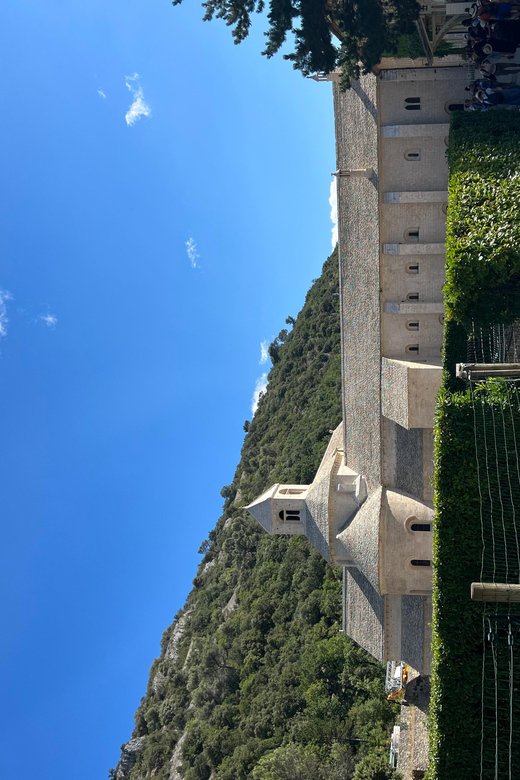
The Abbey of Sénanque brings a different mood. This Cistercian building sits among fields that are especially striking when lavender is in season. The combination of simple stone architecture and open countryside makes it one of the most memorable photo stops on the route.
The planned visit lasts about an hour. If you choose this option, understand the effect on the rest of the day. Time at Roussillon and Cadenet may become shorter, so the abbey is not an extra stop added without consequence.
That choice comes down to your priorities. If Sénanque is high on your list, it is worth protecting the time. If you care more about walking through Roussillon or lingering over olive oil at Bastide de Laval, you may prefer a shorter abbey visit or a route adjustment.
Lavender timing matters too. The fields are not guaranteed to look the same throughout the year, so you should treat the abbey as an architectural and scenic stop rather than booking only for a lavender photograph. The building itself gives the visit value beyond the season.
Roussillon and the ochre cliffs
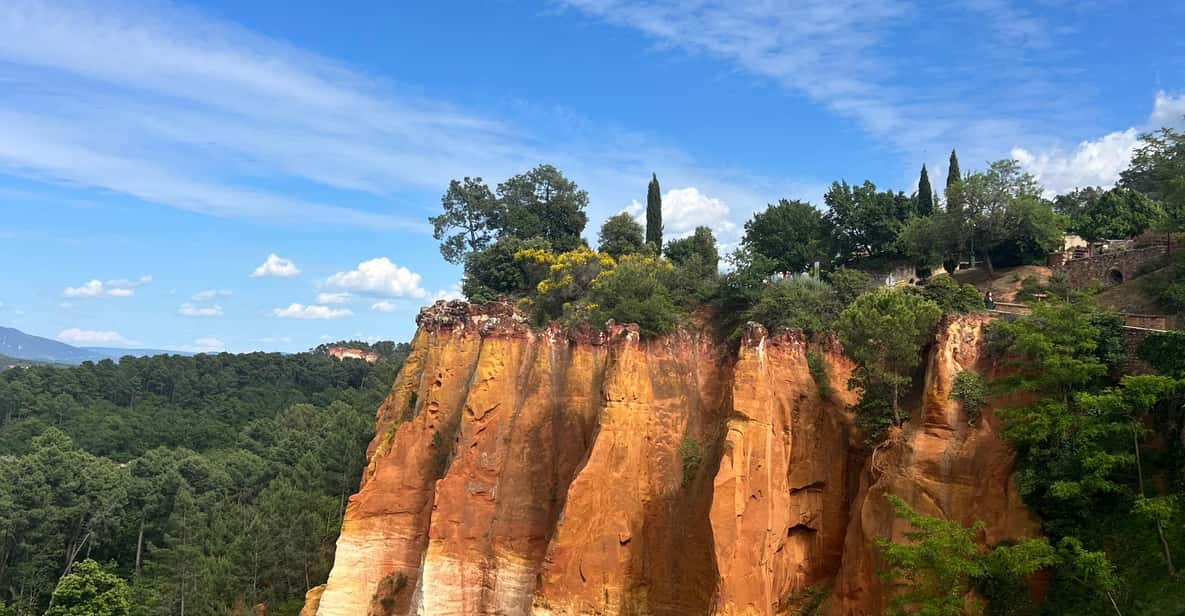
Roussillon changes the color of the day. The village is known for ochre cliffs and colorful houses, with red, orange, and yellow tones that are unlike the pale stone of Gordes and Bonnieux.
You have about 90 minutes here. That is enough time to walk the village and explore the ochre formations. One visitor specifically enjoyed the walk among the ochre land formations, and this is where comfortable footwear matters most.
The ochre is not just a pretty backdrop. It explains the character of the village, from the earth around it to the warm colors on its buildings. You will want to keep your camera ready, but do not spend the whole stop looking through a screen. The color shifts as you move through the streets and paths.
Roussillon may be shortened if you select the Sénanque Abbey option. Ask your guide at the start of the day how the timing is likely to work. That simple conversation can prevent disappointment later.
Cadenet and Bastide de Laval olive oil
The final stop is in Cadenet at Bastide de Laval, where you taste artisanal olive oil. This is a pleasing way to finish because it moves the day from scenery to food, and it gives you a direct connection to Provence’s agricultural traditions.
The tasting lasts about 45 minutes. The olive oil is served at the Élysée Palace, which gives you an interesting detail to listen for during the presentation. Wine tastings are also included, so this is more than a quick sample before getting back in the vehicle.
The stop is friendly and relaxed, but it is still a tasting rather than a full meal. Personal expenses are not included, and a picnic is optional at an extra cost. If you want lunch arranged, tell the provider about it when you book, along with any food allergies.
A family picnic in a lavender field was a particular highlight for one group, but you should treat that as an optional arrangement, not part of the basic price. It can turn the middle of the day into a special memory, though it also adds cost and takes time from one of the village visits.
What the $411 price buys you
At $411 per person, this is not a budget sightseeing ride. The value rests in the private setup. You get transportation, a live guide, pickup and drop-off, olive oil and wine tastings, and the ability to shape the pace around your own group.
That can be worthwhile from Marseille or Aix-en-Provence, where a self-drive day would require route planning, parking decisions, and a designated driver. It is also useful for families, since the guide can help with photographs and adjust the schedule when needed.
The price is harder to justify if you only want one village or dislike moving frequently. You are paying for breadth and convenience. The route covers a lot in one day, but no single village receives enough time for a slow, unhurried exploration.
For two or more people, the private format may feel more reasonable because the day is shared by your own party. For solo visitors, the per-person cost is likely to feel high unless private guiding and door-to-door service are especially important.
Language, accessibility, and timing
Guiding is available in French, English, Portuguese, and Italian. Italian guiding needs to be checked by email when you book, so do not assume it will be available on every date.
The activity is listed as wheelchair accessible, but the villages themselves contain hills and old stone streets. Because the exact route and vehicle setup are not described in detail, you should discuss your mobility needs before booking.
The schedule can change if a visit is unavailable because of a public holiday, festival, or weekend closure. That is especially relevant for the Friday market and Sénanque Abbey. A flexible attitude will help you enjoy the day if the order of stops changes.
Cancellation is free up to 24 hours in advance, and you can reserve now and pay later. Those terms are useful when you are coordinating several Provence stops, though they do not remove the need to check guide language and optional picnic arrangements.
Who should book this Luberon day?
I would recommend this tour to families, couples, and small groups who want the classic Luberon in one organized day. It suits you especially well if you are staying in Marseille or Aix-en-Provence, do not want to drive, and care about combining villages with food and scenic stops.
It is also a good match for photographers. Bonnieux and Gordes provide hilltop views, Sénanque offers its abbey and lavender setting, and Roussillon adds ochre formations. The guides can also help with family pictures, which is a small but valuable advantage.
I would hesitate if you prefer to spend half a day in one village, want a long restaurant lunch, or are mainly interested in the Friday market. The schedule is full, and the abbey can reduce time at later stops.
Should you book this Luberon tour?
Book it if you want a private, well-supported introduction to the Luberon and value having the driving handled for you. The strongest features are the variety of stops, flexible pickup, personal guiding, photo help, and the olive oil tasting at Bastide de Laval.
Before paying, decide whether Sénanque Abbey matters more to you than extra time in Roussillon and Cadenet. Also check the guide language, ask about a picnic if desired, and be ready for a day that may last anywhere from six to nine hours. With those expectations clear, this is a practical way to see a lot of Provence without turning your holiday into a road-planning exercise.
FAQ
Where does the tour start and finish?
Pickup and drop-off are available in Marseille, Aix-en-Provence, and surrounding areas. Pickup can be arranged at your accommodation in those areas.
How long does the experience last?
The advertised duration is seven hours. The actual duration can range from six to nine hours, depending on the day and itinerary.
Is this a private tour?
Yes. The experience is offered for a private group.
Which villages are included?
The route includes Lourmarin, Bonnieux, Gordes, and Roussillon, along with a visit to Sénanque Abbey and an olive oil tasting in Cadenet.
Can I visit the Lourmarin market?
The Friday Provençal market is highlighted as part of the Lourmarin experience. Market timing can depend on the day and the final schedule.
Is Sénanque Abbey always included?
The experience offers a Sénanque Abbey option. Choosing it can shorten the time available at Roussillon and Cadenet.
What tastings are included?
Olive oil and wine tastings are included. The olive oil tasting takes place at Bastide de Laval in Cadenet.
Is lunch included?
No. A picnic is not included in the base price, but one can be prepared for an additional fee.
Which languages are available?
Guiding is available in French, English, Portuguese, and Italian. Italian availability should be confirmed by email when you book.
Is the tour wheelchair accessible?
The activity is listed as wheelchair accessible. You should still inform the provider about your specific mobility needs because the villages have old streets and hills.