REVIEW · DEAUVILLE CITY
Private Guided Bike Tour of Deauville & Trouville in French
Book on Viator →Operated by Les Balades De La Côte Fleurie · Bookable on Viator
Deauville and Trouville-sur-Mer sit side by side, but they tell very different stories. On this private 2.5-hour bike tour, William leads you from Trouville’s fishing market to Deauville’s famous beach, linking grand villas, horse racing, thalassotherapy, and casino life along the way. His personal connection matters: he was born in Deauville and raised in Trouville.
I like the relaxed pace and the chance to move beyond the usual waterfront stops. I also like that the tour is private, so William can adjust the meeting point and conversation for your group. The main consideration is simple: you must be comfortable riding a bike in town, and the tour is conducted in French.
In This Review
- Key points
- Why a bicycle is the right way to compare Deauville and Trouville
- Starting on Boulevard Eugène Boudin in Deauville
- Trouville’s fish market and the working side of the coast
- Deauville beach and the famous boardwalk
- Deauville La Touques and the horse-racing connection
- Villa Montebello and Deauville’s grand architecture
- Trouville’s Casino Barrière and the rivalry between resorts
- What William adds to the ride
- Is $80.64 per person a fair price?
- Who should book this private French bike tour?
- My verdict on Deauville and Trouville by bike
- FAQ
- How long does the private bike tour last?
- Where does the tour begin and end?
- Is the tour conducted in English?
- What is included in the price?
- What should I bring?
- Is the tour suitable for all cycling abilities?
Key points
- William’s local connection: Born in Deauville and raised in Trouville-sur-Mer, he brings personal knowledge of both towns.
- Two towns, one ride: Compare fishing-centered Trouville with polished, horse-focused Deauville in a single outing.
- A gentle cycling pace: The tour is designed for sightseeing, not speed or athletic training.
- Classic bikes and helmets included: You only need to arrange suitable clothing and bring water.
- Small private setting: Only the people in your booking take part, with no unrelated group members.
- Weather matters: Poor weather can lead to a new date or a full refund.
Why a bicycle is the right way to compare Deauville and Trouville
A short walk can show you the seafronts of Deauville and Trouville, but a bicycle gives the two towns a clearer relationship. You can cross between their different moods, see more ground in two and a half hours, and get away from the most obvious streets without turning the outing into exercise.
Trouville-sur-Mer grew around fishing and the sea. Deauville became known for grand architecture, horse racing, beaches, casinos, and resort life. They are close neighbors, yet their identities are not the same. That contrast is the real subject of the ride.
William is especially well placed to explain it. He was born in Deauville and grew up in Trouville-sur-Mer, so you get more than a list of dates and buildings. The tour covers architecture, thalassotherapy, local life, fishing, beaches, and gambling, with the details tied to the streets around you.
The pace is described as non-sporting. That makes this a good choice if you want to stop, listen, and look around rather than chase a fast route. You still need to know how to ride in town, though. The minimum age is 15, and William asks you to describe your cycling comfort level before the outing.
You can also read our reviews of more tours and experiences in Deauville City.
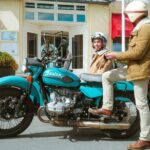

Starting on Boulevard Eugène Boudin in Deauville
The ride begins on Boulevard Eugène Boudin in Deauville and returns to the same meeting point. This fixed start makes planning fairly easy, especially if you are staying in Deauville or arriving by public transport. If you are lodging elsewhere, you can ask about a tailored meeting point when booking.
The opening section sets up the rest of the experience. Instead of treating Deauville as an isolated resort, William connects it with Trouville, the older fishing town across the waterway. That framing helps you understand why the towns developed different reputations.
Because this is a private activity, the group consists only of the people in your reservation. That is useful if you want to ask questions about local customs, the two towns, or nearby places such as Honfleur, Cabourg, Dives-sur-Mer, or Villers-sur-Mer. The provider also offers rides from those places, though this particular tour begins and ends in Deauville.
You receive a classic bicycle and helmet. Water is not included, so bring your own bottle. The same goes for clothing: pack a windproof layer if rain is possible, and in winter bring a scarf and gloves. Coastal weather can make a mild ride feel much colder than expected.
Trouville’s fish market and the working side of the coast
The first listed stop is the Marché de Trouville-sur-Mer, where the focus is the town’s fishing life. The scheduled stop is about five minutes, but the point is larger than the clock suggests. Trouville is not presented only as a pretty seaside resort. Its identity is tied to fishers, seafood, and the daily rhythm of the market.
William uses the fish stalls and fishmongers as a way to explain the town. This is one of the most useful parts of the route because it gives you a local subject to watch rather than another grand façade to photograph. The market connects the town to its working past and present.
The visit is brief, so do not expect a long market tour or a meal stop. It is a visual and historical introduction. If you want time to browse or buy seafood, plan that separately after the ride.
This stop also shows why cycling is helpful. You can reach a part of Trouville that may not fit into a simple Deauville beach walk, then continue without spending the day on foot. The route treats the two towns as connected places, not separate postcard scenes.
Deauville beach and the famous boardwalk
Next comes Plage de Deauville, with about ten minutes set aside for the beach and its well-known boards. Deauville’s boardwalk is one of the town’s most recognizable features, and William explains why it became so strongly linked with the resort’s public image.
The beach stop is likely to be the most immediately familiar part of the outing. It offers a chance to see the broad coastal setting and understand how Deauville presents itself as a leisure town. The emphasis is not simply on sand and sea, but on the role of the beach in the town’s identity.
Ten minutes is enough for orientation and explanation, but not for a long stroll along the boards. The bicycle remains nearby, and the ride continues. If you want a slower beach visit, return later on your own.
The coastal setting also makes clothing important. A windproof layer is specifically recommended in case of rain, while winter riders should bring gloves and a scarf. The tour requires good weather, so an unfavorable forecast can affect the schedule.
Deauville La Touques and the horse-racing connection
The ride then reaches Hippodrome Deauville La Touques, one of Deauville’s two racetracks. The scheduled stop lasts about ten minutes. Even if you are not interested in horse racing, this pause helps explain why Deauville developed as more than a beach resort.
William places the racetrack within the story of the town. Deauville’s identity includes sport, prestige, seasonal events, and the social world connected with racing. Seeing the hippodrome gives that subject a physical setting instead of leaving it as an abstract part of the town’s reputation.
This is also an example of the tour’s wider approach. You are not simply riding from attraction to attraction. You are learning how different activities shaped the two towns: fishing in Trouville, racing and resort culture in Deauville, and gambling in both.
The stop is short, so you will not get an extended visit inside the racetrack. The value is in William’s explanation and in seeing the building and surroundings as part of the town’s development.
Villa Montebello and Deauville’s grand architecture
At the Musée Villa Montebello, William discusses the villas of the Second Empire through Villa Montebello. The listed stop is about ten minutes, giving you a compact introduction to the architecture that helped define the resort towns.
This is where the ride moves from public entertainment to private wealth and style. Villas can look like attractive backgrounds when you pass them quickly. With context, they become evidence of who came to the coast, how the resorts wanted to be seen, and how architecture helped create an image of refined seaside life.
The tour does not include an admission ticket to the museum. The stop is an exterior or contextual visit within the cycling route, so you should not expect a full museum tour unless you arrange that separately. That is not a weakness if you want a broad overview, but it matters if your main interest is indoor art or detailed collections.
William’s teaching style is a major part of this section. The written feedback describes him as exceptionally informed, with one person comparing the experience to spending time with a history professor. That praise fits the design of the ride, which uses buildings and streets as lessons rather than treating them as quick photo stops.
Trouville’s Casino Barrière and the rivalry between resorts
The final listed stop is Casino Barrière Trouville, with about ten minutes devoted to the casino and the long competition between Trouville and Deauville. This is a useful ending because it brings the two towns back together. Both developed resort attractions, but they did not always present themselves in the same way.
William explains how the casinos helped put the towns in competition. The subject is less about gambling itself than about the social and economic role of casinos in seaside resorts. They attracted visitors, shaped reputations, and became part of the rivalry between neighboring communities.
You are not promised casino play or an interior gambling session. The scheduled time is for commentary and sightseeing. If you want to enter or spend time inside, check the local rules and opening arrangements separately.
By this point, the route has covered fishing, beaches, horse racing, villas, and casinos. That range is the tour’s strongest feature. It gives you several ways to understand the coast instead of reducing Deauville to a beach boardwalk and Trouville to a market.
What William adds to the ride
A local guide can make a short route feel much larger, and William’s background is central here. He was born in Deauville, raised in Trouville-sur-Mer, and knows the surrounding area as well. His own connection to both places allows him to explain differences that may not be obvious during an independent visit.
The strongest praise connected with the experience focuses on his knowledge and the pleasure of the afternoon. One French-language comment describes the discovery of Trouville and Deauville as especially rewarding and exciting. Another highlights his deep understanding of the place where he was born.
The tour is offered in French, so you should be able to follow spoken French comfortably. That language choice can be a benefit if you want a local French-language experience, but it is an important limitation if you need English commentary.
Because the ride is private, you can ask questions without holding up a large group. William can also take your cycling comfort into account. Tell him honestly how confident you are before the tour, especially if you have not ridden in a town recently.
Is $80.64 per person a fair price?
At $80.64 per person, this is not the cheapest way to see Deauville’s beach and Trouville’s market. You are paying for a private experience, a bicycle, a helmet, and two and a half hours of local guiding rather than for transport alone.
The value improves if two or more people in your party want the same pace and language. You are not sharing the outing with unrelated participants, and group discounts are available. Since the guide can discuss a tailored meeting point, the arrangement may also save time compared with organizing a separate route between Deauville and Trouville.
You should judge the price against your interests. If you only want to see the boards and take a few photos, a self-guided walk will cost less. If you want to understand how fishing, racing, villas, thalassotherapy, and casinos shaped the two towns, the private guide adds the part you cannot get from simply riding past the buildings.
The experience has a current score of 5 out of 5 from 17 ratings, with 100 percent recommending it. The repeated strength is William’s command of the area and his ability to make the outing informative as well as pleasant. That is the feature doing most of the work in the price calculation.
Who should book this private French bike tour?
I would recommend it to adults and older teenagers who can ride comfortably in town and want context along with sightseeing. The minimum age is 15, so it is not designed for younger children.
It suits couples, families with older children, and friends who prefer a private outing. It is also a good fit if you dislike large group tours and want to ask questions freely.
You may want to choose something else if you do not speak French well enough to follow a guided conversation, if you want a fast athletic ride, or if you hope to spend a long time at one attraction. The tour moves between several subjects, and its pace is deliberately easy rather than strenuous.
Weather is another practical concern. The experience requires good weather, and poor conditions can lead to a different date or a full refund. For the best chance of riding comfortably, bring water and dress for wind and rain, especially outside the warmest months.
Free cancellation is available up to 24 hours before the start time for a full refund. Changes or cancellations made within 24 hours are not refunded, and the activity can also be rescheduled or refunded if its minimum number of participants is not reached.
My verdict on Deauville and Trouville by bike
This ride works because it gives you a clear comparison. Trouville is introduced through fishing and its market, while Deauville comes into view through beaches, racing, villas, and resort culture. The casinos then show how the two towns competed for visitors and status.
I especially like the combination of a gentle cycling route and detailed local explanation. The bicycle gets you away from the most familiar streets, while William’s personal ties make the history feel connected to real places.
Book it if you are comfortable cycling, can follow French, and want an informed look at both towns in one outing. Skip it if you want a museum-heavy visit, a long beach stop, or an English-language tour. For the right rider, this is a useful and well-focused way to see the Côte Fleurie beyond its polished waterfront.
FAQ
How long does the private bike tour last?
The tour lasts approximately 2 hours and 30 minutes.
Where does the tour begin and end?
It begins on Boulevard Eugène Boudin in Deauville, at Bd Eugène Boudin, 14800 Deauville, France. The activity ends back at the meeting point.
Is the tour conducted in English?
No. This experience is conducted in French.
What is included in the price?
A bicycle and helmet are included.
What should I bring?
Bring a bottle of water. You should also bring a windproof layer in case of rain, plus a scarf and gloves in winter.
Is the tour suitable for all cycling abilities?
Participants must know how to ride a bike in town and should tell the guide how comfortable they are with cycling. The minimum age is 15.