REVIEW · PARIS
Paris: Fast-Access Seine River Cruise from Eiffel Tower
Book on GetYourGuide →Operated by Vedettes de Paris · Bookable on GetYourGuide
The Seine feels like Paris’s front porch, and this cruise lets you sit down. You get a live guide plus a 360-degree city view, with the Eiffel Tower and Notre Dame in the same hour. I especially like the 100% electric boat for how quiet it feels, and the straightforward way the route strings together the biggest landmarks. The only real drawback: you’ll be outdoors on top, so weather (and occasional wind) can decide how cozy you feel.
You start at Port de Suffren near the Eiffel Tower, then glide past grand buildings like the Louvre area, Musée d’Orsay, and the Hôtel de Ville. Then you loop back after a set of iconic river moments, including passing under historic bridges like Pont de Bir-Haikeim. If you hate lines and you want a fast orientation to Paris, this is a very solid pick. Just keep in mind the guide shifts between languages, so you’ll want to pay attention when it switches.
Finally, the price is the kind that makes this feel like a smart add-on, not a big splurge—especially if you’re doing Paris for the first time. You’ll come away with context, not just photos. If you’re the type who wants a long, slow cruise with lots of stops, consider whether one hour is enough for your style.
In This Review
- Key highlights worth your attention
- Setting out from the Eiffel Tower area: where this cruise really starts
- The electric boat factor: why it changes the experience
- How the live guide storytelling works while you float
- The full sightseeing loop: what you’ll see and why it matters
- Port de Suffren: your launchpad for classic Paris
- Les Invalides: the stately river-side approach
- Musée d’Orsay: the river version of art-gallery frontage
- Île de la Cité and Notre Dame: the emotional Paris stop
- Hôtel de Ville: where city power feels visible
- Louvre area: seeing the palace without lining up
- Place de la Concorde and Grand Palais: the big-set Paris finale
- The bridges and the Pont de Bir-Haikeim effect
- Photo tips that match how this cruise actually runs
- Comfort on board: what you’ll feel after 60 minutes
- Drinks and snacks: small extras, not a meal
- Value check: is $21 worth it for what you actually get?
- Who this Seine cruise fits best (and who should skip it)
- Should you book this Seine River cruise from Port de Suffren?
- FAQ
- FAQ
- How long is the Seine cruise from the Eiffel Tower area?
- Where do I meet and board?
- What languages do I get on board?
- Do I get drinks or snacks?
- Is the cruise wheelchair accessible?
- How often do boats depart?
- What if I need to cancel or change plans?
Key highlights worth your attention
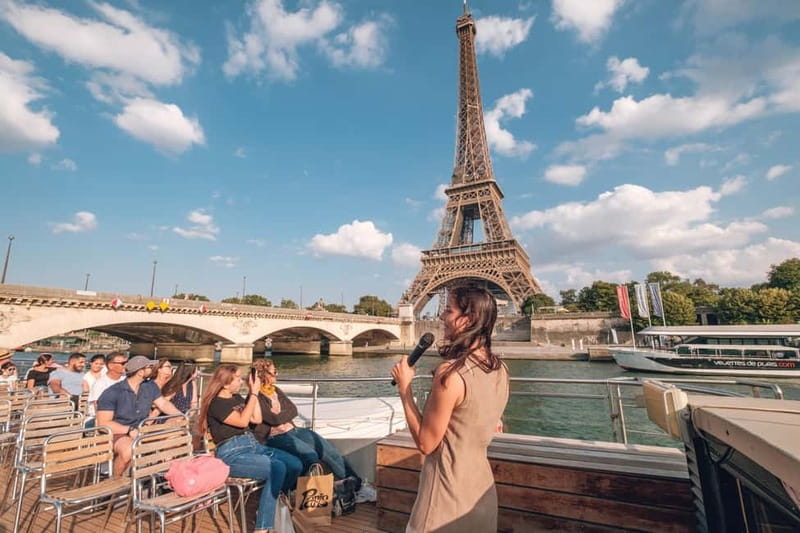
- Bilingual live storytelling: French and English commentary from a local guide, plus a multilingual app.
- Electric-boat calm: less noise and fewer fumes than you’d expect on a city river.
- Icon views on one loop: Eiffel Tower departure energy, then Notre Dame and Louvre area sights.
- Pont de Bir-Haikeim moment: a famous bridge sight that’s much cooler from the water.
- Nice photo timing: a one-hour ride is often easier than waiting for a perfect sunset window.
- Comfort options onboard: spaces inside for shade and outside seating up top (dress for it).
Setting out from the Eiffel Tower area: where this cruise really starts
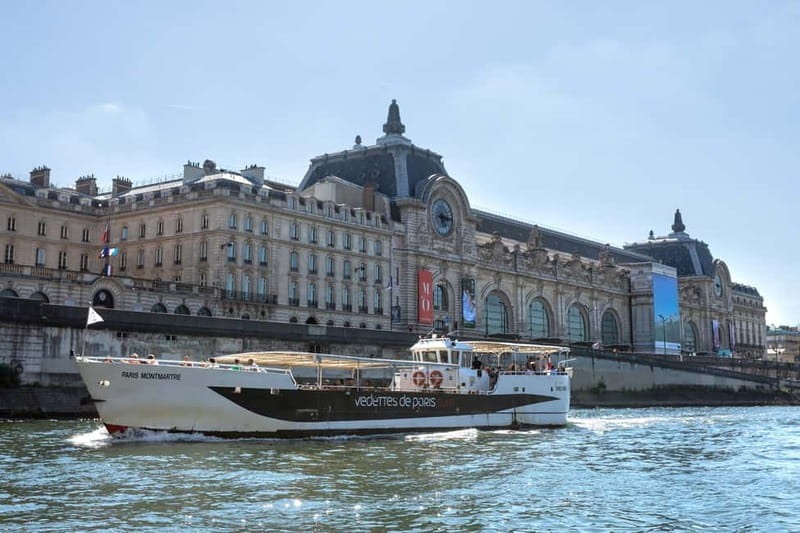
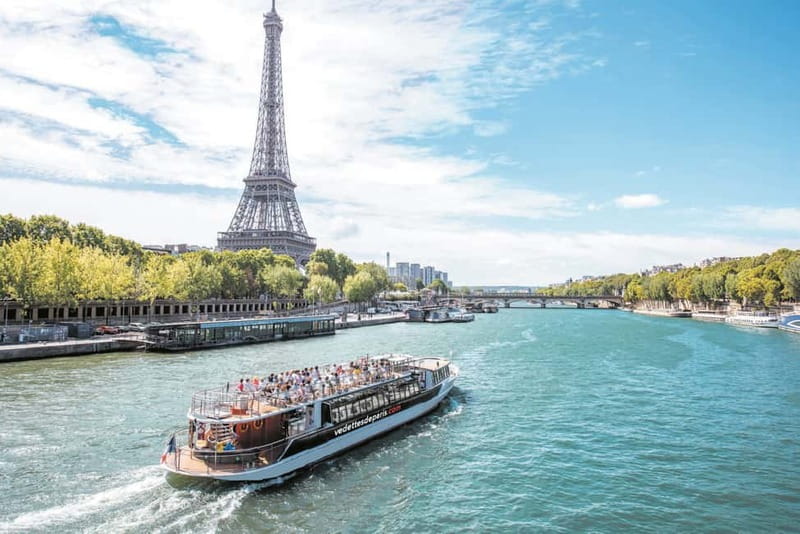
This cruise is built for convenience. You head straight to the embarkation dock near the Eiffel Tower, looking for the Vedettes de Paris boats and the three big flags (red, white, and blue). Boarding happens at the feet of the flags, so don’t overthink it—you’re basically aiming for the flag cluster and the dock stairs.
Plan to arrive early. Boarding is about 20 minutes before departure, and the cruises run roughly every 45 minutes on average. That means you don’t need to babysit the clock all day, but you also don’t want to show up late and sprint down to the dock with everyone else.
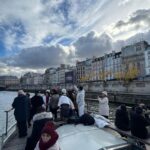
Once you’re onboard, the vibe is what you came for: a peaceful river ride without traffic and horn noise. Several guides’ details show up fast in the feedback—people like that the guide is audible and that the stories connect what you’re seeing to how Paris evolved. The boat itself is described as newer, and that matters, because you’ll feel it in the ride quality and seating.
You can also read our reviews of more boat tours in Paris

The electric boat factor: why it changes the experience
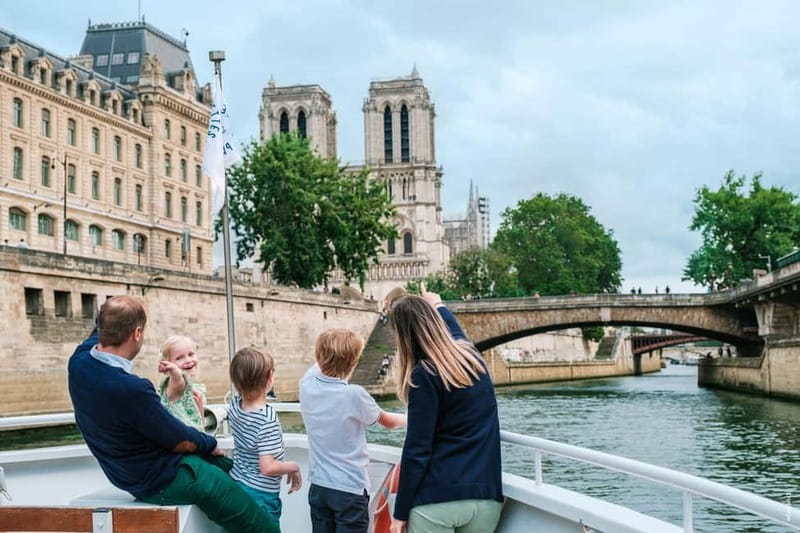
Paris on the Seine can feel like either a postcard parade or a genuine, floaty look at the city. This one leans toward the second option, mainly because it’s a 100% electric boat. You don’t get the engine grumble in the same way, and the ride feels smoother and quieter.
In real terms, that means two things:
- It’s easier to focus on the guide’s commentary because you’re not fighting loud mechanical noise.
- The scenery feels more intimate. When you pass buildings slowly, details stand out—stone color, rooflines, bridge angles—without the trip turning into a loud bus tour.
You also get practical options. People note there’s space to choose shade or sun, so you can ride how you like. If you’re traveling in a cooler month, wrap up and bring layers; if it’s hot, you’ll probably want inside shade at least part of the hour.
How the live guide storytelling works while you float
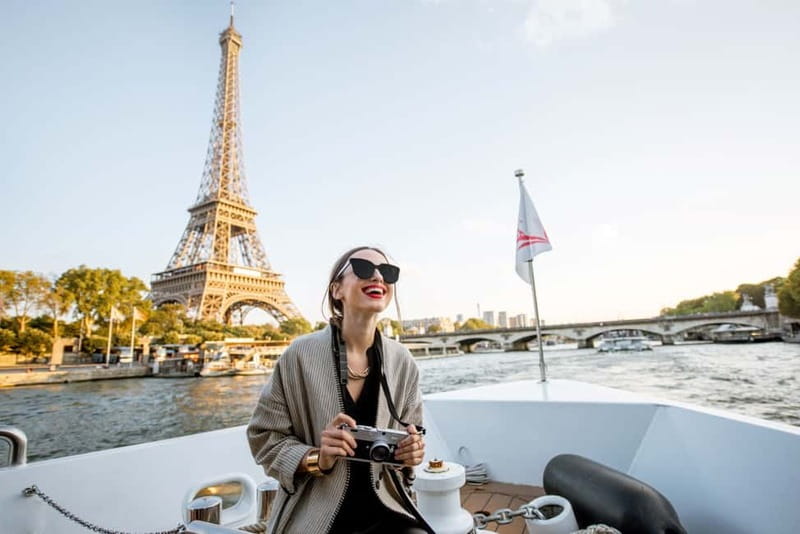
This is one of the strongest reasons to pick this cruise instead of a bare-bones ticketed boat ride. The onboard experience combines:
- A local live guide in English and French
- A multilingual app with commentary
- An included audio guide in several languages (including Italian, Spanish, German, Dutch, Chinese, Japanese, Korean)
What you’ll notice from the way the narration is delivered is that the guide talks in both languages during the trip. One useful tip: when the guide switches languages, keep your attention forward. If you look down to check your phone, you’ll miss the moment they point out a key detail.
Also, if you’re picky about sound, know that a couple of comments mention the speaker could be a bit louder at times. That doesn’t seem to be the norm, but it’s worth a heads-up if you’re hard of hearing. For most people, though, the guide is clear and the commentary lands—especially when they connect landmarks to the why behind them.
The full sightseeing loop: what you’ll see and why it matters
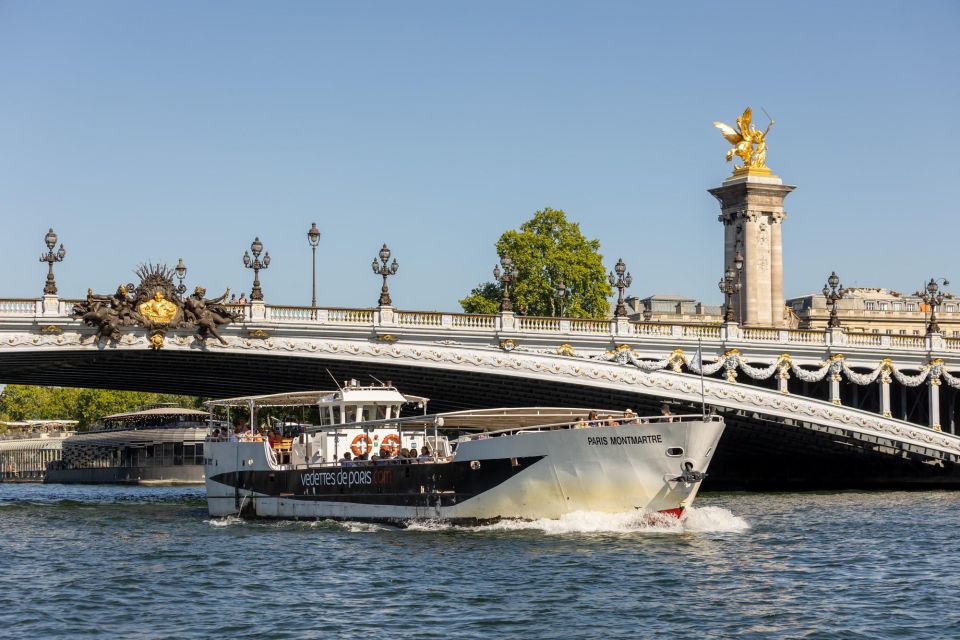
This is a one-hour route, so it moves. But it’s not random. The stops and landmarks are chosen to give you a tight overview of central Paris—especially if you’re new and trying to place everything in your head.
Port de Suffren: your launchpad for classic Paris
You start near the Port de Suffren area, and it’s a good way to begin because it’s close to the action without starting you on the other side of the city. Once you’re out on the water, Paris comes at you from a lower angle. That perspective changes everything—bridge spans look bigger, and facades stop feeling like flat backdrops.


Les Invalides: the stately river-side approach
As you glide along, you pass Les Invalides. Even if you don’t disembark, it’s one of those places that reads instantly from the Seine. From the water, you get a clean line of sight and a sense of scale that street-level photos don’t always show.
This is the “orientation” part of the cruise. You’re learning where major sights sit relative to each other, so later on foot you won’t feel lost.
Musée d’Orsay: the river version of art-gallery frontage
Next up is the Musée d’Orsay area. From the water, the building’s riverside presence is easier to understand. You see how it faces the Seine rather than just how it looks from across the street.
If you already plan to visit the museum later, this gives you a head start: you’ll know what direction you should look from and which exterior details to notice when you’re actually inside.
Île de la Cité and Notre Dame: the emotional Paris stop
This is the moment most people hope for. You reach the Île de la Cité area and get views of Notre Dame Cathedral. It’s dramatic from the river—because the island setting forces the skyline to frame the cathedral.
One practical note: on some days, the route can shift due to river conditions. There’s at least one mention of Notre Dame not being reached when river levels were high, with the cruise adjusting to other sights (including the Statue of Liberty twin). So if Notre Dame is your top priority, keep a Plan B mindset for weather and water conditions.
There can also be a chance to hop off and back on at Notre Dame depending on ticketing and onboard operations. If your trip matters most for that area, ask at the start of your cruise or follow the crew’s instructions closely.
Hôtel de Ville: where city power feels visible
As you continue, you pass the Hôtel de Ville. From the water, the building sits in a way that helps you understand the geometry of central Paris—where the Seine bends and how neighborhoods connect.
This is one of those “quiet learning” stops. You don’t feel rushed, even though the hour moves fast.
Louvre area: seeing the palace without lining up
You also pass by the Louvre. The best thing about seeing the Louvre from the river is that it’s not just a single view. You get a sense of how it anchors the surrounding streets and squares, and how the city organizes itself around these landmark zones.
If you’re planning museum time later, this becomes your mental map. You’ll know where to aim, and you’ll recognize the palace instantly from nearby viewpoints.
Place de la Concorde and Grand Palais: the big-set Paris finale
Near the end, you pass Place de la Concorde and the Grand Palais. These are wide, grand spaces. From the Seine, the scale hits differently because you’re not standing inside the square—you’re outside it, watching the city open up.
This makes the final minutes feel like a stylish handoff from the older historic core to the more monumental, spectacle-ready part of central Paris.
The bridges and the Pont de Bir-Haikeim effect
One of the highlights specifically calls out sailing beneath Pont de Bir-Haikeim. Bridges are often ignored on sightseeing routes, but from the water they’re the choreography. You get under them, through them, and your view transforms in seconds.
If you want photos that feel more than postcard-flat, this is your best bet. The bridge structure creates depth, and the way it cuts the skyline gives you stronger composition than you’ll get from many street angles.
Photo tips that match how this cruise actually runs
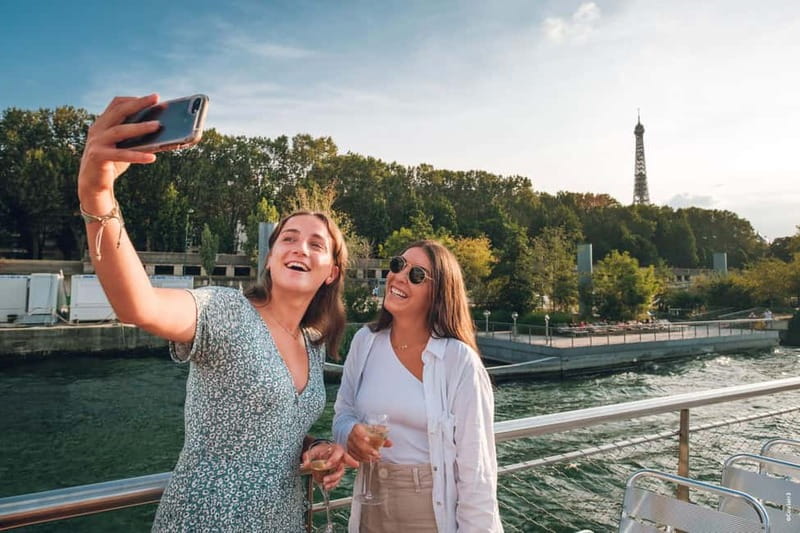
A one-hour cruise gives you momentum, but it also means you should think about your camera strategy before boarding.
- If your priority is sharp skyline shots, you might want to be ready at the front side of your seating choice before the big landmarks appear.
- For the best Eiffel Tower-area photo energy, plan to be on the deck early. Several people stress that getting there early helps if you want the best outdoor spots.
- Dress for where you’ll actually spend time. If you’re going in shoulder season or winter, people suggest warm layers and rain gear because you may sit outside up top.
Also, don’t expect perfect silence for photos. People are talking and snapping images, and that’s normal. The trick is to move with the flow and be ready when the guide calls out a sight.
Comfort on board: what you’ll feel after 60 minutes
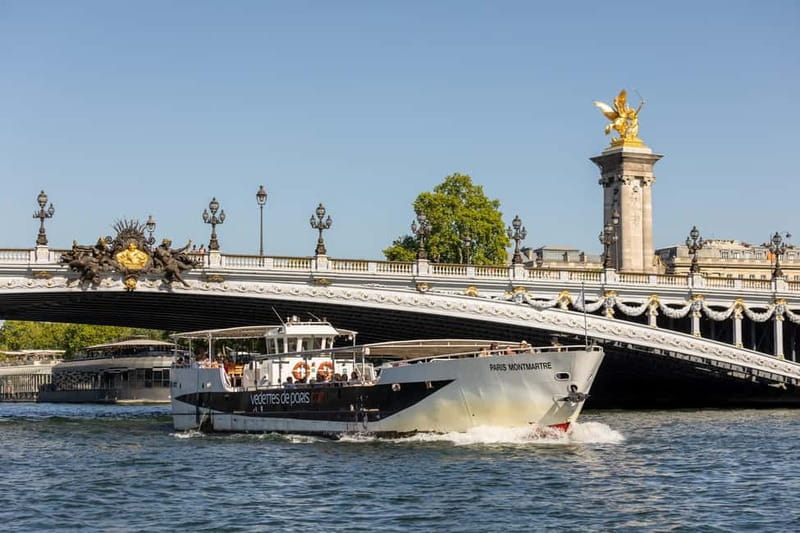
Let’s talk comfort without sugarcoating it.
The boat offers a mix of indoor and outdoor areas. Reviews mention you can find spots in the sun or under shade. That’s useful because Paris weather can flip fast.
At the same time, there are some notes about seating. One comment flags that metal chairs can feel uncomfortable. It’s not a dealbreaker for an hour, but it matters if you’re sensitive to hard seats. If you’re tall or have limited mobility, prioritize indoor seating when possible.
In cool months, you’ll feel the wind more up top. In hot months, inside can get warm too. Bring what you need so you’re not distracted by the weather the whole time.
Drinks and snacks: small extras, not a meal
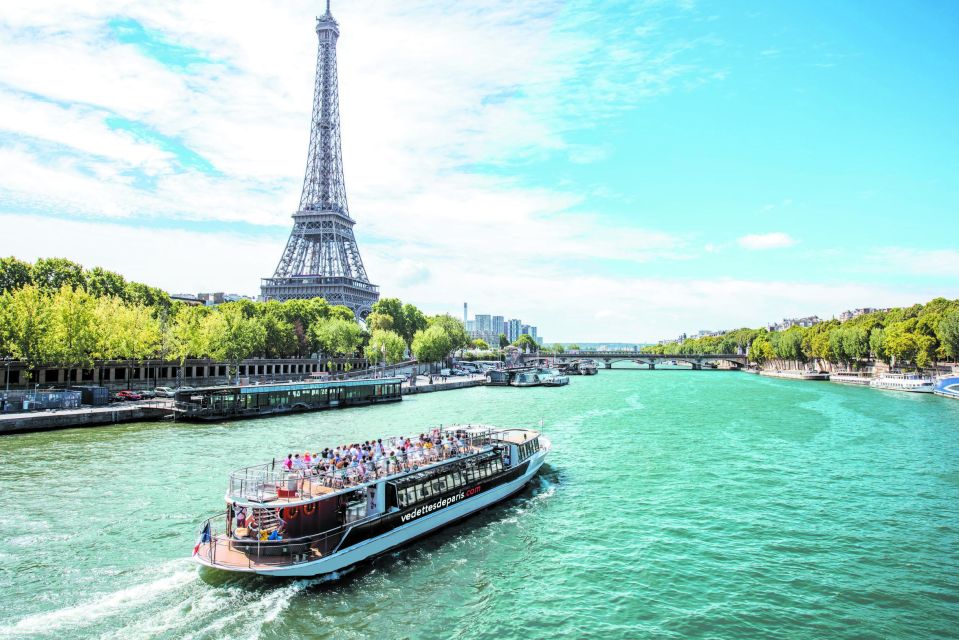
This cruise is not built around dining. Food is not included. If you choose an option that includes drinks and snacks, you’ll have that onboard support. Otherwise, drinks and snacks are available to purchase.
Here’s how to use that wisely:
- If you’re doing lunch or dinner later, this is fine to treat like a sightseeing block, not a meal replacement.
- If you’re traveling with kids, having purchase options can help keep everyone calm during the hour.
Some feedback suggests drinks/snacks can be reasonably priced, but they might not arrive as cold as you’d like on a very hot day. So don’t plan a hydration miracle here—come prepared with your own water if that’s a priority for you.
Value check: is $21 worth it for what you actually get?
At around $21 per person for a 1-hour guided cruise, the value comes from the combination:
- Major landmarks in central Paris in one ride
- Live bilingual guide commentary (not just an audio-only loop)
- An included multilingual app and audio guide options
- A smooth way to see the city without traffic and stoplights
If you’re on a tight schedule, this is the kind of activity that helps you land smarter for the rest of your trip. You’re not just consuming views. You’re building a working map: Eiffel Tower orientation, then Notre Dame and Louvre area connections, plus the big squares at the end.
If you’re already an expert on Paris and you hate guided narration, you might feel the hour is short and scripted. But for first-timers, couples, and small groups who want to get their bearings fast, it’s an efficient use of time.
Who this Seine cruise fits best (and who should skip it)
This tour fits especially well if you:
- Want a first-time Paris orientation with context
- Appreciate a guide who explains what you’re looking at while you float
- Prefer a calm river experience over buses and walking marathons
- Need wheelchair access (the boat is wheelchair accessible)
You might think twice if you:
- Want an all-day itinerary with frequent stops and museum time
- Need a strict, never-changing route every single time (river conditions can affect how landmarks appear)
- Are extremely sensitive to sound switches between languages
Should you book this Seine River cruise from Port de Suffren?
If you want a high-value, low-effort taste of central Paris, I’d book it. The electric boat quiet, the bilingual live guide, and the concentration of landmarks into a single hour make it feel like a smart starting move.
Book it if you’re planning to walk the city after. You’ll recognize more, and you’ll waste less time staring at your map. If weather is changeable, bring layers and be ready for some outdoor time. And if Notre Dame is a must-see, pick a time that gives you flexibility in your schedule so you can adjust if river conditions force route changes.
In short: this is the kind of Seine cruise that does more than pass by. It helps you understand Paris while you’re still looking at it.
FAQ
FAQ
How long is the Seine cruise from the Eiffel Tower area?
The cruise lasts 1 hour.
Where do I meet and board?
Head to the embarkation dock near the Eiffel Tower and look for the Vedettes de Paris boats with three big flags (red, white, and blue). Boarding access is at the feet of the flags.
What languages do I get on board?
You get live guide commentary in English and French, plus an included multilingual app and audio guide.
Do I get drinks or snacks?
Drinks and snacks are included only if you select that option. Otherwise, drinks and snacks are available to purchase on board.
Is the cruise wheelchair accessible?
Yes, the cruise is wheelchair accessible.
How often do boats depart?
The cruise runs about every 45 minutes on average, and boarding takes place roughly 20 minutes before departure.
What if I need to cancel or change plans?
You can cancel up to 24 hours in advance for a full refund. For changing dates, you can use the reschedule option on the GYG app until 24 hours before the initial departure.