REVIEW · PARIS
Paris: Aura Invalides Immersive Experience Entry Ticket
Book on GetYourGuide →Operated by Cultival · Bookable on GetYourGuide
Paris at night gets even better inside Invalides.
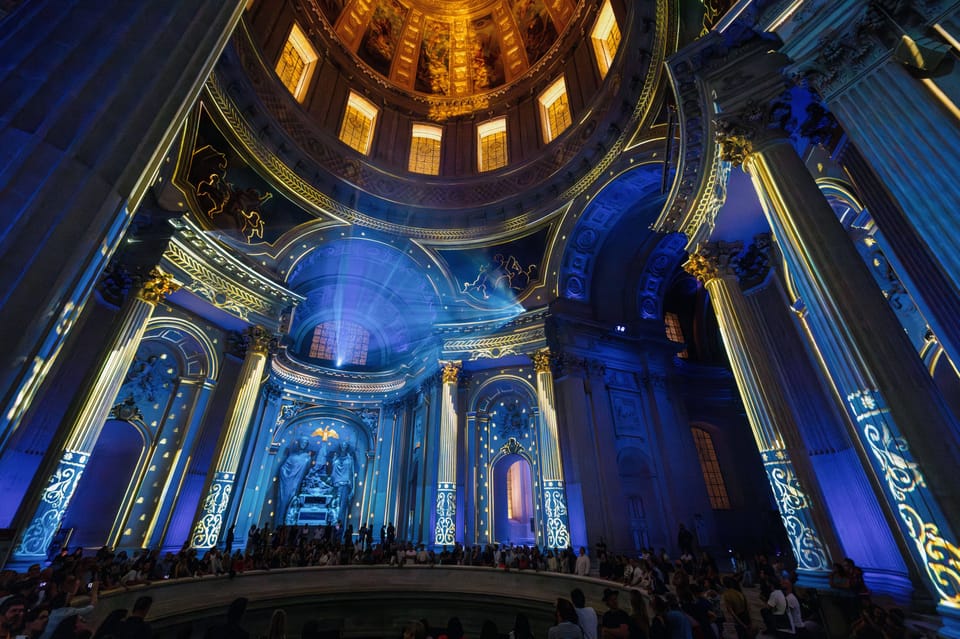
I love the way this show turns the Dôme des Invalides into a living space, using lights and video mapping to make the architecture feel brand-new. I also love the sound design and the pacing, with moments that bring you into a quiet, almost collective focus rather than just watching from one fixed spot. The main thing to consider: it can get crowded and cold, and there are flickering lights plus loud sound, so it’s not the right choice if you want a relaxed, low-sensory visit.
What I like most is that you’re not just buying a ticket to another museum room. You’re stepping into one of Paris’ most important monuments and letting the building do the talking—Napoleon I’s tomb, chapel spaces, and the huge vaulted ceiling up around 90 meters—while a multimedia program moves your attention around. If you’re expecting a classic guided history lecture the whole time, you may feel a little frustrated. If you’re open to art, mood, and structure-first storytelling, you’ll probably have one of your standout Paris nights.
In This Review
- Key things to know before you go
- Dôme des Invalides at night: what Aura is really like
- Price and value: is $33 worth 50 minutes?
- Arrival at Place Vauban: avoid the wrong entrance and cold lines
- The three-part show: lights, video mapping, and spatial sound
- Napoleon I, the chapels, and why the dome ceiling matters
- The comfort checklist: cold, stairs, sound, and flicker
- Where to stand or sit for the best view
- Who should book Aura Invalides, and who should skip it
- Should you book Aura Invalides in Paris?
- FAQ
- How long does the Aura Invalides experience last?
- When does the show start compared to my ticket time?
- Where do I enter the Dôme des Invalides for this ticket?
- What is included in the ticket price?
- Is food or drinks included?
- Can I bring a stroller or large bags?
- Are there toilets or places to eat on site?
- Is it suitable for small children or wheelchair users?
Key things to know before you go
- It starts about 20 minutes after your ticket time, so don’t plan to be seated immediately.
- The show lasts around 50 minutes, then you’ll still want a moment to look around once the lights change.
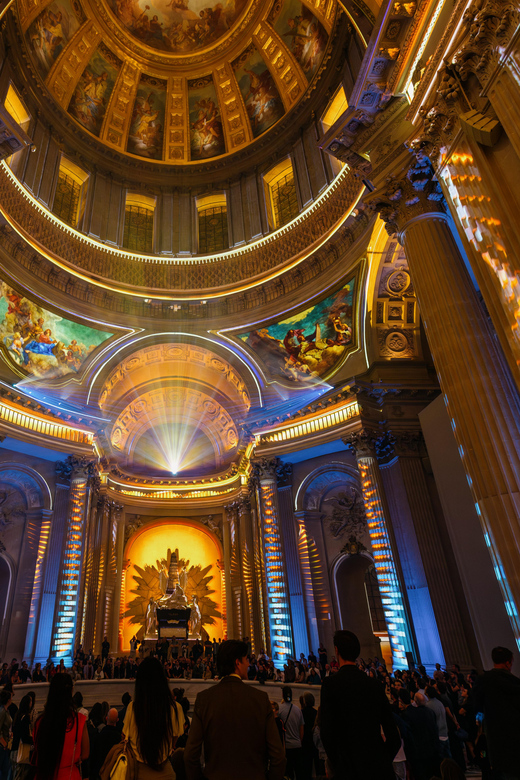
- You explore key parts of the Dôme and its six chapels, not just one screen-facing view.
- Stairs are part of the experience (inside and outside), and it’s ambulatory.
- Cold + loud + occasional flicker are real factors, especially in winter.
- No latecomers are admitted after the show begins, so build in buffer time.
Dôme des Invalides at night: what Aura is really like
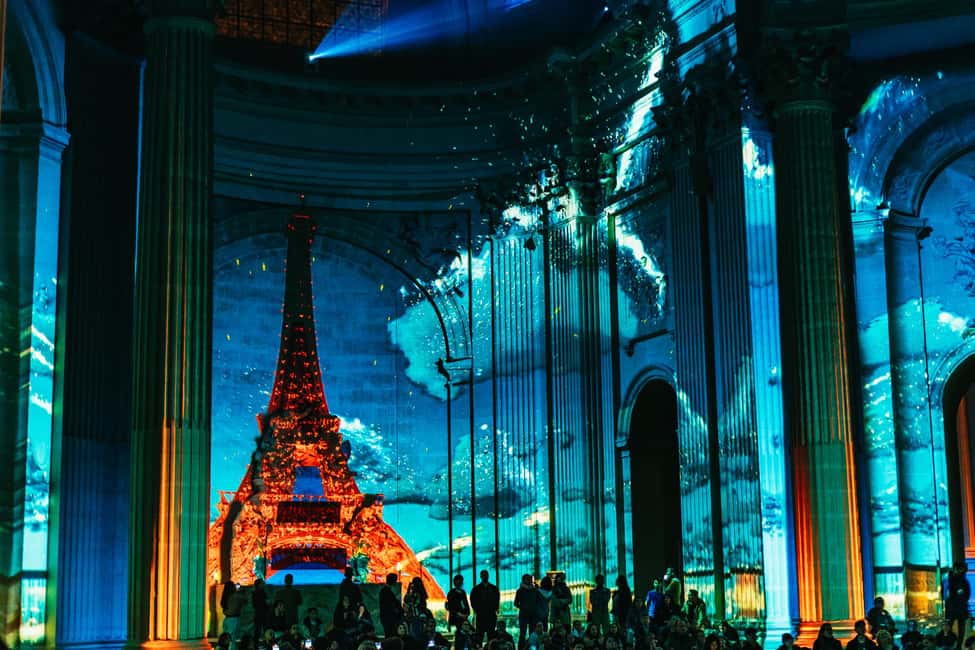
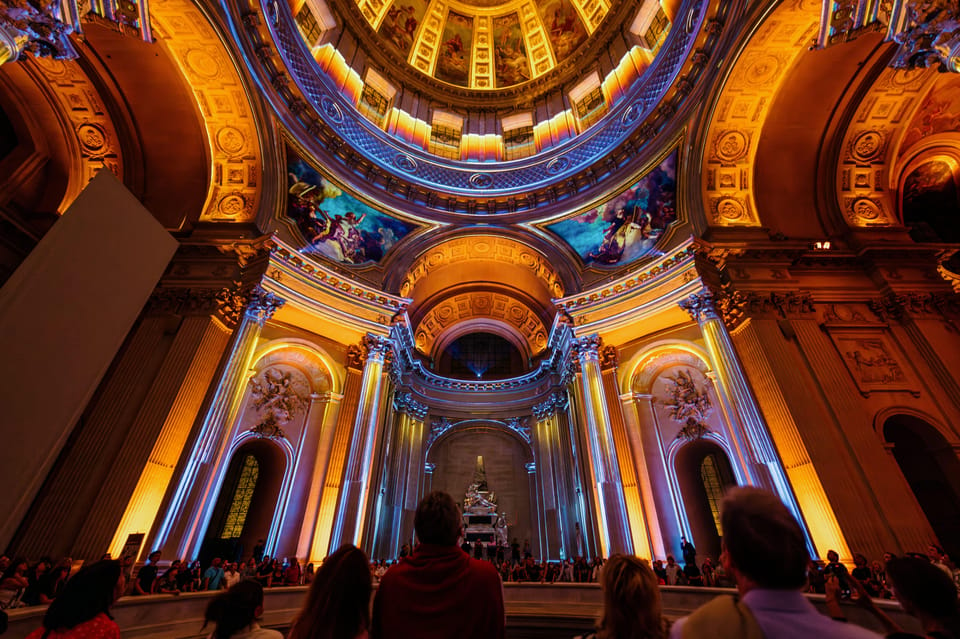
Aura at the Dôme des Invalides is, at its core, a light-and-sound show staged inside a historic monument. Instead of projecting artwork onto a modern wall, they use the dome, chapels, and architectural details as the canvas. The result is a different kind of “sightseeing”: you look up, you move (at least some of the time), and you follow the program’s shifting attention.
The show is built around a three-part sensory journey. Expect orchestral music layered with audio that’s positioned in a way meant to feel more spatial than a typical speaker system. That matters here because Invalides is a huge volume with strong echoes. Good sound in that kind of space doesn’t just fill the room—it shapes how you feel inside it.
One more thing: the experience isn’t trying to be neutral. It leans emotional. The program guides you through a sequence that’s designed to end with a moment of collective contemplation, where the mood quiets down. That’s a big reason people describe it as moving rather than merely impressive.
A few more Paris tours and experiences worth a look


Price and value: is $33 worth 50 minutes?
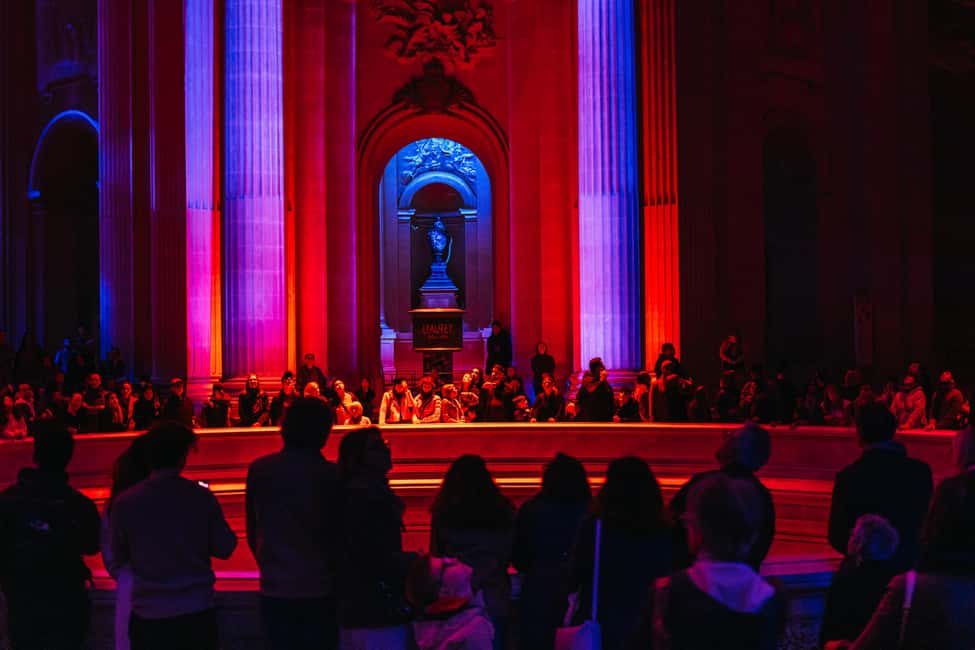
At about $33 per person for roughly 50 minutes, the ticket reads like a show ticket, not a half-day attraction. The value comes from the setting and the production: you’re paying for a multimedia program built to work with a monument that already has serious visual drama.
Here’s how I’d think about value if you’re budgeting a Paris night:
- If you’re the type who enjoys music + visuals (and doesn’t need every fact delivered in a guided lecture), this is good value.
- If you’re mainly hunting for a deep historical explanation while you stand in place, you might decide the money would be better spent on daytime tours plus a separate, lighter evening plan.
The reviews also hint at a subtle truth: people who get the most out of Aura tend to treat it like a performance first, a history setting second. You’ll learn things, but the learning is happening through the way the show frames architecture—especially Napoleon I’s tomb and the big ceiling paintings.
Arrival at Place Vauban: avoid the wrong entrance and cold lines
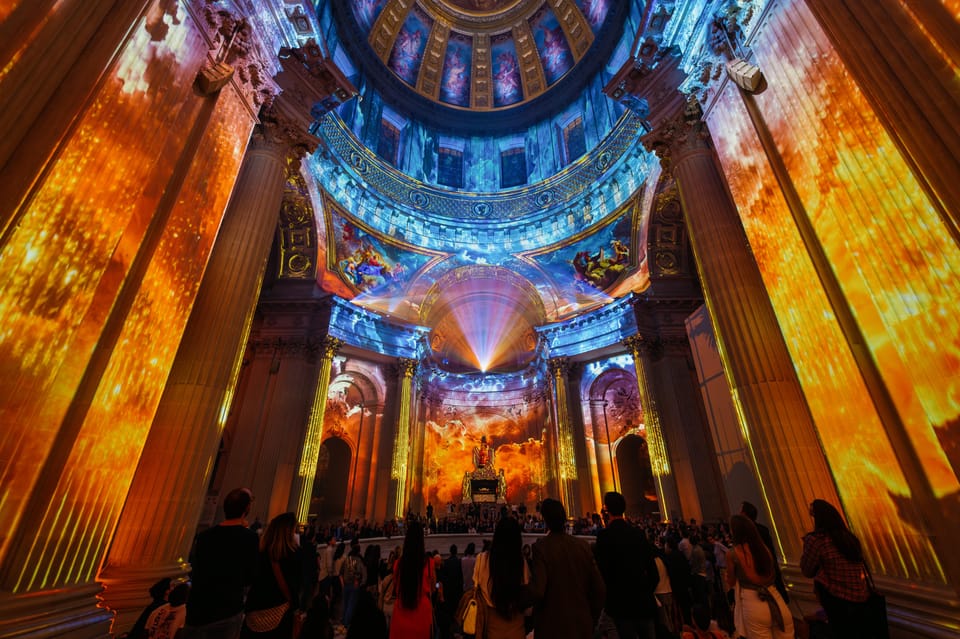
Enter via Place Vauban, on the Dôme des Invalides side (near the Ecole Militaire or St François Xavier metro stations). The Esplanade entrance is not the one you use for admission, and there’s a 12-minute walk between those two entrances—so arrive with a little precision rather than guessing and hoping.
Also plan for the practical reality of night shows in big old buildings. Even though the program is indoors, the check-in area and wait can be uncomfortable. People mention cold and wind, so treat your winter clothing like part of the ticket cost.
Timing tip that saves stress: the show begins 20 minutes after the time listed on your ticket. That means you need to be there early enough to scan in, find your way, and settle without rushing. And it’s strict about this: no latecomers are admitted after the beginning of the experience. If you’re the type who likes to arrive “just in time,” this one will punish you.
The three-part show: lights, video mapping, and spatial sound
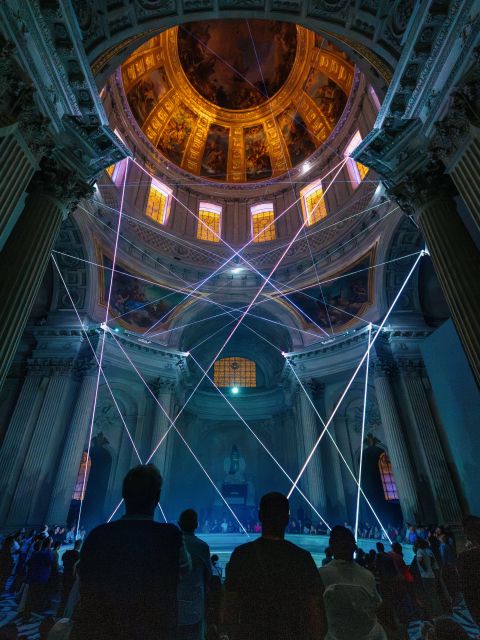
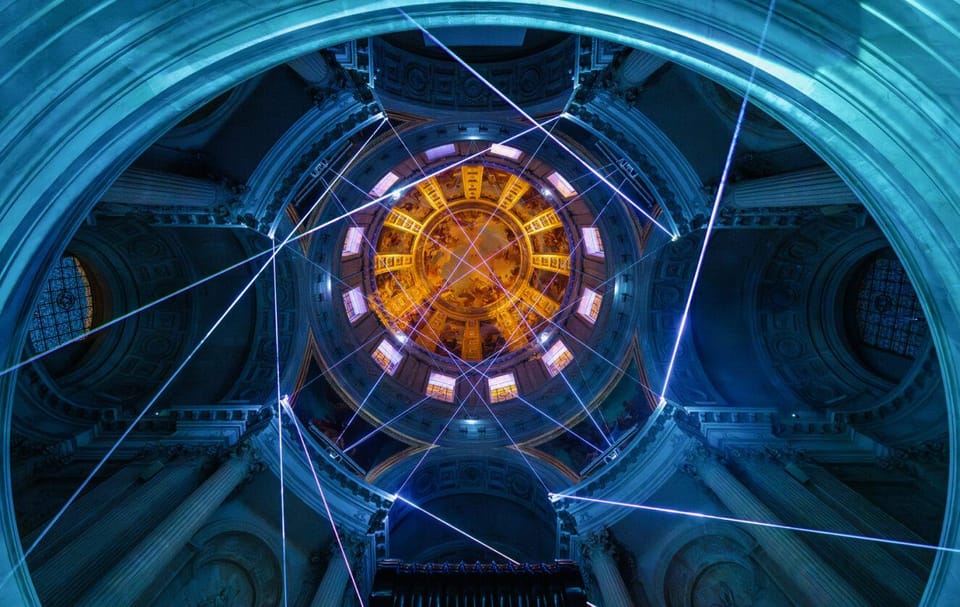
Once you’re inside, the show unfolds in a way that uses the dome’s geometry as part of the storytelling. Lights and video mapping aren’t just effects—they’re direction. They guide your eyes toward details on ceilings, arcs, and chapel spaces, and they shift your attention as the audio swells and changes.
One of the most praised aspects is how the program seems to use the monument’s acoustics and volume. Music isn’t background; it becomes a structural element that controls pacing. When sound is positioned well, you don’t feel like you’re standing beside equipment—you feel like you’re inside the audio world.
You may also be encouraged to move around during parts of the show. That’s not a tiny detail. It changes the experience from passive viewing to something closer to walking through a changing scene. If you want the best comfort, choose footwear you don’t mind walking in for a bit, and be ready for stairs inside and outside.
The show also includes moments that feel more contemplative than flashy. Reviews repeatedly describe it as surreal and moving, not just “cool lights.” That emotional arc is part of why it lands with so many people across ages—even though the program is not recommended for kids under 5.
Napoleon I, the chapels, and why the dome ceiling matters
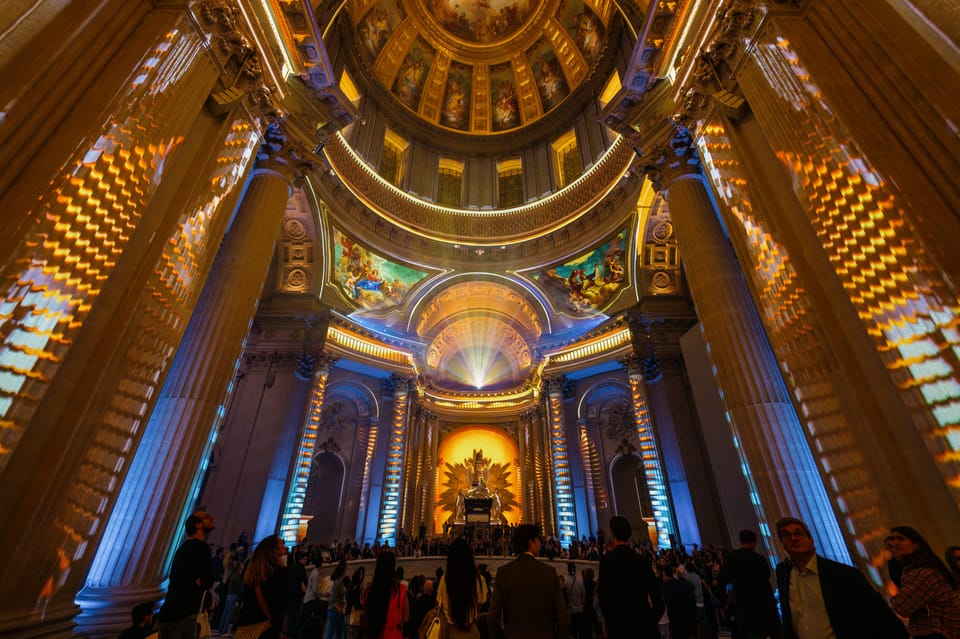
The biggest “you’re really here” moment is the focus on Napoleon I’s tomb. The show frames the tomb area so you’re not just seeing it as an object—you’re seeing it as the center of a spiritual and historical atmosphere. That’s what makes the nighttime format powerful: at night, with projection and orchestral music, the space feels less like a monument and more like a ritual site.
From there, the program guides you through attention on the six chapels of the site. The show is structured so you don’t need to be in one fixed spot the entire time. There’s also time during which you can wander and look around, which helps if you want to actually see the chapel spaces rather than only catch them from the main view.
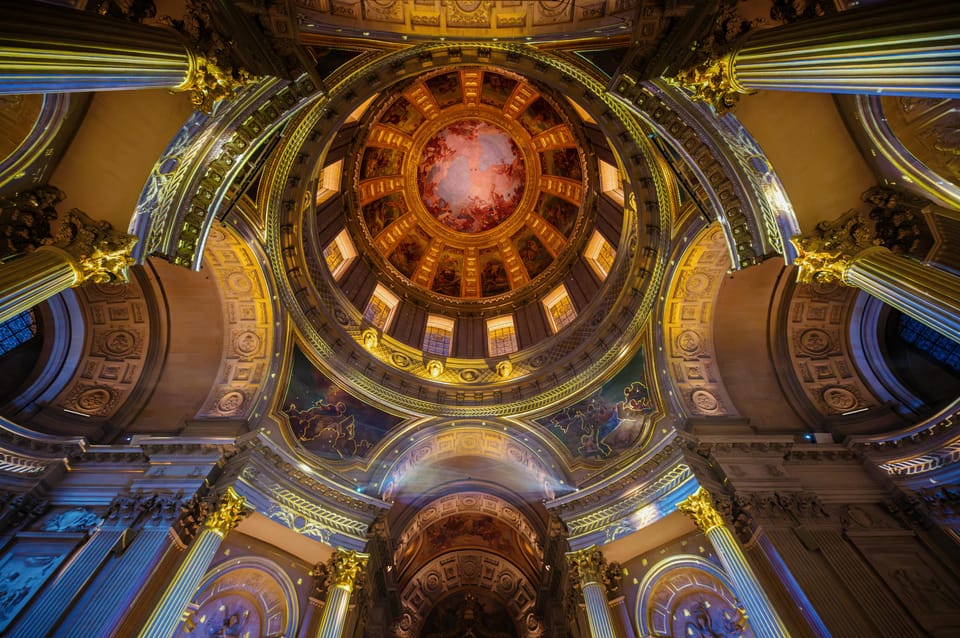
And don’t skip the vertical dimension. The vaulted ceiling reaches about 90 meters, and Aura uses that scale on purpose. When lighting and mapped visuals stretch up across a dome, the architecture stops being “background” and becomes the main subject. If you’ve only ever seen Invalides in daylight, this night version will change how you read the building.





The comfort checklist: cold, stairs, sound, and flicker
This show has production value, which means it comes with sensory intensity. Here’s what you should know before you buy, especially if you’re sensitive to sound or light.
- Flickering lights and high sound volume: If you’re sensitive, bring earplugs (or other hearing protection).
- It can be quite cold inside: wear warm layers. Even if you’re warm outside, the building can feel colder once you’re standing still or sitting on steps.
- Ambulatory experience with stairs: there are stairs both outside and inside the Dôme des Invalides. Wheelchair access isn’t listed as suitable, and it’s not recommended for wheelchair users.
- No strollers, no luggage or large bags: plan to travel light.
- No catering, no toilets, no changing rooms: you’ll want to manage basic needs before you come.
One review-specific note that’s worth taking seriously: some people say the venue and show layout can feel crowded, especially if too many people are admitted at once. The positive side is that there is space to sit on steps and move during parts of the program. The negative side is that if you hate crowds, you’ll want to choose a sensible arrival time and be mentally ready to share the space.
Where to stand or sit for the best view
This is one of those experiences where your position changes what you notice. You’ll likely see a central screen or main visual area during parts of the show, and people recommend finding a good spot facing the main projection.
If you want the easiest setup, look for a place on the steps where you can see without craning constantly. Some visitors mention sitting across from the screen for a good view of both visuals and key architecture. If you’re comfortable with it, keep an eye on how the program directs your attention—there may be moments when the best view isn’t the one you started with.
Also, remember the schedule reality: you might arrive thinking your ticket time means show time. It doesn’t. People report the show starts later than the session time printed on the ticket, so use that time to settle and orient yourself.
Who should book Aura Invalides, and who should skip it
Book it if you:
- want a memorable Paris night activity inside a major monument
- enjoy music + visuals and don’t require a full verbal history talk the entire time
- like experiences that encourage you to look up and around, not just stare ahead
- want a show that feels emotional rather than purely technical
Skip it if you:
- want a quiet, low-sound museum-style visit
- are traveling with a child under 5 (it’s not recommended)
- use a wheelchair (it’s not suitable based on the provided information)
- can’t handle flickering lights or loud audio, even with ear protection
- need on-site bathrooms or food options (none are available)
Should you book Aura Invalides in Paris?
Yes, if you’re aiming for one standout night that uses famous Paris architecture as the main star. The combination of dome acoustics, orchestral music, and video mapping is the reason this ticket earns such consistently high ratings. And for many people, the emotional pacing—moving from spectacle into contemplation—is exactly what makes it stick.
But book it with your expectations calibrated. This isn’t a daytime guided tour where every detail is explained through a headset. It’s a performance that frames the monument, especially Napoleon I’s tomb and the chapels, through light and sound. If that’s your kind of evening, this is a strong buy at around $33.
If you’re still on the fence, my advice is simple: wear warm layers, bring earplugs, arrive early enough to avoid stress, and treat it like a show in one of Paris’ most important rooms.
FAQ
How long does the Aura Invalides experience last?
The show lasts about 50 minutes.
When does the show start compared to my ticket time?
The show begins 20 minutes after the session time indicated on your ticket.
Where do I enter the Dôme des Invalides for this ticket?
Enter via Place Vauban on the Dôme des Invalides side, by the Ecole Militaire or St François Xavier metro stations. Admission is not through the Esplanade entrance.
What is included in the ticket price?
Your ticket includes entry to the Aura Invalides show.
Is food or drinks included?
No. Food and drinks are not included.
Can I bring a stroller or large bags?
No. Baby strollers are not allowed, and luggage or large bags are not allowed.
Are there toilets or places to eat on site?
The site has no changing rooms, toilets, or catering facilities.
Is it suitable for small children or wheelchair users?
It is not recommended for children under 5, and it is not suitable for wheelchair users.