REVIEW · HONFLEUR
Honfleur Outdoor Escape Game
Book on Viator →Operated by Panda Motion Etretat · Bookable on Viator
A puzzle walk beats the usual checklist sightseeing. In Honfleur, this outdoor escape game turns old streets into a real-time challenge along the harbor and key landmarks. You’re not just looking at photos here—you’re actively hunting clues as you go.
Two things I really like: you get guided discovery through town stops, and you finish with a built-in reason to keep moving (the treasure deadline keeps it fun). It’s also set up as a mobile-ticket experience, which makes the logistics simpler once you arrive.
One possible drawback to plan for: if you’re booking the English version, the clue wording may not always be crystal-clear, so you’ll want to stay flexible and use any hint options if you get stuck. If you prefer sharper, more coached guidance, consider the supported option.
In This Review
- Key highlights to look for
- Honfleur puzzle treasure: why this outdoor game is fun
- Price and time: what $31 gets you (and what it doesn’t)
- Getting started: meeting at Quai Lepaulmier and choosing how you play
- Stop-by-stop: Le Vieux Bassin clues by the harbor
- Eglise Sainte Catherine: using a big landmark without overshooting
- Jardin du Tripot: the point where you start racing the clock
- Mobile ticket and private-group setup: small things that matter
- English clues and difficulty levels: how to avoid wasted time
- Who this is best for (and who it isn’t)
- Should you book the Honfleur Outdoor Escape Game?
- FAQ
- FAQ
- How long is the Honfleur Outdoor Escape Game?
- Where does the game start?
- Does the activity end back at the meeting point?
- Is pickup offered?
- What are the main stops on the route?
- Is the experience available in English?
- Do I need a printed ticket?
- What should I bring?
- Is it a private activity?
- Is it refundable if I cancel?
Key highlights to look for

- Le Vieux Bassin focus: you start in the harbor area, where the clues feel naturally tied to the setting
- Landmark-based puzzles: the route builds around major sights like Eglise Sainte Catherine
- Jardin du Tripot momentum: the middle-to-late part is where you start moving faster toward the treasure
- English offered: the game runs in English, but clue phrasing can be imperfect—bring patience
- Choose your play style: autonomous mode or a supported version with a companion
- Private for your group: you only share the game with your own party
Honfleur puzzle treasure: why this outdoor game is fun

This type of activity works in Honfleur because the town is made for walking, pausing, and looking up. Instead of treating the waterfront and churches as background scenery, the game pushes you to notice details—signage, shapes, and landmark cues—while staying on a route that makes sense for a short visit.
It also helps that the whole experience is built around a simple goal: solve puzzles in time, then try to get the treasure. That timer makes it feel more like an adventure than a slow stroll. Even if you’re not a hardcore puzzle person, you’ll still get something out of it because you’re actively exploring Le Vieux Bassin and the streets around it.
You can also read our reviews of more tours and experiences in Honfleur.


Price and time: what $31 gets you (and what it doesn’t)
At about $31.31 per person and roughly 2 hours 30 minutes, this is priced like a mid-range activity for a town break. The value comes from using that time in a way that sightseeing alone often doesn’t: you get a route, a structure, and a reason to keep going even when you’re tired.
That said, you’re not buying an all-day guided tour with long explanations. You’re buying a game experience where you solve clues and move between stops. If what you want most is deep storytelling at every corner, you may need the supported format (more on that below), or you may still enjoy it best if you’re okay with a lighter-touch approach.
Also note the practical reality: if the clue language doesn’t match what you expect, you might lose time. Translation clarity is a real factor in puzzle games, and it affects value. If you’re sensitive to vague instructions, build in patience—or choose support.
Getting started: meeting at Quai Lepaulmier and choosing how you play

You meet at Quai Lepaulmier, 14600 Honfleur, France. The activity ends back at the same meeting point, which is great for mental planning: you don’t have to worry about getting across town after the game.
What matters most is how the experience is delivered. There are two play styles:
- Autonomous version: you play on your own, moving from puzzle to riddle to treasure.
- Supported version: you’re accompanied so the companion can explain puzzles and add history as you go. The supported option describes meeting you in Etretat wherever you want, which is worth double-checking when you book so the handoff makes sense for your exact plans.
In other words, don’t just think of this as one product. It’s closer to two experiences: self-guided puzzle hunt versus coached puzzle hunt. If you’re traveling in a group that needs clearer instructions, support can be the difference between fun and frustration.
Bring walking shoes and rain gear. This is an outdoor route and Honfleur weather can switch quickly. Even if the day stays dry, comfortable shoes make a huge difference because you’ll cover enough distance to feel it.
Stop-by-stop: Le Vieux Bassin clues by the harbor
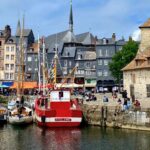
The first stop is Le Vieux Bassin, Honfleur’s harbor basin area. Starting here is smart because the place naturally offers lots of visual “targets” for puzzle design—buildings, waterfront edges, and landmarks you can recognize without hunting for obscure details.
How this stop tends to feel:
- You’ll likely get your first set of instructions and “how to play” rhythm early.
- You’ll be scanning the harbor area and using what you see to match clue language.
- This is also where you can get your confidence up: once you find the first clue, the game usually starts flowing.
Possible drawback: harbor areas can be busy and visually crowded. That doesn’t make the game impossible, but it can cost time if you’re reading clues slowly or if directions aren’t perfectly worded. If you’re the type to interpret instructions literally, keep an eye on nearby landmarks—you may need to look slightly past the most obvious feature.
Eglise Sainte Catherine: using a big landmark without overshooting
Next up is Eglise Sainte Catherine. In puzzle terms, this is a classic “anchor” landmark. Big churches are easy to locate, and they help the game keep a clear sense of place.
Why this stop is valuable:
- It gives you a built-in compass point. Even if you wander a little, you can recover by finding the church area again.
- It breaks up the route visually so you don’t just feel like you’re walking from one generic street to another.
- It’s a moment where architecture becomes a clue tool, not just something you pass by.
A practical consideration: if clue instructions are slightly off in English, this is where overshooting can happen—especially if the wording points to one obvious building and the next clue is actually near but not on it. My advice: when you hit a clue location, take a wide look around the immediate area rather than fixating on only one façade or corner.




Jardin du Tripot: the point where you start racing the clock
The final major stop is Jardin du Tripot. By the time you reach this area, you’re usually deep enough into the game that you understand the rhythm: read clue, locate target, solve next step, repeat. Garden spaces also tend to shift the vibe. You go from waterfront energy to a calmer spot—then you re-enter problem-solving mode with fewer distractions.
How you’ll likely experience this part:
- You’ll start thinking more like a solver and less like a tourist.
- You may feel a push to move faster because the treasure goal is close.
- You’ll probably be rechecking what you’ve learned from earlier clues—especially any landmark relationships.
If you’re traveling with mixed puzzle experience levels, this is where teamwork helps. You can split tasks: one person reads, one person scans, one person checks the route. For a 2.5-hour activity, that kind of group flow can make a big difference.
Mobile ticket and private-group setup: small things that matter
This is set up with a mobile ticket, which is handy because you’re not dealing with printed vouchers while walking around. You also get a private tour/activity, meaning only your group participates. That matters more than people expect. In a private format, you’re not competing with strangers for clue-reading time, and you don’t feel rushed to catch up.
The private setup is a good match if:
- you’re traveling with friends or family who want shared control over pace
- you prefer not to blend into a crowd during a game
- you want the freedom to pause for photos without derailing other people’s schedules
One more practical note: service animals are allowed, and the route is described as suitable for most travelers. Still, you should plan around walking time and outdoor conditions. If you’re dealing with mobility limits, wear supportive footwear and consider rain weather seriously.
English clues and difficulty levels: how to avoid wasted time
This is the area where you should be most alert before you go. The game is offered in English, and while that’s great for many visitors, clue phrasing may not always be perfectly clear. That can lead to extra minutes spent staring at the “right” place for the wrong reason.
Here’s how to protect your experience:
- Read clues slowly once, then take one scanning pass around the area before you assume you’re wrong.
- If you have an option for hints, use them rather than brute-forcing for long stretches.
- Don’t assume the most obvious landmark is the only solution. In puzzle hunts, the wording can point to a nearby feature rather than the exact target.
There’s also an important point about difficulty. The provider message included that there are different difficulty levels and an indication/hint system that helps you compensate if the puzzles feel tough. So if your group is strong at puzzles, you can enjoy it; if you’re not, you may want to choose a lower level when that option is available at booking.
Who this is best for (and who it isn’t)
This works especially well for you if:
- you like walking but don’t want a route that feels aimless
- you enjoy puzzles, or at least enjoy problem-solving as a change of pace
- you want a structured way to experience Honfleur’s old quarters and the sea without planning every stop
It may be less ideal if:
- you expect a fully narrated tour with detailed explanations throughout
- your group gets easily frustrated by vague instructions or unclear translations
- you want a high-energy guided show rather than a self-paced challenge (unless you pick the supported version)
If your group includes both puzzle lovers and puzzle skeptics, the key is communication and pace-setting at the start. Assign roles, keep a calm tone, and treat it like a scavenger-style walk. That mindset turns “wrong turn” moments into comedy instead of stress.
Should you book the Honfleur Outdoor Escape Game?
If you want an active way to see Honfleur in about 2.5 hours, I’d say it’s a strong choice—especially for first-time visitors who want to go beyond the postcard views and actually notice details.
Book it if:
- you’re comfortable walking and exploring outdoors
- you like the idea of solving clues at Le Vieux Bassin, then moving to Eglise Sainte Catherine and Jardin du Tripot
- your group can handle the reality of puzzle hunts: sometimes you’ll need hints or a second look
Skip it or choose support more carefully if:
- you strongly prefer clear, detailed instruction and worry about English clue wording
- your group wants a heavily guided narrative at every step
- you’re booking based on the theme alone and not the experience format—because puzzle style matters more than the label
FAQ
FAQ
How long is the Honfleur Outdoor Escape Game?
It lasts about 2 hours 30 minutes.
Where does the game start?
The meeting point is Quai Lepaulmier, 14600 Honfleur, France.
Does the activity end back at the meeting point?
Yes, it ends back at the meeting point.
Is pickup offered?
Pickup is described as offered, and there is also a supported version where a companion joins you based on the described meeting details.
What are the main stops on the route?
The stops include Le Vieux Bassin, Eglise Sainte Catherine, and Jardin du Tripot.
Is the experience available in English?
Yes, it’s offered in English.
Do I need a printed ticket?
No. A mobile ticket is included.
What should I bring?
Bring walking shoes and rain gear.
Is it a private activity?
Yes. Only your group participates.
Is it refundable if I cancel?
No. The experience is non-refundable and cannot be changed for any reason.