REVIEW · BELLEGARDE SUR VALSERINE
Flowers picking and essential oil distillation workshop
Book on GetYourGuide →Operated by un MAS en PROVENCE · Bookable on GetYourGuide
The best part of this Provence experience is that you do not simply look at lavender fields, take a few photos, and move on. You cut the flowers yourself with a traditional picker’s sickle, then follow them into the distillery to see how steam turns them into essential oil and floral water.
I like the hands-on rhythm: field work first, distillation second. I also like the personal souvenir, since you take home the oil and hydrolate made during the session. The main drawback is timing. Lavender harvest is seasonal, and the experience involves a 30-minute walk from the nearest bus stop, so you need to plan your arrival carefully.
In This Review
- Key points at a glance
- From lavender field to copper still
- Learning the old harvesting gesture
- Packing the still by hand
- How steam creates oil and hydrolate
- The souvenir you actually made
- Getting there from Arles or Nîmes
- Languages, pace, and who will enjoy it
- A few practical tips before booking
- Should you book the lavender workshop?
- FAQ
- How long does the lavender and distillation workshop last?
- How much does the experience cost?
- Where is the distillery located?
- Can I reach the distillery by bus?
- How much does the bus cost?
- Which languages are available?
- What do I do in the lavender field?
- What happens in the distillery?
- Can I take anything home?
- Is the activity suitable for children?
- What should I bring?
- Can I cancel my booking?
Key points at a glance
- Cut lavender with a traditional sickle: Farmer Gaël shows you the correct hand movement in the field.
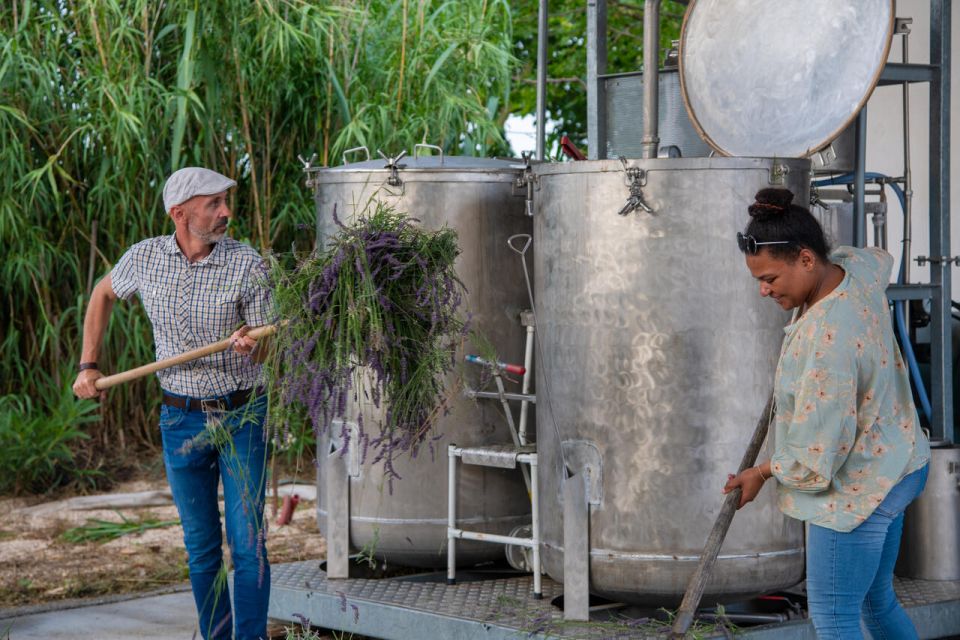
- Follow your plants into the still: You help compact the flowers into the steam-distillation vessel.
- Learn about organic Provence plants: The session covers cultivation, scents, and uses in food, cosmetics, and health.
- Take home two small products: Your extracted essential oil and hydrolate become a useful, local souvenir.
- Allow 2.5 hours: The activity combines a field walk, practical work, and a guided distillery visit.
- Bring sun protection and sturdy shoes: The outdoor portion is easier in comfortable footwear.
From lavender field to copper still
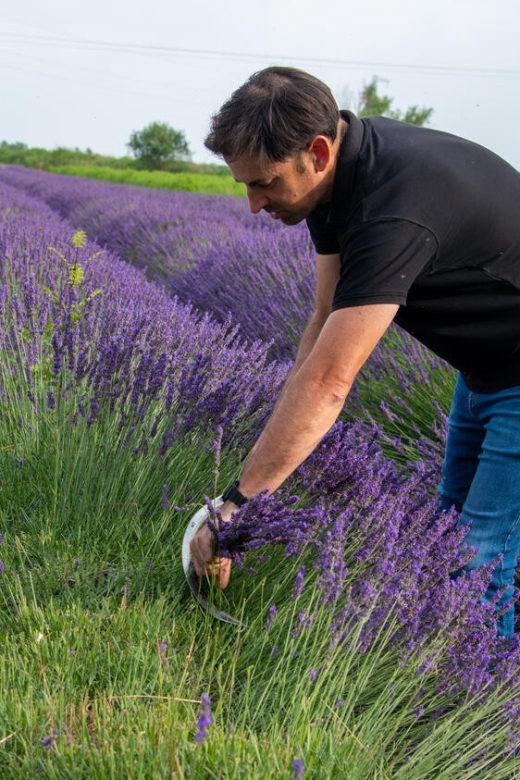
This is a small-scale agricultural experience rather than a standard sightseeing stop. You begin among the lavender plants, learning how aromatic crops grow in Provence and what makes the lavender flower useful beyond its pleasant scent.
The field walk gives the activity a clear purpose. You are not just passing through a purple field. You are learning which part of the plant is harvested, how the flowers are cut, and why the timing of the harvest matters. The pace should suit anyone who wants context before the practical work begins.
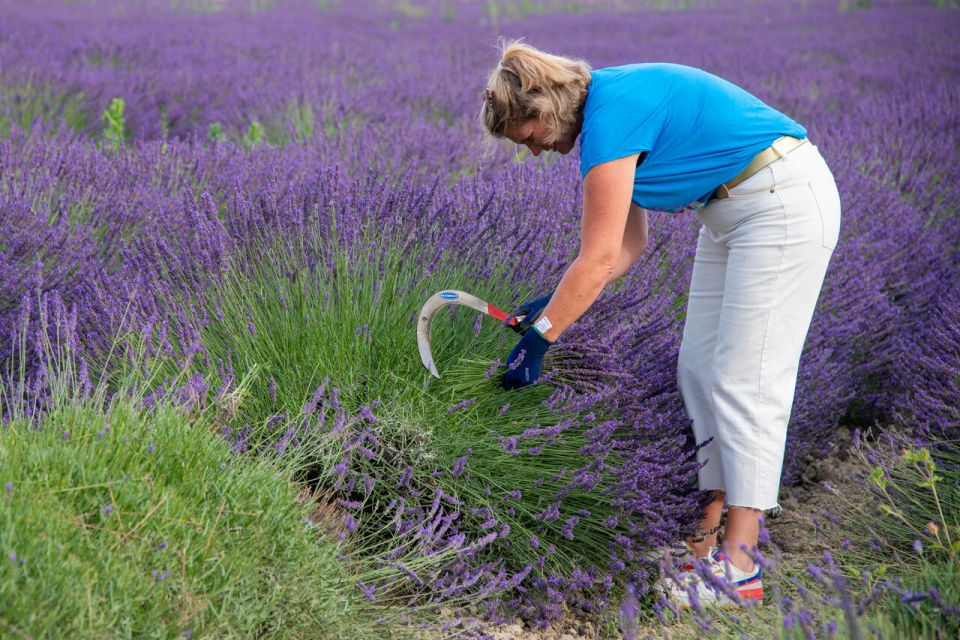
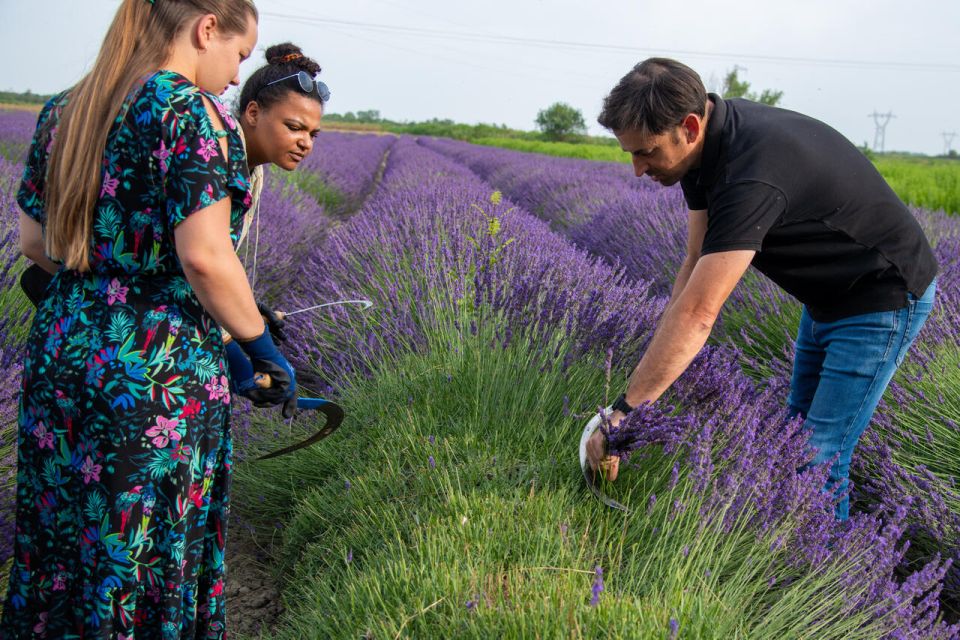
Gaël, the farmer, leads the harvesting section. He supplies one of the traditional picker’s sickles and shows you how to handle it properly. This is a simple tool, but the technique matters. You learn the traditional gesture instead of treating the plants like flowers in a home garden.
That hands-on start helps you understand the work behind the finished bottle. A tiny bottle of essential oil may look like a simple gift-shop product. Here, you see that it begins with many plants, careful cutting, and a process designed to capture their scent.
After gathering the lavender, you move to the artisanal distillery. The shift from open field to working still is the heart of the experience. Your flowers are no longer just something to admire. They become raw material for a practical lesson in steam extraction.
Learning the old harvesting gesture
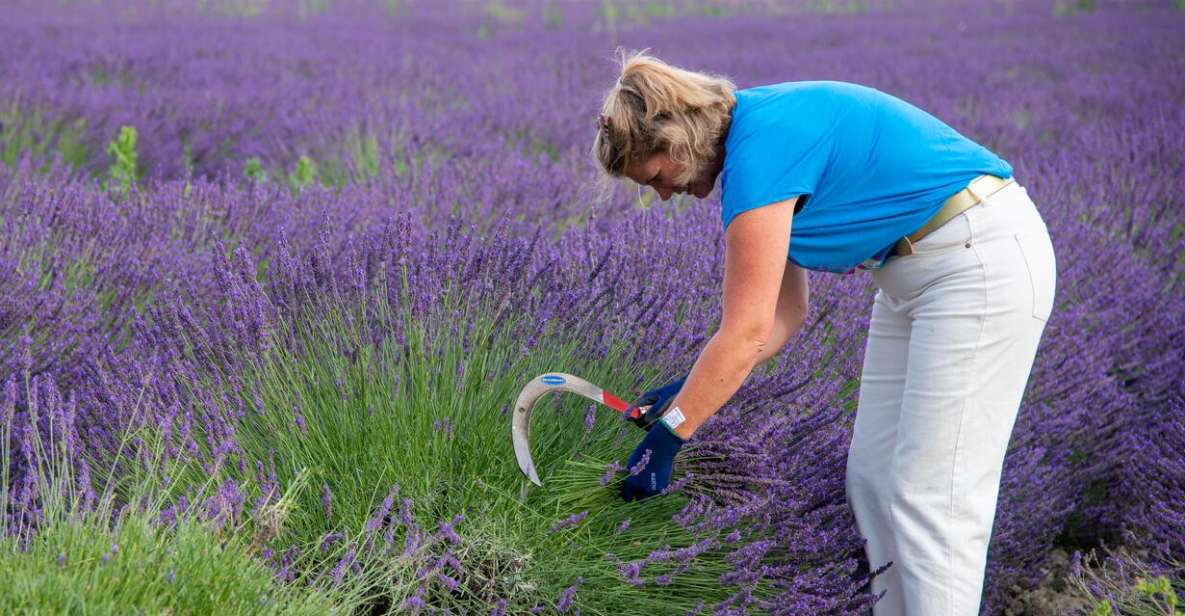
The field portion is likely to be the most memorable part for anyone who enjoys local crafts and working traditions. A sickle gives you a direct connection to the harvest, but it also requires attention. You should expect instruction before you begin rather than rushing into the plants.
The activity is suitable for visitors who want to use their hands, though it is not designed for very young children. Children under 10 are not permitted. Older children may enjoy it if they are comfortable following instructions and spending time outdoors.
The information about cultivation and plant characteristics adds useful context. You learn about lavender as an aromatic crop, not only as a symbol of Provence. The same plants have links to food, cosmetics, and health, and the distillery section explains how their scent and properties are put to use.
Wear shoes that can handle a field path. Comfortable shoes are specifically recommended, and sunscreen is essential for the outdoor portion. You should also dress for sun and warmth, since the first stage takes place outside and the exact starting time depends on availability.
One practical point: the experience is tied to the harvest. The chance to cut lavender in the field is the reason to book this rather than a year-round distillery tour. If picking flowers is your main goal, check the date and season carefully before making plans.
Packing the still by hand
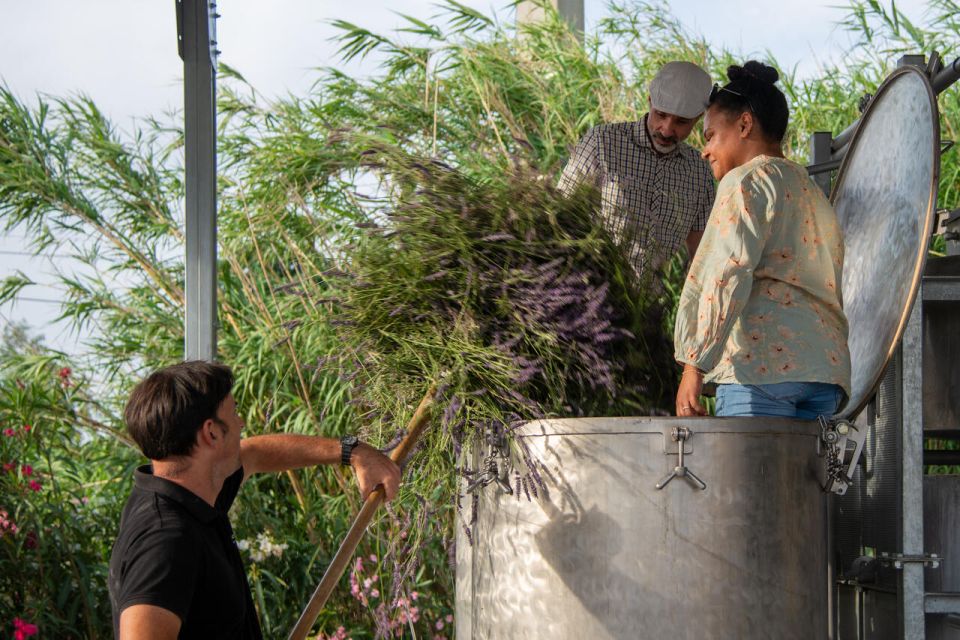
At the distillery, the group helps prepare the plants for extraction. The instructions describe an unusually physical step: you compact the flowers into the still, even climbing into it to pack the material properly.
That detail makes the process easier to understand. Steam needs to move through a packed mass of plant material in the right way. By helping load and compact the lavender, you see the work involved before any oil reaches a bottle.
The still is also where the experience becomes more technical. The guide explains the steam-distillation process and the stages that separate the essential oil from the floral water. You do not need a background in chemistry. The value is in watching a farm product change through a process you can follow from start to finish.
The distillery is described as artisanal, which matters for the atmosphere. This is not presented as a large factory visit with machines behind glass. You take part in the preparation and learn how local plants are handled in a smaller working setting.
The wording about jumping into the still should be understood as part of the packing activity, not as a stunt. You are helping compact the plant material so the extraction can work. Follow the guide’s directions and treat the equipment as working distillery machinery.
How steam creates oil and hydrolate
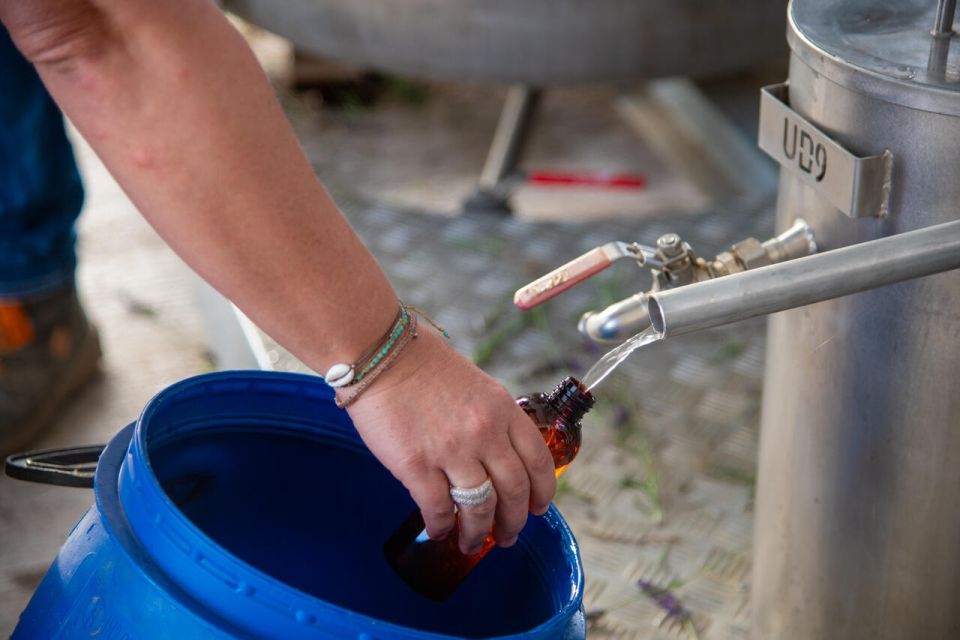
The extraction itself uses steam. Steam passes through the plant material and carries its aromatic compounds. The result is separated into essential oil and hydrolate, also called floral water.
The essential oil is the concentrated scented product. The hydrolate is the water produced during the same process. Both come from the plants you have just handled, which gives the souvenir more meaning than a bottle bought from a shelf.
You are guided through the process rather than left to watch from a distance. The goal is to learn the secrets of the steam still, place your plants into the vessel, and carry out your own extraction. The exact quantity of oil you receive is not specified, so do not book this expecting a large supply. Think of it as a personal sample made during a working lesson.
The guide also covers scents and uses for the organic plants. That may include their role in food, cosmetics, and health, all areas named as part of the session. The focus is broad enough to help you understand why aromatic plants matter in daily life, not just why they smell good.
This stage rewards curiosity. Ask about the difference between the oil and hydrolate, how the flowers affect the scent, and how the distillery handles organic plants. The information provided confirms that the activity is centered on local, organic extraction, but it does not promise a full technical course or professional certification.
The souvenir you actually made
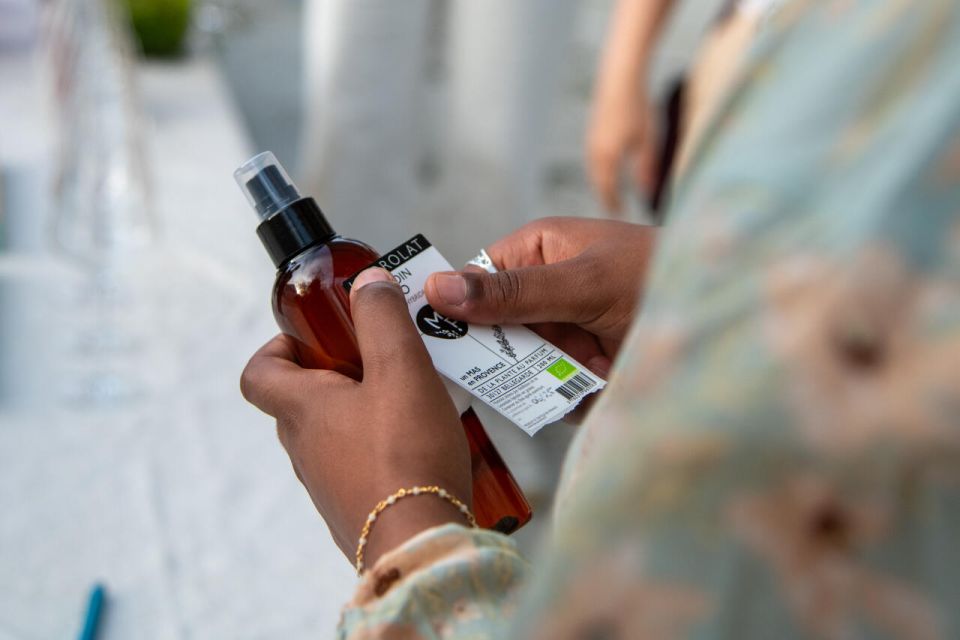
Many Provence tours end with a purchased product. Here, you take home your own extracted bottle of organic essential oil and hydrolate. That is the clearest selling point for the price.
At $34 per person, the activity offers more than a field visit. The cost covers the lavender walk, the sickle lesson, the distillery tour, the extraction instruction, and the two personal products. You are paying for a practical workshop as well as a guided visit.
I consider that good value if you are interested in how local products are made. It is less compelling if all you want is a quick photo in a lavender field. A scenic stop will take less time and may cost less, but it will not explain the route from harvested flower to finished oil.
The souvenir is also easy to pack and useful as a reminder of the day. Essential oils should be handled with care, and you should follow any instructions given during the session. The activity description confirms that you keep the bottles, but it does not state their exact size or provide detailed safety guidance for home use.
A small refreshment adds to the welcome. The experience includes a bottle of water and a piece of cake during the tour. That is a modest touch, but it matters during a summer activity that combines walking and practical work in the sun.
Getting there from Arles or Nîmes
The distillery is about 15 minutes by car from Arles and 20 minutes by car from Nîmes. A car is the simpler option, especially if you are carrying supplies or traveling on a tight schedule.
Public transport is possible, but it takes extra planning. Bus line Lio number 130 leaves from the bus station in Arles and stops in Bellegarde at the Magnolias stop. From there, you face a 30-minute walk to the MAS. The bus fare is listed as €1.50.
That route can work for an independent visitor who is comfortable walking, but you should allow time for the full connection. The activity has set starting times, and arriving late could be a problem. Check the current bus timetable and the available workshop time before relying on public transport.
The location outside the main towns is part of the appeal. You are going to a working agricultural and distillery setting rather than a central museum. The tradeoff is simple: the more rural setting gives the activity its character, but transport takes more effort.
Languages, pace, and who will enjoy it
The live tour is offered in French and English. That makes the hands-on instructions accessible to English-speaking visitors, while the setting still feels rooted in local farming practice.
The full duration is 2.5 hours. That is long enough for a proper field session and extraction, but short enough to fit into a day based in Arles or Nîmes. I would not pair it with another tightly timed activity unless you have included travel time on both ends.
You should book this if you enjoy:
- Local agriculture and traditional tools
- Small production workshops
- Fragrant plants and natural products
- Activities where you make or collect something
- A slower, practical alternative to sightseeing by car
You may want to skip it if you dislike outdoor work, direct contact with plants, or learning through participation. The activity is not simply a talk. You will walk in the field, use a sickle, help load the still, and take part in the extraction.
The age limit also shapes the audience. Children under 10 cannot join, so this is better suited to adults, older children, couples, and families with teenagers who can follow safety instructions.
A few practical tips before booking
Check the starting time before building your day around the workshop. The duration is fixed at 2.5 hours, but starting times vary according to availability.
Bring sunscreen and comfortable shoes. Those are not throwaway suggestions. You will be outside in the lavender field, and the public transport option includes a 30-minute walk from Bellegarde.
If you are coming from Arles or Nîmes, compare the car journey with the bus connection. By car, the listed travel time is short. By bus, you need the Lio number 130, the Bellegarde stop at Magnolias, and enough time for the walk to the MAS.
The cancellation policy is useful if your schedule is uncertain. You can cancel up to 24 hours in advance for a full refund, and you can reserve now and pay later. That flexibility helps if you are arranging several Provence day trips around weather and harvest timing.
Ask about the bottles and home use during the workshop. The activity includes your own essential oil and hydrolate, but the supplied details do not give bottle sizes or specific usage instructions. The distillery is the right place to clarify storage and safe application.
Should you book the lavender workshop?
Book it if you want to understand Provence through one of its most familiar plants rather than simply photograph it. The strongest parts are the traditional sickle lesson with Gaël, the chance to help pack the still, and the personal oil and hydrolate you take home.
At $34, the price is fair for a 2.5-hour experience that combines a field walk, instruction, refreshments, and a working extraction. The main conditions are practical: you need comfortable shoes, sun protection, transport planning, and an interest in active participation.
I would choose this over a basic lavender-field visit if you value local production and memorable souvenirs. I would pass only if your schedule is too tight for the rural location or you want a passive sightseeing stop. For anyone curious about how Provence turns plants into useful products, this is a focused and hands-on choice.
FAQ
How long does the lavender and distillation workshop last?
The activity lasts 2.5 hours. Starting times vary, so check availability when booking.
How much does the experience cost?
The price is $34 per person.
Where is the distillery located?
The distillery is in Provence, about 15 minutes by car from Arles and 20 minutes by car from Nîmes.
Can I reach the distillery by bus?
Yes. Lio bus line 130 leaves from the Arles bus station and stops in Bellegarde at Magnolias. The distillery is a 30-minute walk from that stop.
How much does the bus cost?
The listed bus fare is €1.50.
Which languages are available?
The live tour is offered in French and English.
What do I do in the lavender field?
You learn about aromatic plant cultivation and lavender, receive a traditional picker’s sickle, and practice cutting the flowers with farmer Gaël.
What happens in the distillery?
You take part in a guided visit, help place and compact the plants in the steam still, and learn how organic essential oil and hydrolate are extracted.
Can I take anything home?
Yes. You keep your own extracted bottle of organic essential oil and hydrolate.
Is the activity suitable for children?
Children under 10 are not permitted to take part.
What should I bring?
Bring sunscreen and comfortable shoes. The experience includes time walking and working in the lavender field.
Can I cancel my booking?
You can cancel up to 24 hours in advance for a full refund. You can also reserve now and pay later.