REVIEW · CANNES
Fascinating Cannes – Private Walking Tour
Book on Viator →Operated by US LLC – Local Tours in Lithuania · Bookable on Viator
Cannes is more than film stars and polished hotels. This private walking tour cuts through the postcard image, starting at the Old Port, climbing into Le Suquet, passing a real food market, and ending beside the famous beach promenade. You get the city’s old bones before its modern shine.
I like the way the route connects local Cannes with its international stage. I also like the clear 2.5-hour shape: long enough to cover the main historic center, short enough to fit around a wider Riviera day. The catch is the price, $388.18 per person, which is a serious bill for a walk with no paid admissions.
In This Review
- Key points at a glance
- Cannes before the cameras: starting at Quai Saint-Pierre
- Climbing into Le Suquet by way of Rue du Suquet
- Marché Forville: Cannes at its most useful
- Rue Meynadier and the old retail spine
- Rue Félix Faure and the meeting of old and new
- The Palais des Festivals and the price of fame
- La Croisette and the final walk to the beach
- What the private format is really worth
- How $388.18 per person compares with a free walk
- Who will get the most from this Cannes walk
- Practical advice before you go
- Should you book this private Cannes tour?
- FAQ
- Where does the tour start?
- Where does the tour end?
- How long does the experience last?
- Is the tour private?
- What language is offered?
- What places are included?
- Are admission tickets included?
- Can most people take part?
- What happens if the weather is poor?
Key points at a glance
- Old Port to Croisette: Follow a one-way story through Cannes, from fishing harbor and hilltop quarter to film festival center and beach.
- Le Suquet streets: Walk the cobbled Rue du Suquet and Rue St. Antoine, where Cannes feels older, smaller, and more local.
- Marché Forville: See the covered market and its flower section at the low point of the old district.
- Private format: Only your group takes part, with an English-language guide and the chance to keep the pace personal.
- All outdoor stops: Every listed stop has free admission, but the experience depends on walking and good weather.
- High price, strong coverage: The walk earns its value through private attention and city context, not through entrance tickets.
Cannes before the cameras: starting at Quai Saint-Pierre
The walk begins at Quai Laubeuf, beside Quai Saint-Pierre and the Old Port. This is a smart starting point because Cannes opens here in a distinctly Mediterranean way: boats and harbor activity in front of you, the Suquet hill behind you, and three and four-story buildings rising in an Italian style along the waterfront.
A broad walkway and a two-lane road separate the port from a row of restaurants. Their terraces extend along the promenade, with palm trees softening the base of the old buildings. You can expect the guide to use this first section to explain how the waterfront fits into Cannes today, rather than dropping you straight into the city’s film identity.
The stop lasts about 18 minutes. That is enough time to get your bearings and see the contrast between the working port setting and the elegant resort city farther east. Since admission is free, you are paying for the explanation, the route, and the convenience of having the waterfront placed in context.
You can also read our reviews of more walking tours in Cannes


Climbing into Le Suquet by way of Rue du Suquet
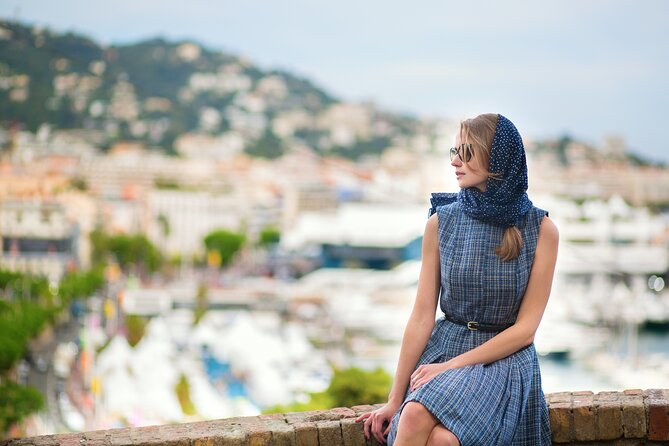
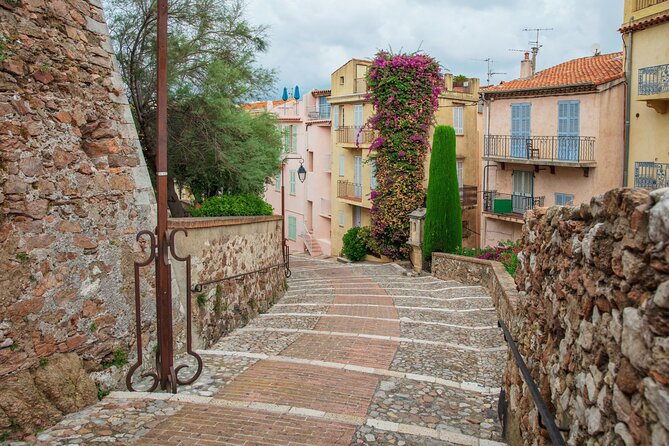
From the port, the route turns toward Le Suquet, Cannes’ old quarter. Rue du Suquet and the nearby Rue St. Antoine offer the kind of narrow, sloping, cobbled streets that many people picture when they think of old Cannes.
This is where the tour gains texture. The city’s famous waterfront can feel polished and open, while Le Suquet is shaped by the hill and its winding lanes. Local eateries line the streets, giving this section a more grounded feel than the grand hotel frontage along the coast.
You should wear shoes with a steady grip. The route is a walking experience, and the old quarter’s charm comes partly from its uneven, hilly streets. The tour information says most people can participate, but it does not promise a flat route or step-free access.
The guide allows about 18 minutes here. That may sound brief for an old district, but the walk is designed as a connected tour rather than a long stop in one place. You will see the character of Le Suquet, hear its stories, and keep moving through the historic center.
Marché Forville: Cannes at its most useful
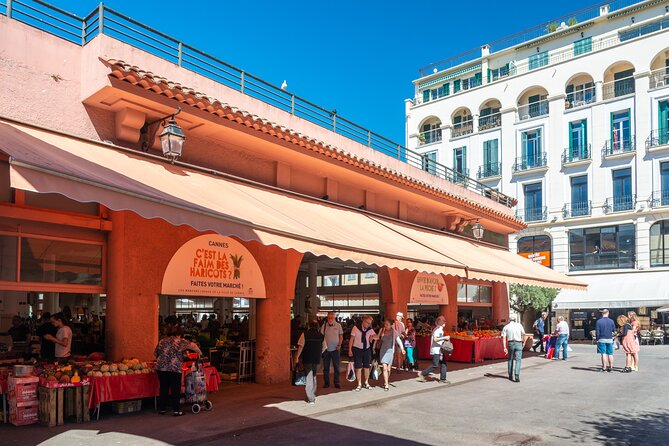
At the lowest point of Le Suquet, you reach Marché Forville, a covered market and one of the best places on the route to see everyday Cannes. The market includes a section devoted to flowers, so this stop adds scent and color to the city’s stone streets and seaside views.
I especially like the market’s place in the route. It breaks up the monuments and famous names with something practical. A market tells you more about how a city lives than another grand façade can, even if the visit is short.
The stop is scheduled for about 18 minutes. That is enough for a quick look, but not a long shopping session or a leisurely meal. If you want to buy something, ask the guide how much time is available before you get distracted by the food and flower stalls.
Because the market is covered, it can also provide a little relief from sun or light rain. Still, the overall experience requires good weather, and the tour may be moved or canceled if conditions are poor.
Rue Meynadier and the old retail spine
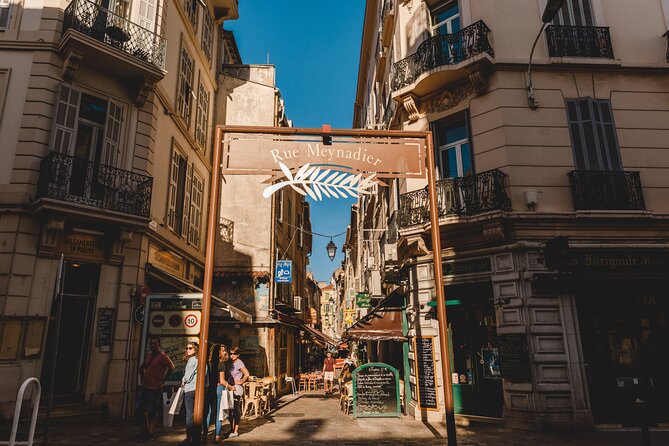
Next comes Rue Meynadier, a pedestrian shopping street with roots reaching back to the 16th century. Horses and carriages once used this route. Today, you follow it on foot, moving past butchers, cheesemakers, fashion shops, and sellers of local products.
This is one of the tour’s most useful stretches for understanding Cannes as a lived-in city. Rue Meynadier is not only about famous views. It connects food, shopping, and the old quarter in one walk, letting you see how the traditional center still serves daily needs.
The street is described as a place to follow your whims, but the tour’s timing is less whimsical: about 18 minutes. You can browse and take in the shopfronts, but you should not expect a full shopping break. The guide’s role here is to point out what matters and keep the private group moving toward the Suquet and central Cannes.
If you prefer a quiet walking route, this section may feel busy, especially at popular times. If you enjoy streets where a cheesemaker can sit beside a boutique, it is a welcome change from the carefully staged waterfront.
Rue Félix Faure and the meeting of old and new
The route then reaches Rue Félix Faure and the Allées de la Liberté, in the center of town at the foot of the historic district. This area sits between the refurbished Cours Félix Faure and the Pantiero promenade.
The setting brings together two sides of Cannes. One is local and historic, tied to the old center. The other looks outward, toward the port, festivals, visitors, and the international identity that made Cannes famous.
About 18 minutes is planned here. The value comes from the guide’s ability to connect places that might otherwise seem separate. Without that link, you could see a market, a shopping street, and a promenade as unrelated stops. Together, they show the gradual shift from old town to resort city.
This part also helps with orientation. Cannes is compact in its central zones, but its streets can feel confusing when you are seeing them for the first time. A private guide can make the route easier to follow and explain why the central spaces matter.
You can also read our reviews of more private tours in Cannes


The Palais des Festivals and the price of fame
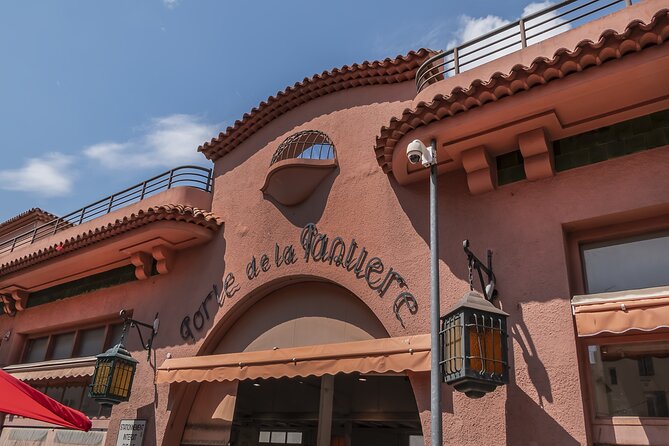
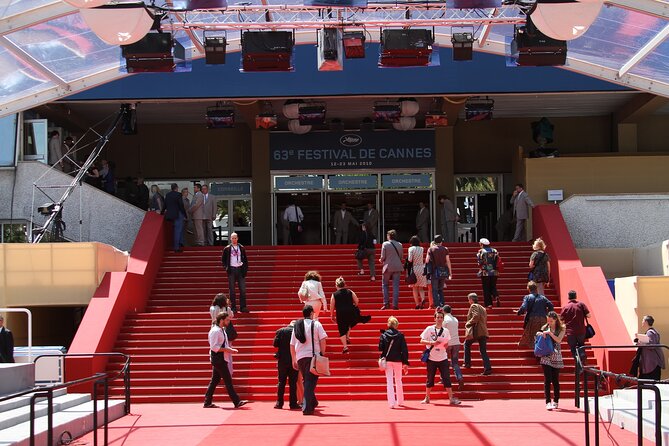
The walk continues to the Palace of Festivals and Congresses of Cannes, the convention center known for hosting the Cannes Film Festival, Cannes Lions International Festival of Creativity, and NRJ Music Award.
This is the point where the city’s global reputation becomes physical. You are no longer just hearing about Cannes as a film destination. You are looking at the place where major festivals and awards events take place.
The stop is listed at about 18 minutes, with no admission ticket included because the visit is an outdoor stop. Do not book this expecting an inside tour of the convention center. The appeal is the setting, the guide’s explanation, and the connection between the building and Cannes’ public image.
For film fans, this may be the most anticipated part of the route. For everyone else, it still helps explain why a relatively compact coastal city has such a large international profile. The contrast with Le Suquet is the point: one neighborhood feels rooted in old Cannes, while this building represents the city’s worldwide reach.
La Croisette and the final walk to the beach
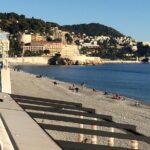
The tour ends along Boulevard de la Croisette, Cannes’ famous beachfront boardwalk. The beach beside it is a long public stretch of sand, giving you a final look at the city’s open seafront after the tighter streets of Le Suquet and Rue Meynadier.
This ending makes practical sense. You finish at Croisette Beach, not back at the starting point, so you can continue along the waterfront, settle into a beach visit, or make your own plans in the resort district. It also gives the walk a clear visual finish, from old harbor to public beach.
The final stop receives about 19 minutes. That is enough to take in the promenade and hear the guide’s closing context, but it is not a beach day. Bring your own plan if you want to stay by the water afterward.
La Croisette can feel polished and showy. That is not a flaw, but it is different from the market and old quarter. The route works best because it shows both sides instead of pretending Cannes is only one thing.
What the private format is really worth
This is a private activity, so only your group takes part. That matters most if you want to ask questions, adjust the walking pace, or focus on a particular part of Cannes without waiting for a large group.
The tour is offered in English, and confirmation is provided when you book. It is near public transportation, which makes the starting point at Quai Laubeuf reasonably practical for a day in Cannes. The listed end point is Croisette Beach, so plan your next move from the eastern waterfront rather than expecting to return to the port.
No guide name is provided, so you cannot choose a particular guide based on the information available. The rating is 4.8 from four reviews, and the strongest positive point is clear: the history and stories add value to the walk. One piece of direct criticism is also important. A participant found it informative and liked the historical stories, but felt the price was high because friends could walk the same areas for free.
That is a fair concern. Every stop has free admission, and you can cover much of the same ground on your own. The private fee makes sense only if the guide’s storytelling, route planning, and attention are worth more to you than saving money.
How $388.18 per person compares with a free walk
At $388.18 per person, this is not a budget introduction to Cannes. The price is especially noticeable because there are no museum tickets, tasting credits, transport rides, or other paid inclusions stated.
I would look at the cost in three ways:
- For a solo visitor: The price is hard to justify unless private guiding is a top priority.
- For a couple: The total cost becomes substantial, but personal attention may matter if you want a focused introduction.
- For a group: Group discounts are available, so the value may improve when the cost is spread across more people.
The key question is not if you can walk the streets without paying. You can. The question is if you want someone to connect Quai Saint-Pierre, Le Suquet, the market, old shopping streets, the festival center, and La Croisette into one usable story.
If you have only a short time in Cannes, that convenience may be worth paying for. If you enjoy making your own route and reading up before arriving, the price will probably feel steep.
Who will get the most from this Cannes walk
I would consider this tour a good fit for you if you want a short private introduction and prefer historical stories to a fast checklist of sights. It also suits a group that wants to stay together without adding strangers to the walk.
It works well as a first look before spending more time in Cannes on your own. The route gives you several useful areas to return to, especially Marché Forville, Rue Meynadier, Le Suquet, and the Croisette.
It may suit you less if you want extended market time, shopping, food tastings, museum interiors, or a slow beach visit. The schedule gives each location about 18 or 19 minutes, so the experience is broad rather than deep.
The route is also not ideal for anyone who needs a fully flat path. Most people can participate, but Le Suquet is hilly and cobbled. Ask before booking if your group has mobility concerns, since the supplied information does not give detailed accessibility guidance.
Practical advice before you go
Wear comfortable walking shoes and expect a route that changes from broad waterfront pavement to old streets and a hill. Cannes can look easy on a map, but the shift into Le Suquet makes footwear matter.
Plan your day around the weather. This experience requires good weather. If poor conditions cancel it, you will be offered another date or a full refund.
Keep your schedule flexible after the walk. Since the route ends at Croisette Beach, you can continue by the shore or make your way to another part of Cannes without retracing the route to the Old Port.
The tour lasts about 2 hours and 30 minutes. The seven stops account for most of that time, with short walking links between them. You will see a lot, but you should not expect long, unhurried visits at every place.
Free cancellation is available if you cancel at least 24 hours before the start time. Cancellations or changes made less than 24 hours ahead are not refunded or accepted, and the cut-off uses local time.
Should you book this private Cannes tour?
Book it if you want one English-language guide to connect Cannes’ harbor, old quarter, market, shopping streets, festival center, and beach in a single private walk. The history stories are the strongest reason to choose it, and the route gives you a useful sense of how local Cannes and international Cannes fit together.
Skip it if $388.18 per person feels out of proportion to a free-admission walking route. You can see these districts independently, and the tour does not include stated food, transport, or attraction tickets.
For a larger group using the available discount, the private format may make better financial sense. For one or two people on a tight budget, I would book only if personal guiding and efficient orientation matter more than cost.
FAQ
Where does the tour start?
The tour starts at Quai Laubeuf, 06400 Cannes, France.
Where does the tour end?
It ends at Croisette Beach Cannes.
How long does the experience last?
The walk lasts approximately 2 hours and 30 minutes.
Is the tour private?
Yes. Only your group participates in the activity.
What language is offered?
The tour is offered in English.
What places are included?
The route includes Quai Saint-Pierre, Rue du Suquet, Marché Forville, Rue Meynadier, Rue Félix Faure, the Palace of Festivals and Congresses of Cannes, and Boulevard de la Croisette.
Are admission tickets included?
All listed stops have free admission. No paid entrance tickets are stated as part of the experience.
Can most people take part?
Yes. The information says most people can participate, though the route includes the hilly and cobbled streets of Le Suquet.
What happens if the weather is poor?
The experience requires good weather. If it is canceled because of poor conditions, you will be offered a different date or a full refund.