REVIEW · PARIS
Bateaux Mouches Sightseeing Cruise on the Seine River in Paris
Book on Viator →Operated by Compagnie des Bateaux-Mouches · Bookable on Viator
Seine views without the walking strain. This Bateaux Mouches cruise strings together Paris’ biggest sights along the river in about 70 minutes, letting you skip some land-based stress while you glide past monuments like Notre-Dame and the Louvre.
I like the simple setup: two decks (inside or on top) plus a restroom onboard. I also like how the route compresses a lot of “wow” into a short window, so you get an overview fast and can plan what to revisit later on foot.
One thing to consider: the narration can be hard to hear depending on where you sit and how loud the crowd gets, so top-deck seating helps if you care about the commentary.
In This Review
- Quick key points before you go
- Why this Seine cruise feels like the smart first move
- Port de la Conférence: getting on the boat without losing your morning
- Two decks, one route: where you should sit for comfort and views
- The itinerary you’ll actually recognize: landmarks in walking-distance order
- Place de la Concorde: guillotine memories and Egypt’s obelisk
- The Louvre and its glass pyramid: from fortress to museum
- Hôtel de Ville: a city hall rebuilt from fire
- Conciergerie: royal palace, then a revolutionary prison
- Île de la Cité: the cradle of Paris
- Sainte-Chapelle: Gothic power, built over generations
- Île Saint-Louis (once île aux vaches): classic old Paris houses
- Pont Neuf: oldest stone bridge and Henri IV’s statue
- Musée d’Orsay: an old railway station turned art museum
- Les Invalides: gold dome, Napoleon’s tomb, and the military museum
- Eiffel Tower: Iron Lady engineering on full display
- How long is enough? The cruise distance and what it does not include
- Price and value: is about $20.40 worth it?
- Best timing: morning calm or sunset sparkle
- Who should book this Seine cruise?
- Small practical cautions (so your day stays smooth)
- Should you book Bateaux Mouches on the Seine?
- FAQ
- Are there toilets on board?
- Is WiFi available on the boat?
- Do I need a specific time slot?
- Does the cruise make intermediate stops?
- Can I buy snacks or drinks during the cruise?
- Is the cruise accessible for mobility needs and children?
Quick key points before you go
- Two-deck boat means you can choose shade/heat or open-air views
- Frequent departures from 10am to 9pm make timing easier than booking one rigid slot
- Landmark lineup hits Notre-Dame area, the Louvre, City Hall, and then the Eiffel Tower
- Upper deck is best for sound if you want the guide information clearly
- Cold-weather reality: the top deck can get chilly fast, especially at sunset
Why this Seine cruise feels like the smart first move
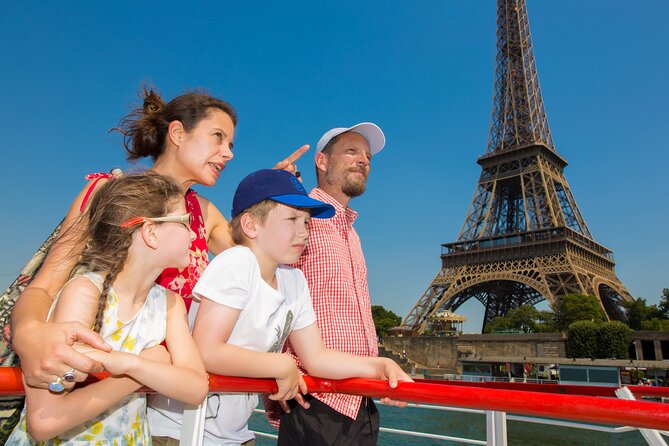
If you’re arriving in Paris and your legs are already tired, this is a clean way to reset. You trade crowds and traffic for a slow-moving viewpoint from the water, and the city suddenly makes more sense when you see how it lines up along the Seine.
I also like that the cruise is short enough to fit into almost any plan. Seventy minutes gives you the big-picture tour without eating your whole day. And since you’re on and off the boat quickly, you can pivot afterward to neighborhoods you actually want to explore.
You can also read our reviews of more boat tours in Paris

Port de la Conférence: getting on the boat without losing your morning
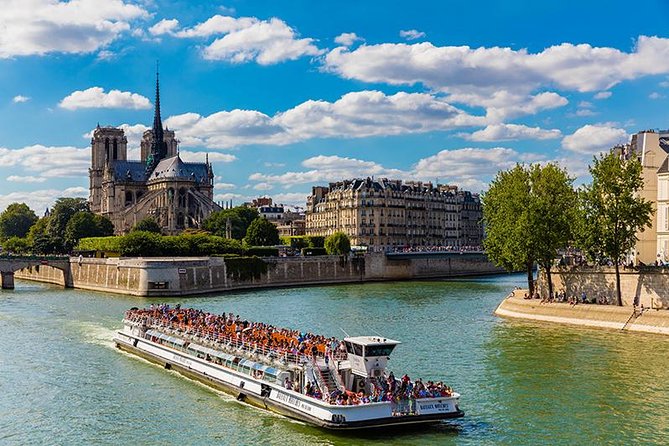
The meeting point is Port de la Conférence (75008), and the tour runs daily from 10:00 AM to 9:00 PM with departures every 30–45 minutes. That frequency matters. You’re not stuck waiting for one exact time, and you can adjust if the weather shifts or you’re running late.
Do plan for a quick ticket exchange at the desk if you booked through a voucher system. I’ve seen enough “wait in one line, then another” situations in Paris to treat this as normal. Once you’re holding the right ticket, boarding is generally straightforward, even when the quay is busy.
Also note the cruise doesn’t make intermediate stops. It’s a start-and-finish loop back to the same meeting point near Pont de l’Alma, so it’s best when you want an overview rather than a hop-on/hop-off sightseeing plan.
Two decks, one route: where you should sit for comfort and views
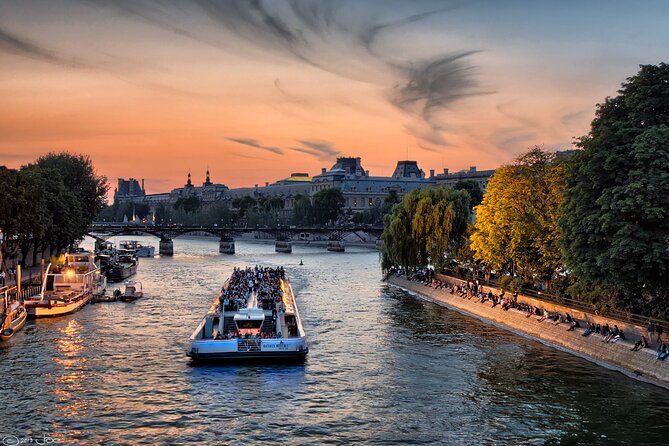
You get two levels to choose from: an air-conditioned interior and a roof-top deck with open-air views. If you want the classic photos with the skyline in frame, the top deck is the obvious pick. If you’re sensitive to cold or rain, go inside and still enjoy the monuments—just know the mood feels different when you’re not in the wind.
Here’s the practical trick: if you care about hearing the commentary, choose where the sound carries best. Some departures end up loud inside, and not every area hears the narration equally. In past cruises like this one, the upper deck has tended to work better for following what’s being said.
Weather can change your experience fast. In colder months, people cluster quickly for the best sightlines, and the top deck can feel brutal near sunset. Dress for that, not for what it feels like on land.
The itinerary you’ll actually recognize: landmarks in walking-distance order
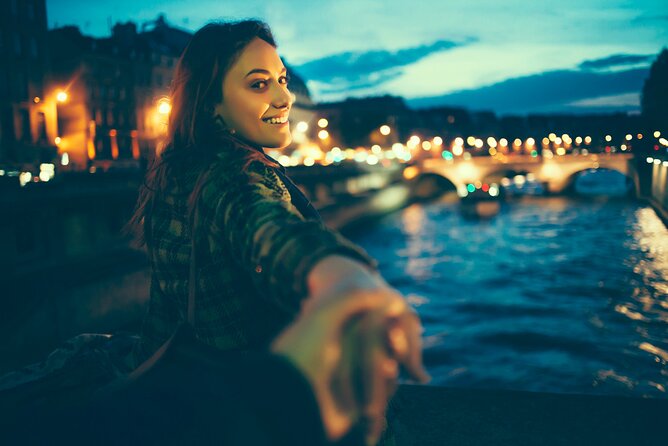
The cruise is designed so that you can identify major Paris sights from the river. What makes it work is pacing: you pass each landmark slowly enough to orient yourself, even if it’s your first trip to the city.
Place de la Concorde: guillotine memories and Egypt’s obelisk
You start in a grand square that dates to the 18th century. In 1792, this area was home to a guillotine that took thousands of victims’ lives, so you’re looking at beauty with a heavy shadow attached.
Then comes the obelisk. In 1836, King Louis Philippe installed it—a gift from Egypt. From the river, it’s one of those visuals that snaps your brain into “this is the real Paris” mode.

The Louvre and its glass pyramid: from fortress to museum
Next up is the Louvre area. It began as a stronghold in the 13th century, became a royal residence, and was transformed into a museum in 1793. Today, the museum holds over 35,000 works, including the type of masterpieces people fly across the world to see.
Since 1989, visitors enter through the glass pyramid designed by I. M. Pei. From the Seine, you don’t get museum entry, but you do get a perfect sense of where it sits in the city and why it’s such a magnet.
Hôtel de Ville: a city hall rebuilt from fire
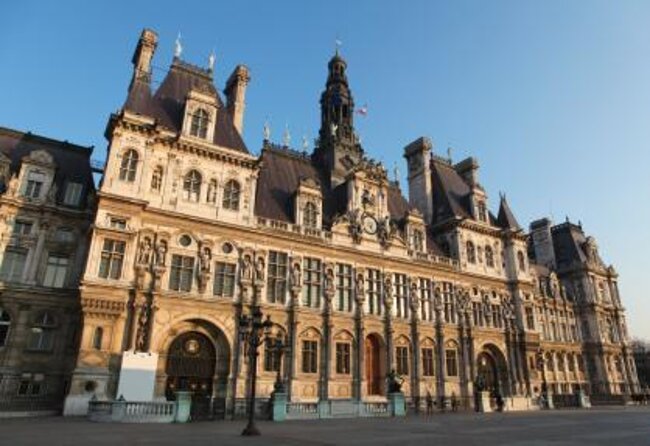
You’ll pass Hôtel de Ville, a neo-renaissance building that was rebuilt in the 19th century after being burnt down during the Commune rule of 1871. Today it serves as Paris City Hall.
From the water, it’s easier to appreciate the scale without fighting street-level crowds. It’s also a reminder that Paris landmarks aren’t frozen in time—they keep getting reshaped by history.
Conciergerie: royal palace, then a revolutionary prison
The Conciergerie is a key stop for understanding the French Revolution era. What remains of the palace of the first kings of France later became a prison during the Revolution.
From the river, it’s the kind of landmark you’d normally miss if you were just speed-walking between museums. This cruise helps you clock where the story elements are.
Île de la Cité: the cradle of Paris
Then the cruise moves to Île de la Cité, often described as the cradle of Paris. Here, the first inhabitants—the Parisii—settled back in the 3rd century BC.
This is one of the places where the river doesn’t just show buildings. It shows why the city’s center forms where it does. Even if you’re not stepping onto the island, you’ll remember it later when you walk nearby.
Sainte-Chapelle: Gothic power, built over generations
A major Gothic highlight comes next: Sainte-Chapelle. Construction began in 1163 and wasn’t completed until 1350, and it earned a famous mention through Victor Hugo in The Hunchback of Notre-Dame.
The restoration work is tied to architect Viollet-Le-Duc in the 19th century. From the Seine, you’ll often catch the sheer vertical feel of the architecture, which is harder to notice from street level.
Île Saint-Louis (once île aux vaches): classic old Paris houses
Next, you pass the island area that was once known as île aux vaches (cow’s island). Today it’s loved for its 16th and 17th century houses, built mostly by architect Le Vau.
This is a different kind of sightseeing than the big monuments. You’re watching residential Paris—smaller scale, lots of character. It’s the kind of scene that makes you want to wander once you’re back on land.
Pont Neuf: oldest stone bridge and Henri IV’s statue
You’ll go by Pont Neuf, the oldest stone bridge in Paris. It opened in 1606, and at its center stands the equestrian statue of King Henri IV, nicknamed Vert Galant (the Green Gallant) because of his many female conquests.
This stop is great for orientation. Bridges are where you feel the city’s layout most clearly, and Pont Neuf is one of the anchors.
Musée d’Orsay: an old railway station turned art museum
The cruise also shows the former railway station that became Musée d’Orsay. Built in 1900, it’s now a museum displaying major 19th-century works, with special attention to Impressionist art.
From the Seine, it’s a reminder that Paris doesn’t just build monuments. It repurposes them. And if you’re an art lover, this can help you decide whether you want to commit to Orsay later.
Les Invalides: gold dome, Napoleon’s tomb, and the military museum
You’ll see the famous gold dome of Les Invalides. It was originally built as a hospital for war wounded under Louis XIV. Today it houses the tomb of Napoleon I and the Musée de l’Armée.
This part is especially effective from the water because the dome shape reads clearly against the sky. You get that “Paris has a visual signature” feeling even if you don’t know all the details on the first pass.
Eiffel Tower: Iron Lady engineering on full display
Finally, you reach the iconic finale: the Eiffel Tower, nicknamed the Iron Lady. It was designed by engineer Gustave Eiffel for the 1889 World Exhibition, rising 324 metres high and weighing about 10,000 tonnes.
If you time it near evening, you’ll notice the tower’s lights and the shift in atmosphere. Even without going up, the river view makes it feel more personal than a distant postcard shot.
How long is enough? The cruise distance and what it does not include
The experience is about 1 hour 10 minutes (often experienced as roughly 70 minutes). That’s plenty for a first overview, but it’s not a long-distance journey.
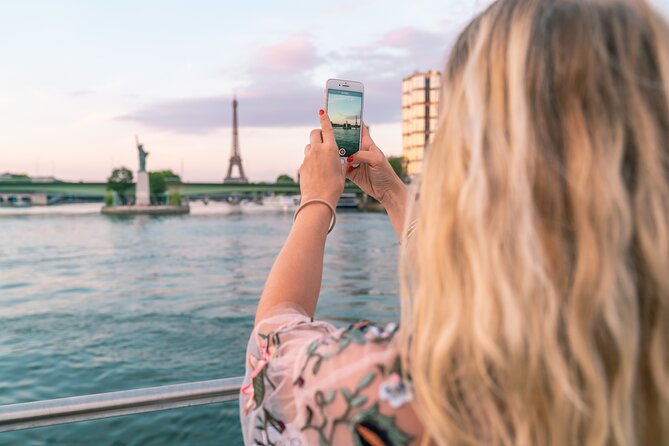
One practical expectation: this route does not go far enough down the Seine to reach far-off landmarks like the Statue of Liberty. Think of it as “Paris highlights close to the center,” not a full Seine voyage to the ends of the map.
Price and value: is about $20.40 worth it?
At around $20.40 per person, the value is mostly about time and convenience. For roughly an hour, you see a tight stack of major landmarks without navigating as many street crossings, queues, or lines.
You also get a few useful inclusions:
- Restroom onboard
- Two decks, including air-conditioned interior
- Flexibility with departures throughout the day
- Easy boarding since you can board at any available time rather than needing a fixed seat reservation
Add in that there’s no WiFi onboard, but you don’t really need it when the views are the point. Snacks and drinks are available for purchase, which helps when you’re staying out for sunset.
If you compare this to paying for multiple paid entries just to fill time, the cruise often wins as the “first plan” for a trip. It’s not a replacement for museum days. It’s a setup tool.
Best timing: morning calm or sunset sparkle
Pick your departure like you’re choosing the mood of your photos. Daytime is comfortable and easier for sight recognition. Evening can be magical, especially when the Eiffel Tower starts to light up.
If you go late, dress warm. Several experiences on this route turn into cold-weather tests on the top deck, particularly in December and other cooler seasons. Inside is a straightforward backup, but the open-air deck is where the skyline feels most dramatic.
Who should book this Seine cruise?
This cruise fits best when you want:
- a quick orientation to where major sights sit along the river
- a low-effort way to see monuments without crisscrossing the city
- an outing that works for all ages, including families with children and pushchairs
It can be a good choice for first-time visitors because the lineup is recognizable and the route helps you remember where things are. It’s also a solid “break” day plan if you’ve been walking all morning.
Small practical cautions (so your day stays smooth)
- Audio clarity varies: the narration can be hard to hear when it’s loud or when you’re seated where sound doesn’t carry well. Upper deck seating tends to help.
- Boarding lines can happen: on busy holiday periods, you might stand in line longer than you expect, and boarding can feel disorganized at first.
- Crowds are part of the deal: this cruise has a large capacity, so expect a lively mix of families and groups. That can be fun, but it also affects how easy it is to hear details.
If your top priority is quiet and perfectly audible commentary, you might want to pick a less peak departure and sit where you can follow the narration.
Should you book Bateaux Mouches on the Seine?
I think it’s a good booking if you want your Paris highlights in one efficient slice. The views-from-the-water factor is real, and the cruise does a lot of heavy lifting in a short time. For most people, it’s one of the best ways to get your bearings fast without turning your day into a logistics exercise.
Skip it only if you’re very sensitive to crowd noise or you need narration to be crystal clear no matter what. In those cases, you’ll want a plan that prioritizes sound and quiet—or you’ll accept that the experience is mostly about seeing, not hearing.
FAQ
Are there toilets on board?
Yes. Free toilets are available on board.
Is WiFi available on the boat?
No. WiFi is not included on board.
Do I need a specific time slot?
No. You don’t need to book a specific time slot. You can board at any available time during the day.
Does the cruise make intermediate stops?
No. The cruise starts and returns to the same point and does not make intermediate stops.
Can I buy snacks or drinks during the cruise?
Yes. Snacks and soft drinks are available for purchase, including tea or coffee at extra cost.
Is the cruise accessible for mobility needs and children?
The boats are accessible for people with reduced mobility and children in pushchairs. The cruise is suitable for guests of all ages, with young children being the responsibility of adults.