REVIEW · PARIS
Award-Winning Paris French Bakery Experience — Le Marais, 4th Arr
Book on Viator →Operated by A Taste of Paris (Voyages LLC) · Bookable on Viator
Your hands knead real Parisian dough. I like that this Le Marais baking class is taught inside a working boulangerie with a master baker, so you see how the bread world actually runs. You’ll start with a traditional French breakfast or afternoon goûter and sample baked treats before rolling up your sleeves.
The small-group size (max 9) is another big plus, because you’re not just watching—you’re getting hands-on time. One thing to plan carefully: morning and afternoon tours can run from different locations, so show up at the correct address for your time window, not just the general neighborhood.
In This Review
- Key Highlights That Matter
- Le Marais Meeting Point: Finding Miss Manon Without Stress
- Start With French Breakfast or Goûter: Why It Changes the Class
- Tour the Working Boulangerie: What You Learn By Seeing Ovens in Action
- The Hands-On Part: Baguettes, Croissants, and Pain au Chocolat
- How Much Is Truly Hands-On? A Realistic Expectation
- Space and Timing: 2 Hours in a Busy Bakery
- Take Home Your Baguette: The Best Souvenir Is Edible
- Price and Value: Is $114.88 Worth It?
- Who This Works Best For (and Who Might Be Frustrated)
- Quick Booking Checklist Before You Go
- Should You Book This Paris Bakery Class?
- FAQ
- How long is the experience?
- Where does the tour begin?
- Do morning and afternoon tours meet at the same location?
- Is hotel pickup included?
- What language is the class offered in?
- How many people are in the group?
- What do I eat when I arrive?
- What do I make during the class?
- What do I take home?
- Are children allowed?
Key Highlights That Matter
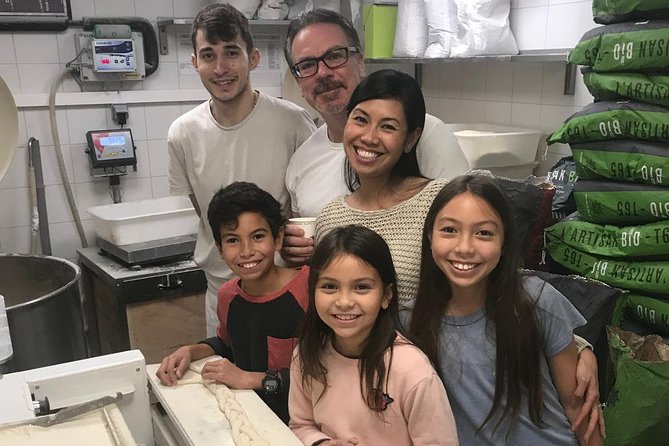
- Real bakery workflow: you learn from what’s happening in back, not from a staged demo
- Small-group pacing: max 9 keeps the class focused and questions welcomed
- Master baker guidance in English: you may hear teaching styles from instructors praised like Mourad, Alice, Lisa, Elyse, or Tuc
- Baguette take-home value: you leave with the loaf you made, not just a certificate
- You eat first: breakfast/goûter on arrival plus samples before you bake
Le Marais Meeting Point: Finding Miss Manon Without Stress
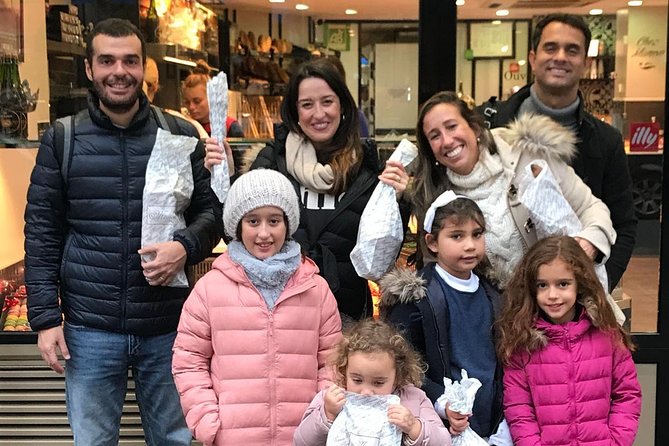
This experience starts at Miss Manon, 87 Rue Saint-Antoine, in the 4th arrondissement. You’ll head there on your own (no hotel pickup), so give yourself a little buffer to locate the bakery entrance and get checked in.
One practical note from the way these classes operate: morning and afternoon tours use different locations. The address on your confirmation details matters, so I suggest taking a screenshot of it and checking it the same morning you go.
Also, expect some movement. There’s mention in the experience feedback of steep stairs, so if stairs are an issue for you, plan accordingly before you book.
You can also read our reviews of more tours and experiences in Paris.



Start With French Breakfast or Goûter: Why It Changes the Class
You begin with a traditional French breakfast at arrival. If your tour runs in the afternoon, you’ll get the goûter version (the French afternoon snack), which is a smart match for pastry-focused lessons.
This first hour-of-mouth-feel matters more than it sounds. You taste the styles you’re about to make, then you’re baking with a clearer idea of what the final texture should feel like.
Before you start hands-on, you’ll also sample other baked treats. That small tasting break helps you connect the lesson to real flavors and not just technique.
Tour the Working Boulangerie: What You Learn By Seeing Ovens in Action
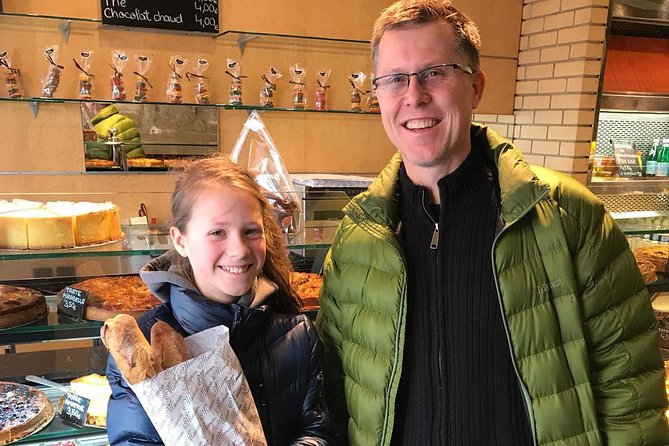
After the initial food, you’ll get a bakery tour, then head into the backroom where the bakers work. This is where the experience earns its reputation: you’re not in a test kitchen. You’re in a real production space with real equipment.
The value here is context. You’ll learn how the process moves from handmade steps to the industrial machines and ovens used for batch production, and that gives you a realistic picture of how Paris keeps the bread supply moving every day.
You’ll also see the physical rhythm of a bakery—where tasks happen, how the space is organized, and why timing is everything. Even if you’ve baked at home, watching how professionals manage temperature, dough handling, and oven cycles helps you understand why some recipes work reliably and others don’t.
The Hands-On Part: Baguettes, Croissants, and Pain au Chocolat
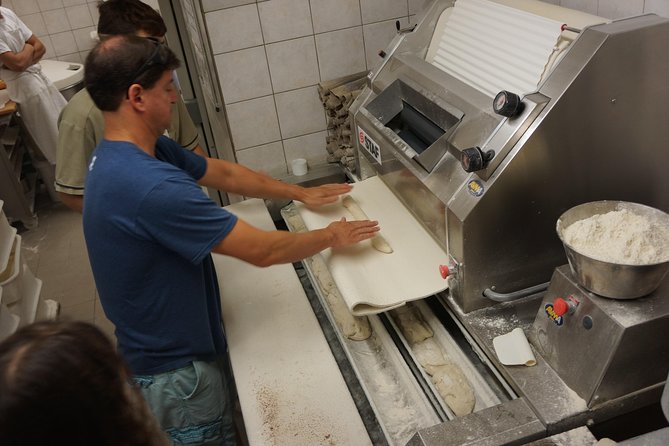
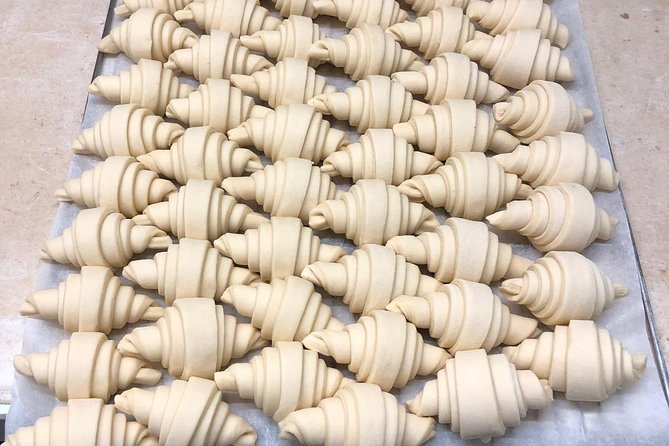
The core of the class is hands-on baking under the direction of a master French baker. You’ll mix, knead, roll, and bake the items taught during the session, including baguettes and croissants, plus pain au chocolat.
You’re also learning the shaping logic. For baguettes, that means understanding how to form dough to support proper expansion and that classic long-loaf look. For croissants and chocolate pastries, you’re training your hands to handle dough gently enough to keep the structure intact.
A fun detail that shows up across instructor feedback is humor and patience. People specifically call out guides like Mourad and Alice (and others such as Lisa, Elyse, and Tuc) for being clear, engaging, and good with both adults and kids. If you’re coming to learn, that teaching style matters because pastry dough is fussy—you want instruction that makes the steps feel doable.
How Much Is Truly Hands-On? A Realistic Expectation
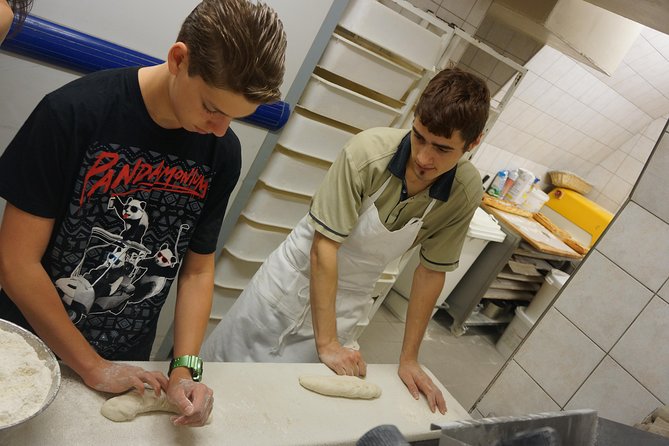
This is the part I think you should calibrate before you go. The class is hands-on, but some steps can involve pre-prepared dough or workflow set up for a group schedule. That can reduce how much you feel like you started from raw flour-to-finished-product, even though you still do key parts like handling, shaping, and baking.
If your goal is learning every single technique from absolute scratch, plan for a guided workshop rather than a full home-economy bread boot camp. Still, most of what makes bread and pastries hard—timing, dough feel, and oven expectations—is covered in a way you can actually use later.





Space and Timing: 2 Hours in a Busy Bakery
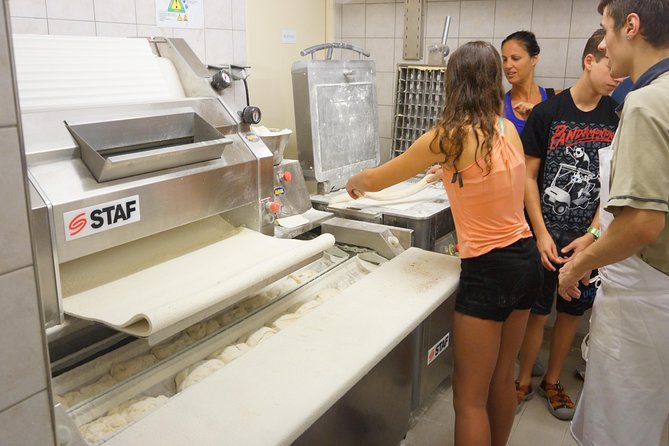
The experience runs about 2 hours. In a working bakery, that time has to cover arrival food, instruction, hands-on baking, and clean-up, so the pacing is structured and efficient.
One practical consideration is workspace layout. There’s a mention of a cramped setup with limited table space in a high-traffic operating area. That doesn’t usually ruin the experience, but if you’re someone who hates tight quarters, know that you’ll be working close to others while ovens and displays are in the active flow.
Also, because the schedule is tight, you won’t have time to wander. Come dressed and ready to work, and treat the whole session like a real working shift: listen carefully, follow the baker’s lead, and don’t overthink it.
Take Home Your Baguette: The Best Souvenir Is Edible
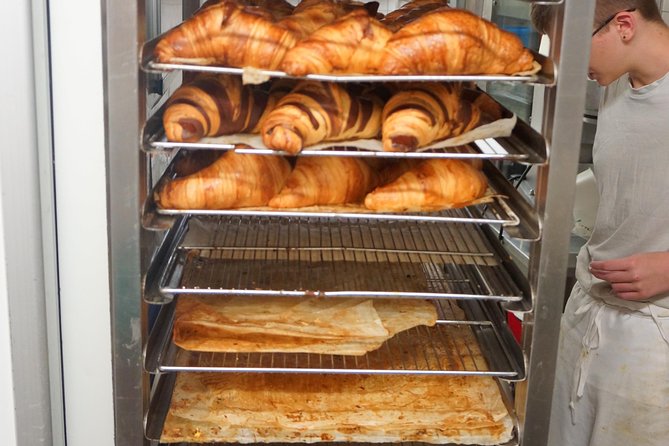
The biggest guaranteed payoff is that you leave with your very own homemade baguette. That’s not just a token. It’s a direct result of what you did—proof that the class teaches skills you can repeat.
This also turns the class into a practical souvenir. You can carry the bread back the same day and use it immediately, which is a lot more satisfying than bringing home something that won’t get eaten.
And once you bake bread successfully, it changes how you see the city. After making your own baguette, you start noticing crust color, scoring patterns, and how bakery windows in Paris translate to real dough behavior.
Price and Value: Is $114.88 Worth It?
At $114.88 per person, this isn’t the cheapest way to spend a morning or afternoon in Paris. But value here isn’t just the price tag—it’s what you’re buying.
You’re paying for three things that are hard to replicate elsewhere:
- A guided, small-group class (max 9) with a master French baker
- Hands-on baking in a real production bakery, including baguettes and croissants, plus pain au chocolat
- Food on arrival plus a take-home baguette you made yourself
If you’re the kind of traveler who likes learning a skill you can practice at home, the cost makes more sense than if you just want a quick photo stop. For foodie travelers, families, and anyone with a baker in the family (or a secret desire to become one), the workshop format is exactly the kind of experience that justifies the spend.
Who This Works Best For (and Who Might Be Frustrated)
This class is a great fit if you want:
- Hands-on cooking time more than a passive tasting
- A small group and clear instruction in English
- The satisfaction of making something classic like a baguette and taking it home
It can be less ideal if you:
- Can’t manage stairs or crowded working spaces
- Want a course that guarantees every stage is completely from scratch
- Are the type who needs a perfectly flexible plan, since morning and afternoon groups can use different locations
If you’re traveling with kids, it can be especially rewarding. Feedback notes that instructors can be patient with children and keep the experience fun and paced for families.
Quick Booking Checklist Before You Go
To make the day smooth, I’d do these three things:
- Confirm your time slot and the exact address for your morning or afternoon session
- Wear something you can work in (you’re kneading and shaping dough)
- Plan to stay engaged for the full 2 hours and not treat it like a casual stroll
The bakery environment is active, so arriving on time isn’t optional. It’s how you get the full breakfast/goûter, the full instruction, and the bread take-home that makes the class worth it.
Should You Book This Paris Bakery Class?
I’d book it if you want a real working-bakery experience with a master baker, clear English teaching, and genuine hands-on results—especially if the idea of making a baguette is a bucket-list goal for you.
I’d think twice if stairs are a problem for you, or if you’re expecting a completely unguided, start-to-finish from-scratch bread journey. In that case, look for a different kind of cooking experience with fewer production constraints.
Overall, this one is strong value for skill-focused food travelers. You’re not just eating Paris bread—you’re learning how it’s made, with a loaf in your hands at the end.
FAQ
How long is the experience?
It runs about 2 hours.
Where does the tour begin?
The meeting point listed is Miss Manon at 87 Rue Saint-Antoine, 75004 Paris, France.
Do morning and afternoon tours meet at the same location?
No. Morning and afternoon tours are held at different locations, so you need to go to the correct address for your scheduled time.
Is hotel pickup included?
No. Hotel pickup and drop-off are not included.
What language is the class offered in?
The experience is offered in English.
How many people are in the group?
The maximum group size is 9 travelers.
What do I eat when I arrive?
You’ll have a traditional French breakfast at arrival (and if you’re on an afternoon session, it’s described as a goûter).
What do I make during the class?
You learn to make baguettes, croissants, and pain au chocolat.
What do I take home?
You take home a baguette you made during the experience.
Are children allowed?
Children must be accompanied by an adult.