REVIEW · GERTWILLER
Alsatian brunch – wine tasting & Immersive wine cellar tour
Book on GetYourGuide →Operated by Vins Zeyssolff - Au Péché Vigneron · Bookable on GetYourGuide
On paper, a wine tour plus brunch sounds like a good plan. In real life, the 180° video projected on barrels makes the whole morning feel different from your average tasting. It’s in Gertwiller, on the Alsatian wine road, at Vins Zeyssolff – Au Péché Vigneron.
I especially like how the experience stays clear and kid-friendly, with a video that explains how Alsace wines are made in a way children can follow. You also get a tasting of 5 Alsace wines paired with a proper brunch made of both sweet and salty local treats.
One thing to watch: the tour runs in English or French depending on the time slot, so it’s smart to check language options before you book.
In This Review
- Key points you should know
- Entering a cellar where the video wraps around the barrels
- Before the cellar: a kid-friendly Alsace wine making primer
- The tasting of 5 Alsace wines: how to get value from the glass
- Brunch in the tearoom: sweet and salty local delicacies that work
- Why the family history presentation feels personal (not scripted)
- Price, timing, and small-group comfort for a $64 morning
- Who this tour suits best (and who might want something else)
- Should you book? My honest take
- FAQ
- What is included in the Alsatian brunch, wine tasting, and cellar tour?
- How long does the experience last?
- Where does the tour start?
- Is the tour available in English?
- Is this tour suitable for children?
- How large is the group?
- What makes the cellar tour different?
Key points you should know

- 180° barrel projection in the cellar: a visual storytelling twist on a classic wine visit
- Tasting 5 Alsace wines: enough variety to find what you actually like
- Brunch with sweet and salty local delicacies: not just pastries, and it’s more than a snack
- Child-friendly start and activities: children can choose directly on site, with juice included
- Small group (up to 10): easier questions, less waiting around, smoother pace
Entering a cellar where the video wraps around the barrels

If you’ve ever done a wine tour that feels like standing still while someone talks, this one breaks the pattern. The big moment happens in the cellar, where wooden barrels sit beneath a 180° video projected onto them. The effect is theatrical without being cheesy. It’s basically wine education with a stage set built from the real thing.
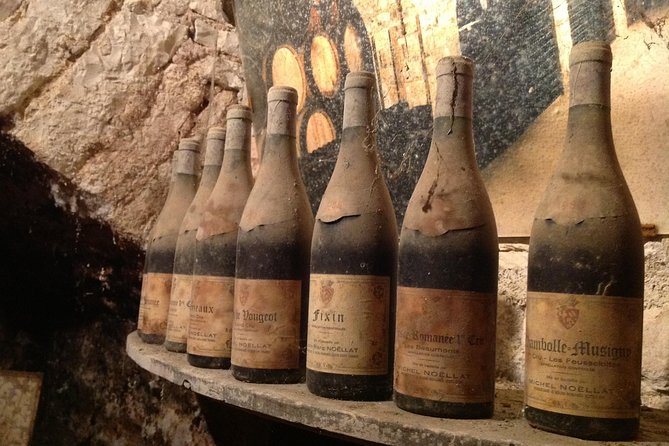
The cellar itself matters, too. You’re not looking at polished props. You’re walking around very old wooden barrels (over a hundred years old), and that gives the tasting a grounded feeling. It helps you understand that Alsace winemaking isn’t just about what’s in the glass today. It’s about time, storage, and family work.
One practical tip: wear comfortable clothes and shoes. Cellars can be cool, and you’ll be moving through spaces where you’ll look up, watch, and listen. You don’t need anything fancy—just plan to stand and sit comfortably for about 90 to 150 minutes total, depending on the start time.
You can also read our reviews of more food & drink experiences in Gertwiller

Before the cellar: a kid-friendly Alsace wine making primer

The morning starts at 156 Rte de Strasbourg, in Gertwiller. From there, you begin in the wine shop with a guide explaining the basics. Then comes a video about how Alsace wines are made, designed to be understandable for children, not just adults.
That detail is more important than it sounds. Wine can be full of jargon—grape varieties, soil, fermentation, aging—and kids often bounce off it. Here, the tone is made for mixed groups, so you’re not spending half the time translating in your head. Adults still learn, but children don’t feel like they’re trapped in an adult lecture.
The pacing is also worth noting. You’re not thrown straight into tasting. You get a framework first, so when you later taste five different wines, you have something to hang the flavors on.
The tasting of 5 Alsace wines: how to get value from the glass

The tasting portion is one of the best ways to judge whether this tour is worth it for your palate. You’ll sample five Alsace wines, with commentary from a live guide. Five may not sound huge, but it’s enough to notice differences without turning the experience into a marathon.
Here’s how I’d approach it so you actually get something out of the tasting:
- Taste in small sips and note what hits first: fruit, acidity, spice, or minerality
- Pay attention to the style of bubbles and texture if you’re offered any sparkling or crisp wines (Alsace is known for them)
- Ask yourself what you prefer rather than trying to “solve” wine like a puzzle
One of the strongest themes from real tasting experiences is that the tour helps people identify personal preference fast. For example, one taster specifically learned they prefer crémant from mineral soil. You won’t get that conclusion from a single sip alone. But by tasting multiple Alsace styles side by side, you can start mapping what you like—so your next bottle purchase in France feels smarter.
Also, this is not a take-it-or-leave-it tasting. The wines are part of a guided morning that includes explanation, cellar context, and then brunch. That combination is what turns a tasting from a quick sip into a usable experience.
For kids: the tour is designed with them in mind. Children are offered choices on site and can have a juice tasting, so the morning stays fun for the whole group.
Brunch in the tearoom: sweet and salty local delicacies that work

After the cellar, the tasting continues in the tearoom area with brunch. This is the part where many wine tours fall short: they serve something small, sweet-only, and call it brunch. Here, you get an assortment of sweet and salty delicacies, which makes it feel like a meal rather than a snack.
Expect a mix of flavors and textures, something like a high-tea style spread—enough variety that you can build your own plate instead of eating the same item over and over. The staff also pair the food experience with coffee, and the flow works well after wine tasting: you get time to reset your palate, mingle, and enjoy the day.
What makes this valuable is not just the food itself. It’s timing and pacing. By the time you reach brunch, you’re mentally ready for a break. You get to taste and then eat, instead of tasting and then rushing out to find lunch somewhere else. If you’re visiting Alsace and want one efficient stop that covers both wine education and real local food, this combo is a strong argument for booking.
And yes, it’s built to be family-friendly. Mixed groups can usually tolerate wine tourism better when there’s a satisfying meal in the middle. Kids get choices on site, and adults still get to enjoy the wines as part of a longer, more human-scale experience.
Why the family history presentation feels personal (not scripted)

The cellar visit isn’t only about old barrels and videos. You also discover family history through a scenographic space, with the 180° video projected directly onto the barrels. It’s presented like a story, not a lecture, which matters if you’re bringing children or if you just want your brain to stop working like a textbook.
This part can land in different ways depending on you:
- If you like wine details, the visuals give context to what winemaking looks and feels like inside a cellar
- If you’re more food-and-vibe oriented, the theatrical staging keeps attention without needing deep technical knowledge
There’s also a credibility layer. The experience has been recognized with awards including Trophée du tourisme Alsace (2021) and Trophée de l’Oenotourisme (2022), plus a marketing prize (France CIVA 2023). Awards don’t automatically make a tour great, but they suggest the operation has been doing this for a while and refining the visitor experience.
If you’re the type who likes your tourism grounded, look at the barrels and the setup and treat the video like a guide to the space. Don’t overthink it. Just watch, listen, and connect it to what you tasted earlier.
Price, timing, and small-group comfort for a $64 morning

At $64 per person, you’re paying for three things that most tours separate: wine education, guided cellar presentation, and a real brunch with sweet and salty options. For many travelers, that’s where the value comes from. You’re not just buying five small pours. You’re buying a guided experience that keeps you in one place for roughly 90 to 150 minutes and feeds you during the same window.
The small-group size also changes the feel. With a limit of 10 participants, you’re less likely to lose the guide in a crowd. That’s useful when you’re trying to understand why Alsace wines taste the way they do. It also helps with mixed ages. A family group can ask questions without the whole schedule turning into a shuffle.
Timing matters mainly for language. The tour is offered in English or French depending on the time slot. If language is a priority for your group, check the slot details early. You don’t want to show up thinking everyone will be covered in your preferred language and then realize you booked the wrong one.
What about logistics once you arrive? Plan for a calm, guided flow: start at the address (156 Rte de Strasbourg), then move through shop explanation, cellar presentation, and finally the tearoom brunch area. This is not a “run across town” type of activity. It’s more like a well-run morning program where you can settle in.
Who this tour suits best (and who might want something else)

This experience is a great fit if you want:
- A family-friendly wine stop where kids have their own choices and activities
- A structured tasting that includes food, so you don’t need to plan the rest of your meal
- A unique presentation, especially that barrel video concept, which gives you something visual to remember
It may be less ideal if you want a super technical wine seminar. This tour focuses on making the story understandable, with a guided tasting and a video-based cellar explanation. You’ll learn plenty, but the goal is clarity and enjoyment over lab-style details.
Still, even for wine enthusiasts, five wines is a practical way to compare styles and identify preferences. If you’re picky about what you like, this is one of the easier ways to get that clarity in a short visit.
Should you book? My honest take

Yes, I’d book it if you’re doing Alsace and you want one morning that covers wine, cellar atmosphere, and a satisfying brunch. The strongest reason is the combination of the 180° barrel projection with a real tasting of five Alsace wines and a brunch that’s not just a token snack. That mix turns it into a full, memorable block of time instead of a quick stop.
Before you hit Reserve, do two quick checks:
- Confirm whether the time slot offers English or French
- Go in expecting a guided, family-friendly experience with food, not a pure wine-tasting-only event
If that matches your travel style, this is the kind of tour you’ll be glad you penciled in.
FAQ

What is included in the Alsatian brunch, wine tasting, and cellar tour?
You get a commented wine tasting of five Alsace wines, a video about how Alsace wines are made, a visit to the cellar with the 180° video projected on barrels, and a brunch with sweet and salty delicacies.
How long does the experience last?
The duration is 90 to 150 minutes, depending on the starting time you choose.
Where does the tour start?
The meeting point is 156 Rte de Strasbourg.
Is the tour available in English?
Yes. The experience is available in English or French, but the exact language depends on the time slot, so it’s best to confirm when booking.
Is this tour suitable for children?
Yes. It’s child-friendly, includes a child-appropriate video about how wines are made, and children can make choices on site, including a juice tasting.
How large is the group?
It’s a small group, limited to 10 participants.
What makes the cellar tour different?
The cellar has wooden barrels over a hundred years old and features a unique 180° immersive video projected on the barrels that tells the family story and context behind Alsace winemaking.