REVIEW · VIENNE
Vienne: Private Walking Tour with Guide
Book on GetYourGuide →Operated by TOUR FRANCE EXPERIENCE · Bookable on GetYourGuide
Vienne’s greatest surprise is how much Roman history fits into a compact French town beside the Rhône. On this two-hour private walk, you move from an ancient road and milestone to a first-century BC temple, with a medieval cathedral and archaeological garden along the way.
I like the private format, since your guide can adjust the pace and explain details that are easy to miss on your own. I also like the meeting point at the tourist office, which gives you a clear place to begin and finish.
The main limitation is time. Two hours is enough for an excellent introduction, but not for a slow visit to every Roman site or an interior tour of the Roman theater. This is a walking overview, not a full museum day.
In This Review
- Key points to know before booking
- Why Vienne makes a strong two-hour walking stop
- Starting at the Tourist Office of Vienne
- The Jardin de Ville and its Roman road
- Saint-Maurice Cathedral’s Romanesque-Gothic facade
- The Temple of Augustus and Livia
- Cybèle archaeological garden and Roman remains
- What the private guide adds
- Is $235 per person good value?
- Timing, walking, and who should book
- My call: book it for context, not access
- FAQ
- Where does the Vienne walking tour begin?
- Where does the tour finish?
- How long does the private walking tour last?
- What languages does the guide speak?
- Is this a private group tour?
- Are entrance tickets included?
- Is transportation included?
- Can I bring luggage or a large bag?
- Is the tour suitable for people with mobility impairments?
Key points to know before booking
- The Temple of Augustus and Livia is the star stop: This first-century BC monument is one of France’s best-preserved Roman buildings.
- The tour begins and ends at the tourist office: You meet your guide outside, where a sign with your name identifies the right person.
- The Jardin de Ville offers more than a pleasant break: You can see part of an ancient Roman road and a milestone honoring Emperor Constantine.
- The guide speaks English or French: Sley and Isobel are among the guides associated with this experience.
- The Roman theater is viewed from outside: Plan on seeing the monument without an included interior admission.
- This suits small private groups: It is best for people who want personal explanations rather than a large group lecture.
Why Vienne makes a strong two-hour walking stop
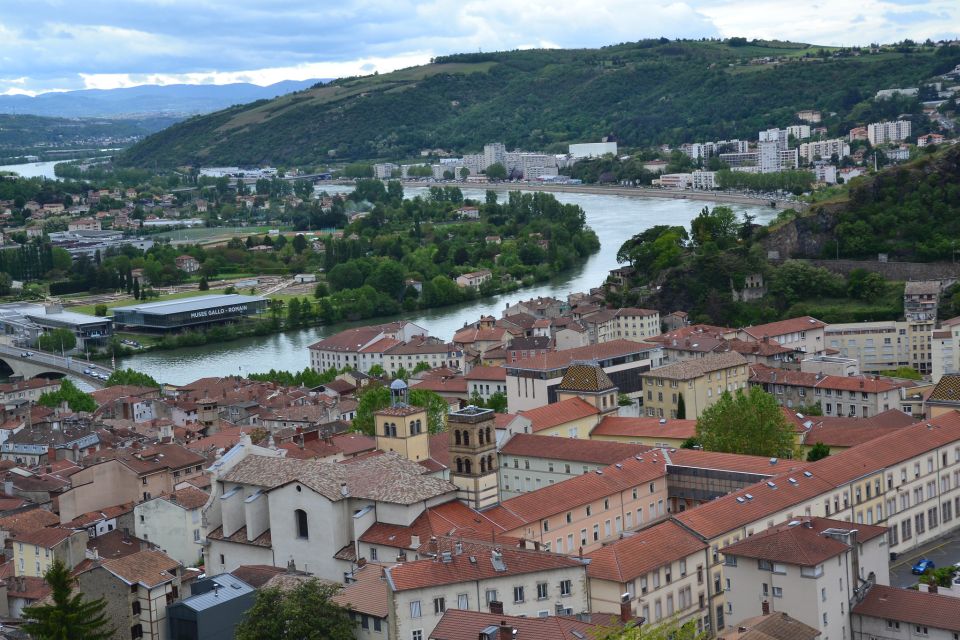
Vienne is easy to overlook beside better-known French destinations, yet its streets carry an unusual mix of Roman and medieval history. The town sits along the Rhône in the Auvergne-Rhône-Alpes region, and its historic center brings major monuments close together.
That compact layout matters. You are not spending half the tour in a vehicle or waiting for a large group to gather. Instead, you walk from one site to the next with a licensed guide who can connect the remains to the town’s wider past.
I would think of this as a first look with context. The monuments are impressive on their own, but the guide helps you understand why a Roman temple survived, how a road fragment fits into the town, and what changed when Vienne became a medieval center.
The route also has a nice change of mood. You begin in a public garden, pass a grand cathedral, encounter Roman remains, and finish back at the tourist office. It is varied enough to keep two hours moving without feeling like a checklist.
Starting at the Tourist Office of Vienne
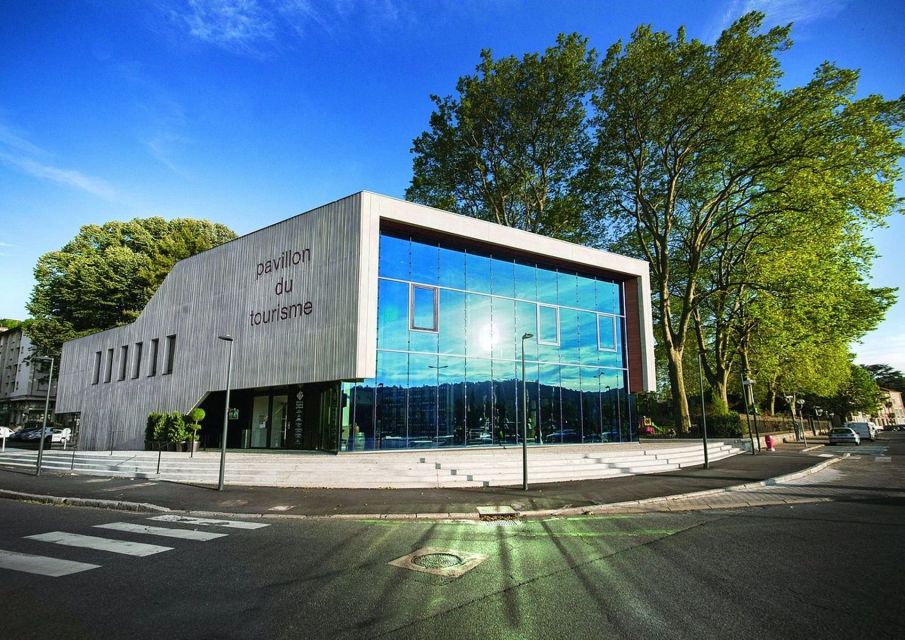
The meeting point is in front of the Tourist Office of Vienne and its region. Your guide carries a sign with your name, a small but useful detail when you are arriving in an unfamiliar town.
The walk returns to the same place at the end. That makes the tour easy to fit into a day of independent sightseeing, especially if you are using Vienne as a short stop and do not want to arrange local transport between monuments.
There is no transportation included, and none is needed for the stated route. The experience is designed as a walking tour through central Vienne.
Since the tour lasts two hours, I would arrive ready to walk rather than treating the start as a formal check-in. Large bags and luggage are not allowed, so this is not a convenient activity to book while hauling suitcases between stations or hotels.
The Jardin de Ville and its Roman road
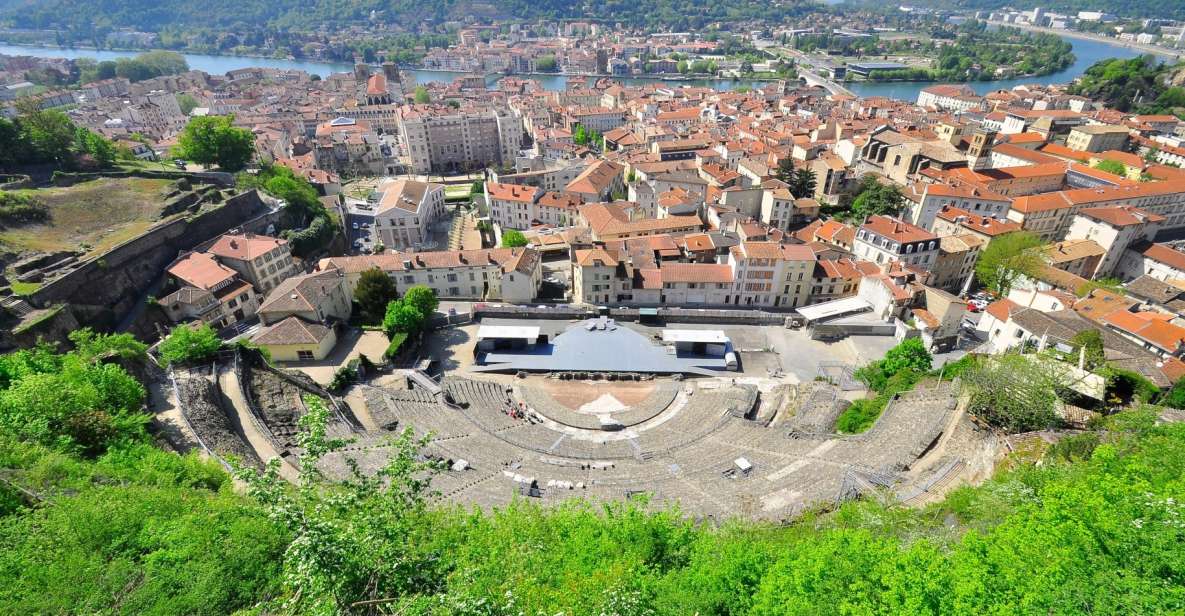
The first stop is the peaceful Jardin de Ville, a public garden with traces of the ancient city. The setting gives you a gentle start, but the historical details are not minor.
Here you can see a section of Roman road and a milestone with an inscription celebrating Emperor Constantine. A Roman road fragment can look simple at first glance. With a guide, you can consider its practical purpose, its place in the town, and the way a single surviving section helps mark the age of Vienne.
The milestone adds another layer. It connects the local street network to imperial power, showing how Roman infrastructure also carried official messages and honors.
I like beginning here because the garden lets you slow down before the denser monuments ahead. It also gives your guide room to establish the story of Vienne without placing you immediately in front of the most famous site.
Do not expect a major garden tour. The point is the combination of calm public space and ancient remains. If you enjoy finding history in ordinary city settings, this will likely be one of the more rewarding early stops.
Saint-Maurice Cathedral’s Romanesque-Gothic facade
From the garden, the route continues to the Cathedral of Saint-Maurice. Its facade dates from the 12th to the 14th centuries and brings a very different mood from the Roman remains.
The cathedral is described for its Romanesque-Gothic design, and the outside view gives you a chance to study how medieval builders expressed faith, authority, and craft through a monumental facade. The long building period is worth noting too. A church developed across several centuries will not present one perfectly uniform style, and your guide can point out the changes visible from the exterior.
This is also a useful counterpoint to the Roman sites. Vienne is not only an ancient Roman settlement preserved in fragments. It remained important long after the Roman period, and the cathedral makes that later chapter tangible.
The supplied tour details do not include an interior admission or promise entry into the cathedral. Treat this stop as an exterior visit unless your guide tells you otherwise. That keeps expectations clear and prevents the tour from feeling rushed while you wait for access.
I would spend a few minutes looking at the facade before listening to the full explanation. Details can disappear when you focus only on the broad outline, especially in a city with so many competing sights.
The Temple of Augustus and Livia
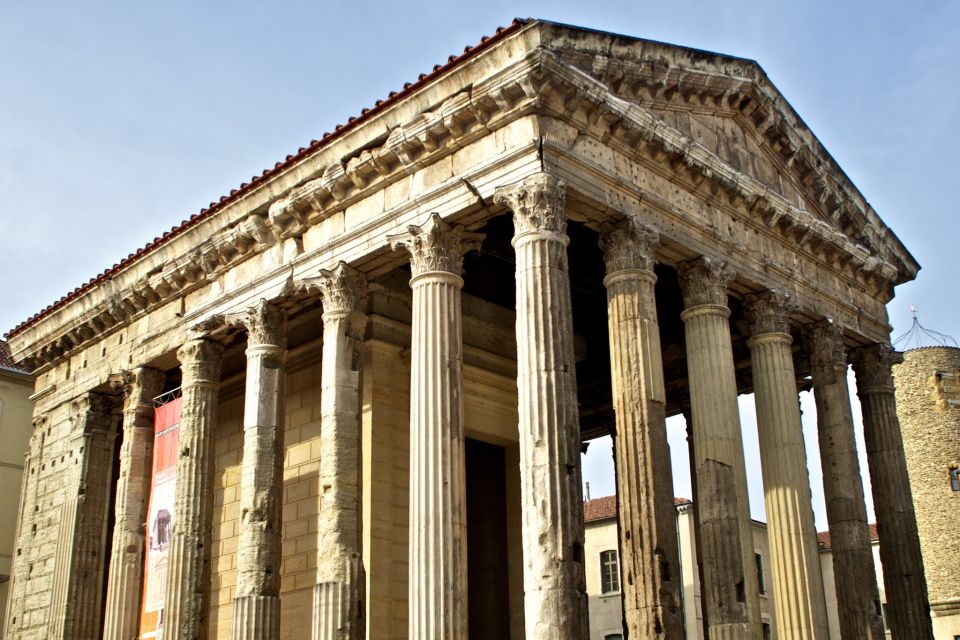
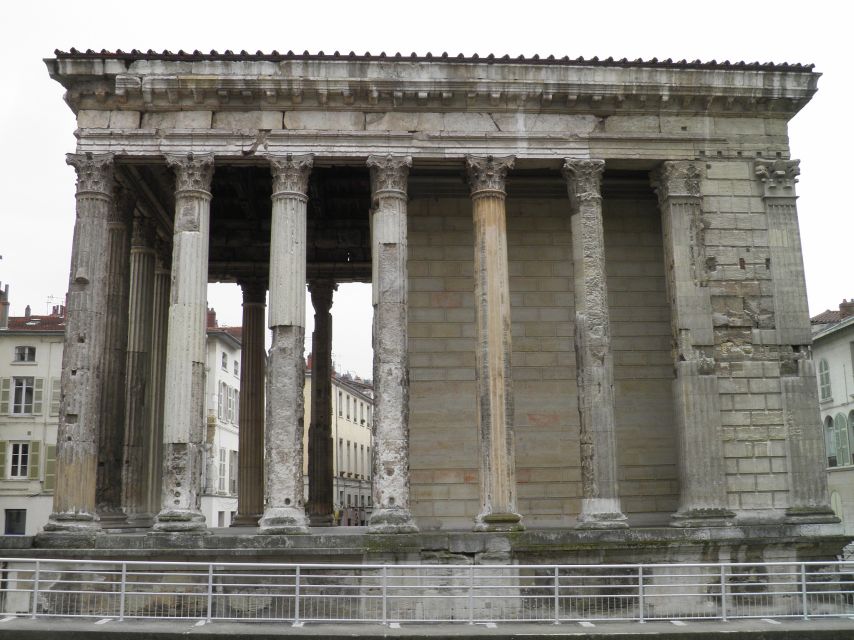
The Temple of Augustus and Livia is the centerpiece of the walk. Dating to the first century BC, it is among the best-preserved Roman monuments in France.
Its survival has a practical explanation. The building was used as a church around the sixth century, which helped protect it through later centuries. That continued use gives the temple unusual power. You are not looking only at a reconstructed ruin or scattered columns. You are seeing a Roman building that remained part of the town’s life.
The temple also shows how dramatically Vienne’s appearance has changed around it. An ancient monument can survive while streets, buildings, and customs shift over time. Your guide can help you separate what belongs to the Roman period from what came later.
This is where the private format has its clearest value. A guide can focus on the questions you actually care about, such as Roman religion, the building’s later Christian use, or why some ancient structures survive better than others.
Allow yourself time to take in the scale and setting. The tour is only two hours, so you will not linger indefinitely, but this is not a site to hurry past. If ancient architecture is your main reason for booking, this temple alone gives the walk a strong purpose.
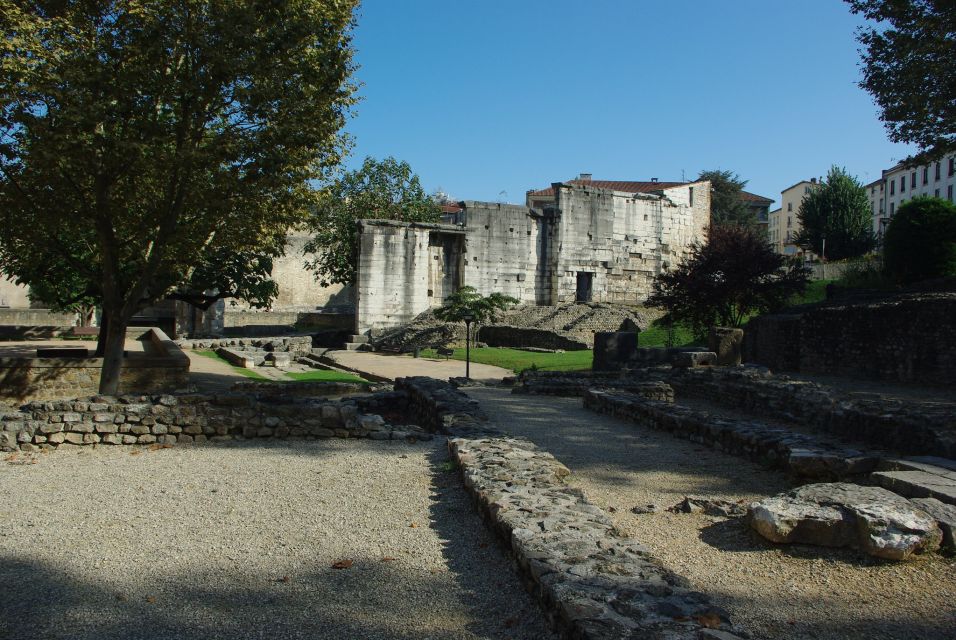
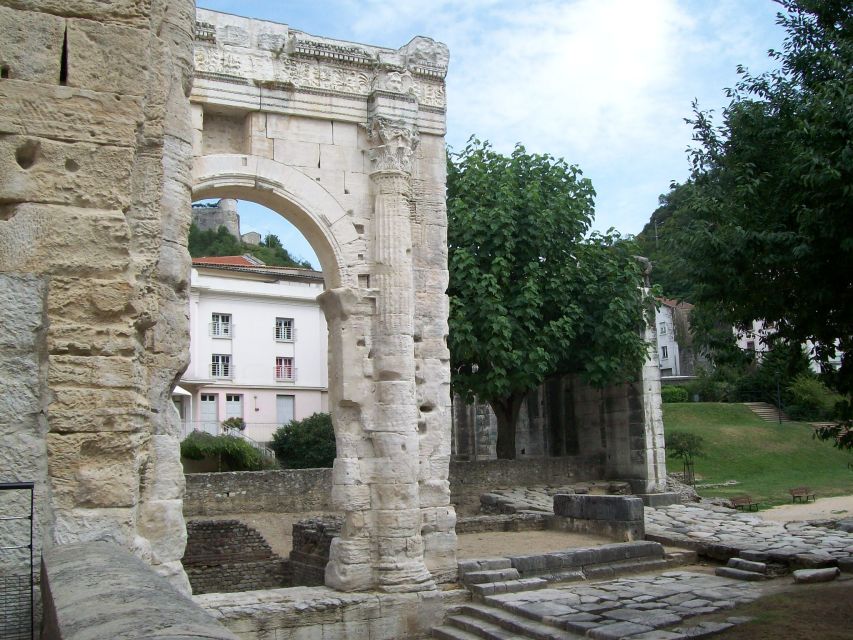
Cybèle archaeological garden and Roman remains
The Cybèle archaeological garden adds another view of Vienne’s Roman past. Rather than presenting one complete building, an archaeological garden helps you read fragments, foundations, and remains within a modern town.
The name connects the site with Cybèle, an ancient goddess, but the supplied tour details do not specify every structure or interpretation you will see there. Your guide will provide the explanation on site, so expect this stop to work best as a guided reading of the remains rather than a self-contained monument.
I appreciate this kind of stop because it teaches you how archaeologists reconstruct a city from partial evidence. You may find that the garden is less immediately dramatic than the intact temple, yet it helps fill in the spaces between Vienne’s most famous monuments.
The route also includes the Roman theater from the exterior. That distinction is important. You can see the monument as part of the city’s Roman setting, but entrance tickets are not included, and the tour does not promise an inside visit.
If you want a full theater visit, check separately for admission and opening information. For this tour, the theater works as one part of a broader walk through Vienne rather than the main event.
What the private guide adds
The experience includes a private tour and a licensed guide, with French and English available. That combination makes it easier to ask questions, pause for clarification, or shift the emphasis toward architecture, Roman history, or the town itself.
Sley is specifically associated with this experience, and the feedback about his work points to several practical strengths. He communicated clearly about where to meet, adjusted the route to suit personal needs, helped locate an ATM, assisted with reservations, and directed participants toward the correct place to catch a train afterward.
Those extra forms of help are not listed as formal tour inclusions, so you should not book expecting a banking or transport service. Still, they show why a private local guide can be useful beyond memorized dates. If you are unfamiliar with Vienne, clear directions and local orientation can make the rest of your day easier.
Isobel is also named as a guide and is described as warm and well informed. The guide you receive may depend on availability, so do not assume Sley or Isobel will lead your specific departure.
A good guide should make the city feel personal without turning the walk into a lecture. This experience appears suited to that balance, with room for local questions and practical help along the way.
Is $235 per person good value?
At $235 per person, this is not a budget walking tour. The price needs to be judged against the private format, not against the cost of a basic group orientation.
You are paying for a licensed guide reserved for your private group, a focused route, and the ability to ask for explanations at your own pace. For a couple or family with a strong interest in Roman and medieval history, that personal attention can make the price reasonable.
The value is weaker if you only want to see the main monuments quickly or are comfortable reading signs and using a guidebook. The tour lasts two hours, and entrance tickets are not included, so the price does not buy a full day of site access.
I would book it when Vienne is important to your trip and you want someone to make sense of the town in a short window. I would skip it if your main goal is an inexpensive stroll or if you already have detailed plans for visiting each monument independently.
The high rating of 4.9 from five reviews supports the idea that the guide quality is a major part of the experience. That is a small sample, so I would treat it as encouraging rather than definitive.
Timing, walking, and who should book
The two-hour duration works well for a morning or afternoon introduction. You get enough time to cover the key sites, but you will need another visit or separate admission if you want to explore interiors at length.
This is a private group experience, which is useful for families, couples, and friends who prefer not to match the pace of strangers. It also suits anyone arriving by train who wants help getting oriented, especially since one participant received assistance finding the proper place to continue by train.
The tour is not suitable for people with mobility impairments. The activity is a walking route, and no transport is provided. Large bags and luggage are not allowed, so leave suitcases elsewhere before meeting your guide.
English and French are the available languages. If you need another language, the provided information does not indicate that one can be arranged.
Free cancellation is available up to 24 hours before the tour for a full refund. You can also reserve now and pay later, which helps if your route through France is still changing.
My call: book it for context, not access
Book this tour if you want Vienne’s Roman and medieval sights explained by a private guide in a short, manageable walk. The Temple of Augustus and Livia, the Roman road in the Jardin de Ville, Saint-Maurice Cathedral, and the Cybèle archaeological garden give the route real variety.
The strongest reason to choose it is the guide’s personal role. Sley’s clear meeting instructions, local help, route adjustments, and train guidance show the kind of support that can matter in a smaller French town. Isobel’s warm, well informed approach adds another encouraging sign.
Do not book it expecting included admissions, a full interior tour of the Roman theater, or a leisurely half-day exploration. At $235 per person, it makes the most sense when you value private attention and have limited time.
For an independent traveler who wants to get the story straight, this is a practical way to meet Vienne.
FAQ
Where does the Vienne walking tour begin?
You meet your guide in front of the Tourist Office of Vienne and its region. The guide will hold a sign with your name.
Where does the tour finish?
The tour returns to the Tourist Office of Vienne and its region.
How long does the private walking tour last?
The tour lasts two hours.
What languages does the guide speak?
The live guide is available in English or French.
Is this a private group tour?
Yes. The experience is arranged for a private group.
Are entrance tickets included?
No. Entrance tickets are not included in the tour price.
Is transportation included?
No. This is a walking tour, and transportation is not included.
Can I bring luggage or a large bag?
No. Luggage and large bags are not allowed.
Is the tour suitable for people with mobility impairments?
No. The experience is not suitable for people with mobility impairments.