REVIEW · VERSAILLES
Versailles Full Tour: Palace, Gardens & Marie-Antoinette’s Estate
Book on Viator →Operated by GetYourGuide France · Bookable on Viator
Versailles hits you fast, then keeps surprising you all day. I love how the guided context turns rooms and statues into a story you can actually follow, and I love that you see the palace plus gardens plus Marie-Antoinette’s estate instead of picking just one highlight. The main drawback is simple: this is a lot of walking and standing, so wear good shoes and be ready to slow down when lines and crowds show up.
This is the kind of day trip you book when you want fewer gaps. You start at 9:30 am near Versailles, and the tour is built for a full circuit: Palace interiors first, gardens later, then the Trianon area and Marie-Antoinette’s private world. You’ll also be working inside peak-season rules, where timed entry can shift a bit on busy days due to safety checks.
The group stays small (max 20), which helps. And because the tour is offered in English, you can focus on what matters instead of trying to translate every label while you’re moving.
In This Review
- Key points before you go
- Versailles in One Shot: How a 7-Hour Tour Fits the Scale
- Meeting at 9:30 and Sticking to the Small-Group Pace
- Entering the Palace: Royal Apartments, Hall of Mirrors, and the Chapel
- Touring the Gardens: 210,000 Flowers and Routes That Make Sense
- Sunday morning fountain show with classical music
- Grand Canal Views and the Trianon Shift
- Marie-Antoinette’s Estate: Petit Trianon, French Pavilion, and Queen’s Hamlet
- Lunch on Your Own and How to Keep Energy Up
- Photo Ops Without Losing the Plot
- Value Check: Why This Price Can Work for Many Visitors
- Who Should Book This Full Tour (and Who Might Prefer Less)
- Should You Book This Versailles Full Tour?
- FAQ
- What time does the Versailles full tour start?
- How long is the tour?
- Is the tour offered in English?
- What is included in the price?
- Do I need to pay for lunch?
- Is there a special fountain show on Sundays?
- How much walking should I expect?
- What’s the group size limit?
- Are strollers allowed?
Key points before you go
- A full-day circuit across the palace, gardens, and Marie-Antoinette’s estate (not just a quick look)
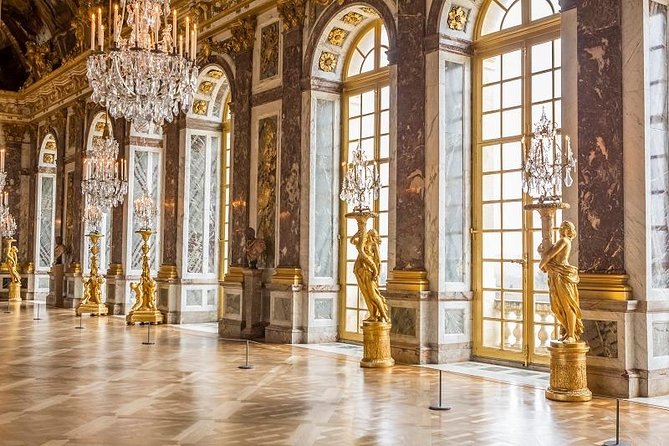
- Hall of Mirrors + Royal Chapel as part of the guided palace route
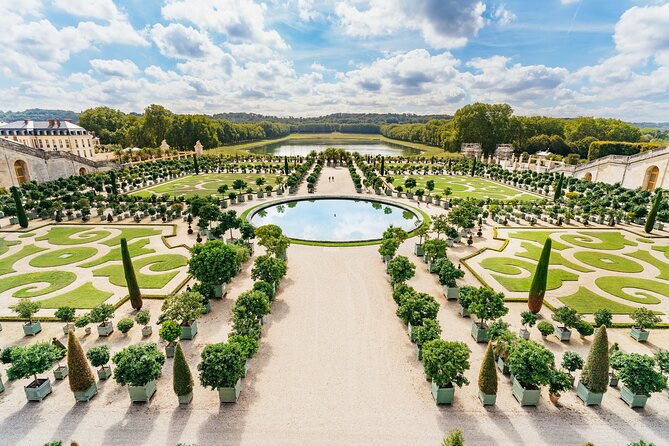
- Gardens scale you can feel: about 1,977 acres (800 hectares) and around 210,000 flowers planted each year
- Sunday morning fountain show with classical music in the gardens
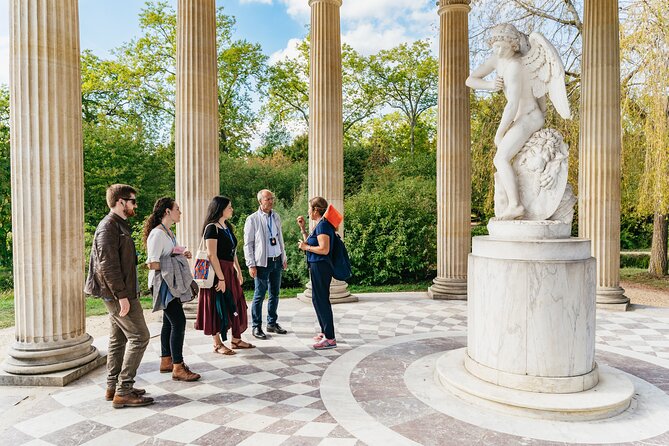
- Marie-Antoinette’s retreat details at Petit Trianon, plus French Pavilion and Queen’s Hamlet
- Trianon break from formality with Grand Trianon, built by Louis XIV in 1670
Versailles in One Shot: How a 7-Hour Tour Fits the Scale
Versailles is huge, and it’s not only big in acres—it’s big in decision-making. If you go solo, you can end up bouncing between rooms and paths with no sense of why anything is where it is. This tour gives you a route that makes the day feel manageable.
Plan for about 7 hours, and treat it like a real itinerary, not a museum drift. You’ll move through different zones that each have their own pace: formal rooms in the palace, open walking in the gardens, then the calmer Trianon/estate area.
The value here is that the day is structured around the major icons you came for. You’ll see the Palace of Versailles, the Hall of Mirrors area, the Royal Chapel, then the gardens, and finally Marie-Antoinette’s Petit Trianon domain. That’s the kind of coverage that can be hard to stitch together yourself—especially if you’re trying to match timed entry.
You can also read our reviews of more tours and experiences in Versailles.


Meeting at 9:30 and Sticking to the Small-Group Pace
Your day starts at 9:30 am at the GetYourGuide France (Versailles Palace Tours) shop at 10 Av. du Général de Gaulle, Versailles. The tour actually departs a few minutes later than the voucher meeting time, so try not to roll in at the last second.
The tour ends back at the Palace of Versailles, Place d’Armes. You’re close to public transport, but transport to and from the attractions is not included—so build in some transit time before you arrive.
The group is capped at 20, and that matters at Versailles. Smaller groups tend to keep the day moving without feeling like a human traffic jam. Still, expect crowds. Versailles has safety controls and timed entry access can be delayed on peak days.
One practical warning: this tour involves considerable walking. It’s listed as moderate physical fitness, not for people who struggle with long standing. If that’s you, consider a shorter palace-only or garden-only option.
Entering the Palace: Royal Apartments, Hall of Mirrors, and the Chapel
The palace portion kicks off with guided access inside the Palace of Versailles, where you’ll learn how it functioned as France’s political power center from 1682 to 1789. That date range helps you see Versailles as more than an ornate backdrop. It was where decisions got made, performances happened, and power was displayed.
You’ll walk through the king’s and queen’s apartments and hit the moments most people photograph—but with meaning. The Hall of Mirrors is the headline, built on dramatic optics: it’s a room that makes Versailles look like it’s made of light. The Royal Chapel adds a different feel—religious space with ceremonial gravitas.
The time you get here is about 1 hour 30 minutes, and that’s just enough to get the structure without turning it into a rushed checklist. The guide’s job is to connect the rooms so your brain isn’t stuck memorizing titles.
What can be a drawback: palace interiors can feel crowded and slow-moving, and if you’re sensitive to noise or you need long breaks, you might find it tiring. One review also noted an occasionally strong French accent in English from a guide. If you’re picky about audio clarity, it may help to download offline translation tools just in case.
Touring the Gardens: 210,000 Flowers and Routes That Make Sense
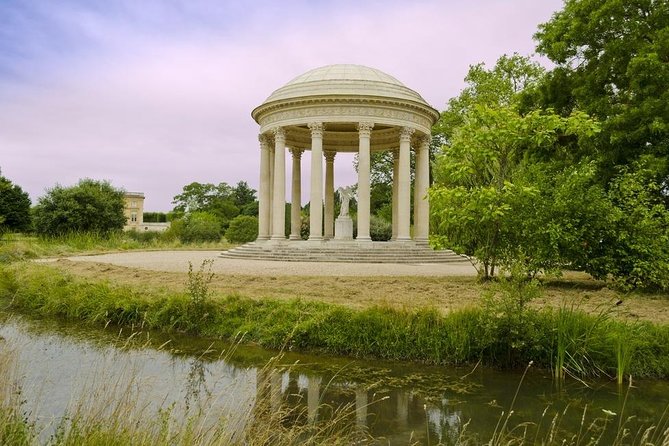
Once the palace pace settles, the gardens take over. You’re stepping into the Gardens of Versailles, a sprawling UNESCO-listed landscape of about 1,977 acres (800 hectares) with roughly 210,000 flowers planted each year.
This is where a guide can make a big difference. Gardens at Versailles aren’t just pretty paths. They’re planned viewpoints, sightlines, and designed outdoor theater. You’ll learn the garden history and why the space was developed over decades.
A key time slot: about 2 hours for the garden portion, including admission that covers musical and fountain show programming. You’ll also get the kind of guided storytelling that helps you connect features like canals and garden compositions to what the monarchy wanted people to see.
If you have any motion sickness or you struggle with long stretches outdoors, bring what you need before you’re out there. The gardens are open, and the tour is walking-forward most of the time.
Sunday morning fountain show with classical music
If your visit is on a Sunday, you get an extra bonus: a morning fountain show coordinated with a classical music soundtrack. That’s a special rhythm for the day because you experience Versailles outside the usual “all sun, all photos” mode.
It also gives you a reason to enjoy the early walking more than you might expect. Instead of just entering the gardens, you get a coordinated performance.



Grand Canal Views and the Trianon Shift
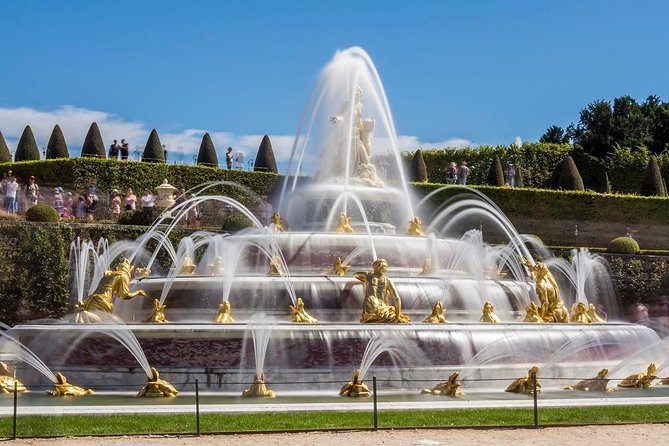
As you move through the gardens area, you’ll pass by the Grand Canal zone. Even if you’re not a boat person, it helps to see the canal because it explains how Versailles used water and long sightlines as part of the spectacle.
Then the tour shifts away from the formal palace energy toward the Trianon region. This matters because Versailles can feel repetitive if you only do the palace and then call it a day. The Trianons are about mood change: lighter, more private, and less tied to strict court ritual.
That’s where Grand Trianon comes in. Louis XIV had this lodge built in 1670 as a place to rest from the formal palace atmosphere. You’ll follow your guide there, and it gives your day a breather that feels real—not just a stop to buy a bottle of water.
Marie-Antoinette’s Estate: Petit Trianon, French Pavilion, and Queen’s Hamlet
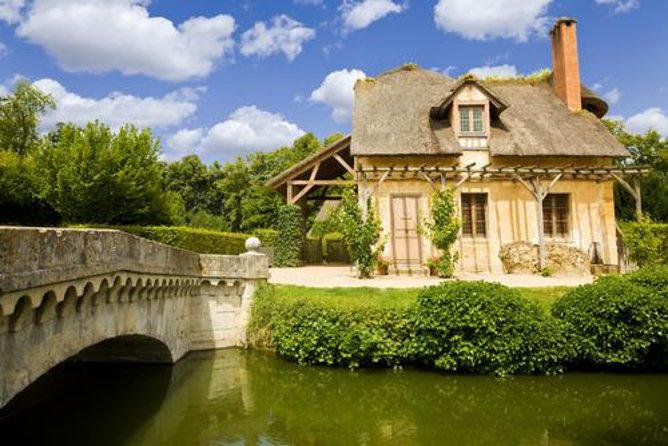
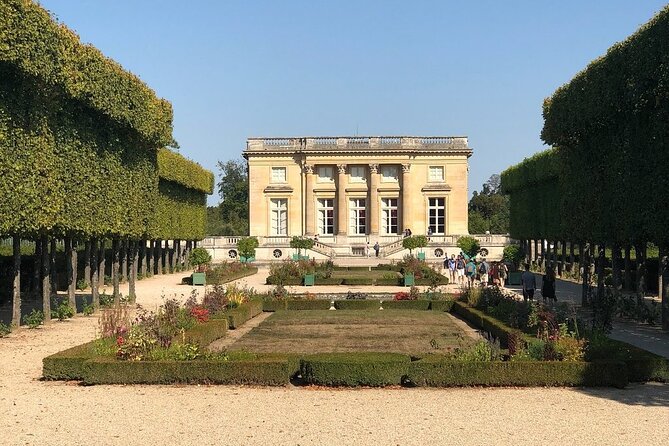
The final big story shift is Marie Antoinette’s world at the Marie-Antoinette’s Estate. You’ll see the Petit Trianon, described as her private retreat, along with the French Pavilion and Queen’s Hamlet.
This portion is about intimacy. Compared to the palace, it’s easier to imagine daily life rather than state theater. You also get to see the smaller-scale choices that made Marie Antoinette’s retreat feel different from the main court.
The guide supports the visit so you understand what you’re looking at, including the links between the estate spaces and the queen’s preferred way of being away from the formal setting. The time here is about 1 hour, with the option designed to include the Petit Trianon and the Queen’s hamlet.
A smart takeaway from how these stops are paced: you’re not just hitting the famous buildings; you’re also getting a sense of how the monarchy used different locations to control tone—public power in the palace, and private escape at the estate.
Lunch on Your Own and How to Keep Energy Up
Lunch is own expense, and that’s completely normal for tours like this. The practical question is timing: when you’re spending most of the day moving, you need food that doesn’t derail you.
The tour includes a break for lunch, and the pacing is usually built to avoid making you choose between eating and seeing. Still, you’ll want to bring water and plan for snacks if you get hungry between stops—especially since palace and gardens days can turn into a “wait in line, then walk again” cycle.
A couple of tips that fit this specific tour style:
- Comfortable shoes first. A lot of the day is outdoors, and standing in queues counts.
- If you’re prone to fatigue, pack light snacks. You’ll thank yourself between palace areas and garden walking.
Also note: stroller access may be limited. Baby strollers may be refused at the palace entrance, so if that’s your situation, plan accordingly.
Photo Ops Without Losing the Plot
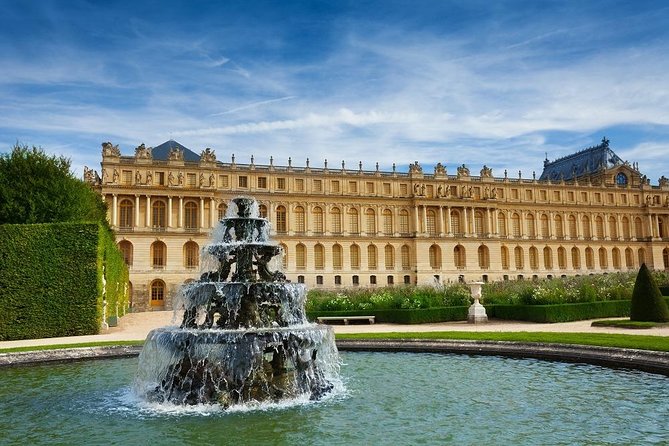
Yes, you’ll take photos. Versailles is a photographer’s playground. But the tour’s real win is that you won’t be guessing what you’re seeing while you’re framing a shot.
You’ll get photo moments throughout the day, and the guide’s explanations help you choose where to linger. That’s the difference between snapping everything and actually enjoying the day.
If you’re the kind of traveler who likes to pause for scenic shots, you’ll probably do well here. If you only stop for the most obvious landmarks, you might feel the day is packed—but that’s the tradeoff for seeing the palace, gardens, and the estate in one run.
Value Check: Why This Price Can Work for Many Visitors
At $174.98 per person, it isn’t a budget day trip. But look at what’s bundled: you get a professional guide plus Versailles Palace admission, a guided palace visit, gardens admission with musical and fountain show coverage, and Marie-Antoinette’s Estate tickets for the Petit Trianon and Queen’s hamlet.
That matters because Versailles tickets and access can add up fast if you’re piecing things together. Here, the day is pre-structured, and you’re buying time and guidance as much as you’re buying entry.
You’re also paying for fewer decision points. Instead of figuring out routes, timing, and which rooms are worth it, you follow a guided path. For a first-time visit, that can be worth every cent.
If you already know Versailles well and just want free-roam time, this might feel a bit scheduled. But for first-timers or anyone who wants the “what am I looking at and why does it matter” side, the price often makes sense.
Who Should Book This Full Tour (and Who Might Prefer Less)
This tour fits best if you:
- Want first-time Versailles coverage with context, not just photos
- Enjoy historical explanations that connect rooms, gardens, and court life
- Can handle a full day with walking and standing (and you’re fine with outdoor walking too)
- Like the idea of ending with Marie-Antoinette’s estate instead of stopping at the palace
You might skip or downshift if you:
- Struggle with long standing or lots of walking
- Need frequent rest stops beyond what a standard tour pace allows
- Prefer to move slowly at your own rhythm and skip fountain show programming
One more practical fit note: if you’re sensitive to audio and accents, be aware English delivery can vary by guide. The good news is the tour is structured so you still get plenty of visible anchors even when the narration style differs.
Should You Book This Versailles Full Tour?
I’d book this if you want to see Versailles as a whole day story—palace power, garden spectacle, and Marie-Antoinette’s retreat—without doing the heavy planning yourself. The built-in admissions and guided route make it easier to get value from a place that can otherwise feel like one big, overwhelming pile of rooms.
I’d think twice if you’re low on stamina or you’re trying to keep the day gentle. Versailles is stunning, but this particular version of the day is built around movement.
If you can handle the walking, this is one of the most logical ways to experience Versailles in the time most people have.
FAQ
What time does the Versailles full tour start?
The tour starts at 9:30 am. The meeting time is at the tour shop, and the tour departs a few minutes later.
How long is the tour?
The full tour takes about 7 hours.
Is the tour offered in English?
Yes, it is offered in English.
What is included in the price?
The price includes a professional guide, Versailles Palace admission and guided visit, gardens admission (including musical and fountain show access), and Marie-Antoinette’s Estate tickets for Petit Trianon and Queen’s hamlet (plus guided coverage there as part of the full-day guided option).
Do I need to pay for lunch?
Yes. Lunch is not included, so you’ll need to budget for your own meal during the break.
Is there a special fountain show on Sundays?
Yes. If you visit on a Sunday, you get an added bonus of seeing a morning fountain show in the gardens coordinated with a classical music soundtrack.
How much walking should I expect?
Expect a considerable amount of walking and long standing at times. It’s not recommended for people with difficulties walking or standing for long periods, and it’s best suited to moderate physical fitness.
What’s the group size limit?
This tour has a maximum of 20 travelers.
Are strollers allowed?
Baby strollers may be refused at the palace entrance, so plan for that if you’re traveling with a stroller.