REVIEW · NICE
Nice walking tour: Old City and Castle Hill
Book on Viator →Operated by Mobilboard Nice · Bookable on Viator
Nice is best when you walk it. This guided Old City and Castle Hill stroll moves fast but not frantic, lining up iconic seafront sights with the kinds of details that make Nice feel like a real place. I especially liked the way the tour connects postcard spots—like La Chaise Bleue and the Promenade—with smaller, story-rich corners in the Old Town. And I liked that the stops include time for photos and food, not just speeches.
One thing to keep in mind: it can run bilingual on a public tour, even though it’s offered in English. If you want a strictly English-only experience every minute, that’s the one potential snag to consider.
In This Review
- Key highlights I’d plan around
- Walking From the Promenade to Castle Hill Without Getting Lost
- Iconic Promenade Stops: Chaises Bleues, Neuf Lignes Obliques, and the Liberty Connection
- La Chaise Bleue (the “you see this everywhere” stop)
- Neuf Lignes Obliques (Nice’s surprising France timeline)
- Statue of Liberty, Nice’s smaller version with a real pedigree
- Castle Hill Cottages and the Bay-Angles View Mindset
- Cours Saleya: Market Energy and What to Eat Without Guessing
- Palais de la Préfecture and Place Rossetti: Where Stories Live in Plain Sight
- Palais de la Préfecture
- Place Rossetti: the heart of the old town
- St. Réparate’s Cathedral: Piedmontese Baroque and a Bar Inside
- #ilovenice Photo Time and How the Stops Work Together
- Price and Value for a 90-Minute Guided Walk
- Guide Energy Matters: Francisco, Nicholas, Tessa, Elena, Helena
- Who This Tour Fits Best (And Who Might Skip It)
- Should You Book This Nice Old City and Castle Hill Walk?
- FAQ
- How long is the Old City and Castle Hill walking tour?
- How much does the tour cost?
- Is the tour offered in English?
- Where do you start and where does the tour end?
- How big is the group?
- Do I need a printed ticket?
- Is food included?
- Can I cancel for free?
Key highlights I’d plan around

- La Chaise Bleue stops with quick context on why this design became a Nice symbol
- Neuf Lignes Obliques placed on the Promenade for Nice’s 150th anniversary link to France
- A small Statue of Liberty connected to Bartholdi training statues
- Cours Saleya market time geared toward local bites like socca and pissaladière
- Place Rossetti and St. Réparate’s Cathedral with trompe l’œil nearby and a bar inside the church
- #ilovenice viewpoint for a Bay of Angels photo angle
Walking From the Promenade to Castle Hill Without Getting Lost

This is a classic way to get your bearings fast. You start on the north side of Nice’s city flow near Rue Halévy and then work your way toward the Old Town zone, ending at Cours Saleya. The route is timed for a 1 hour 30 minutes visit, which means you get meaningful chunks of sights without turning the whole morning (or afternoon) into a full-day endurance event.
The pace is one of the reasons people rave about it. A good guide keeps things moving, but also builds in little pauses for questions and photos. That matters in Nice, where the charm is as much in the street-level details as it is in the big-name monuments.
And you’ll likely notice right away that the tour is built around a mix of modern and old Nice. You start with the bright, seafront identity of the city, then shift into historic streets, church architecture, and market culture.
You can also read our reviews of more walking tours in Nice

Iconic Promenade Stops: Chaises Bleues, Neuf Lignes Obliques, and the Liberty Connection

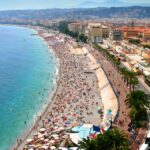
The tour’s early stretch is all about Nice’s most recognizable face: the Promenade des Anglais. It’s a great warm-up. You don’t need to decode anything complex—you just get orientated, and then the guide starts layering in stories.
La Chaise Bleue (the “you see this everywhere” stop)
You’ll hit La Chaise Bleue de SAB, the blue chair symbol that shows up on postcards, chocolates, and the real chairs along the Promenade. The fun part is how quickly the guide explains why it became so recognizable. It’s not just a random object. It became part of Nice’s visual language, almost like a shorthand for the French Riviera.
Neuf Lignes Obliques (Nice’s surprising France timeline)
Next up is Neuf Lignes Obliques. This monument sits on the Promenade and was placed in 2010 to mark the 150th anniversary of Nice’s attachment to France. It’s a small mental twist for first-timers: Nice wasn’t always French, and that history still peeks through the city in visible ways.
Even if you’re not a monuments person, this stop is worth it because it explains the why behind the placement. You end the promenade segment feeling like you understand Nice more than before you arrived.
Statue of Liberty, Nice’s smaller version with a real pedigree
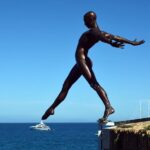
Then comes the Statue of Liberty stop. It’s not the big New York one, but it’s tied to a real story: since 2014, Nice has its own Statue of Liberty, and the guide connects it to Bartholdi. After New York, Paris, Colmar, and Tokyo, Nice joined the list, and the statue’s authenticity is linked to Bartholdi’s training statues.
This is the kind of stop I like because it gives you something you might otherwise overlook. You see a familiar icon—but you learn why this particular one exists in this particular city.
You can also read our reviews of more city tours in Nice
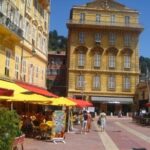




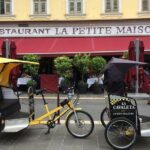
Castle Hill Cottages and the Bay-Angles View Mindset

After the Promenade landmarks, the tour moves toward the Old Town and Castle Hill area. One of the stops focuses on the look of the neighborhood: typical one-storey cottages with roof terraces. The guide explains they were a popular strolling spot for British winter visitors. That detail matters because it connects the architecture and streets to real visitor patterns, not just a vague “old times” vibe.
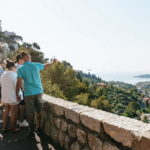
Then you get the viewpoint payoff at #ilovenice. It’s built for photos, but also for perspective. From up here, the Bay of Angels view makes it easier to understand why people plan entire vacations around this stretch of coast. Even if you’ve seen photos already, the guide’s framing helps you notice the city’s shape and how the coastline pulls everything together.
Practical tip: if it’s bright and busy out, bring sunglasses and keep your camera settings simple. This is more about composing with the coastline than fighting technical gear.
Cours Saleya: Market Energy and What to Eat Without Guessing
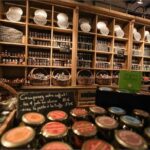
The tour takes you to Cours Saleya (Marche aux Fleurs Cours Saleya). This is where Nice earns its foodie credentials. The guide sets it up with the context that it’s been a flower market for a long time, but now it’s mainly a local marketplace.
What makes this stop useful for you: you’re not left staring at food and wondering what’s worth it. The guide points you toward classic Nice flavors such as socca, pissaladière, and pan bagnat. These aren’t just random items; they’re part of how Nice people actually eat.
Also, the experience includes local tasting time. In the guides’ tradition, you may get a snack at the end and even two local food tastings during the walk. That’s a big value-add for a short 90-minute tour, because it turns the market from a photo stop into a pay-off stop.
If you’re trying to keep your budget in check, this is one of the easiest ways to sample multiple things without committing to a full meal yet.
Palais de la Préfecture and Place Rossetti: Where Stories Live in Plain Sight
From the market area, the tour shifts into the Old Town’s most visual zone: Palais de la Préfecture and then Place Rossetti.
Palais de la Préfecture
This building is now a government building, but it used to be the residence of the town’s former lords. The practical takeaway is how power and place overlap here. In many European cities, big buildings change roles but keep their authority. Nice is similar—you see it at a glance once the guide points it out.
Place Rossetti: the heart of the old town
Place Rossetti is where the tour leans into character. It’s the heart of the Old Town, and the guide points out features like trompe l’œil (optical illusion murals) and the presence of St. Réparate’s Cathedral. You also get a good moment to spot ice-cream options; the area is known for a top ice-cream vendor in the mix of historic streets.
What I like about this stretch is how it slows down just enough. The guide doesn’t just name places; it helps you read what you’re looking at—paint tricks on walls, architecture details, and street rhythm.
St. Réparate’s Cathedral: Piedmontese Baroque and a Bar Inside

Then you hit one of the most memorable stops on the whole route: St. Réparate’s Cathedral. The guide highlights that the church is the first manifestation of Piedmontese Baroque in Nice. If you’re not a baroque-nerd, no worries. The real attention grabber is this: there’s a bar inside.
That sounds odd until you’re standing there and realizing how Nice blends old and everyday life. It’s not a gimmick. It’s part of how people actually use spaces in the city—prayer, history, and real-life moments can share the same address.
Also, the way the guide frames Piedmontese Baroque makes the church feel less like a random stop and more like a milestone in the city’s architectural story.
#ilovenice Photo Time and How the Stops Work Together
The tour isn’t just a list of landmarks. It’s a sequence built around perspective changes.
- Promenade starts you with a coastline identity
- The monument and statue stops give you history-in-miniature
- Castle Hill and cottages shift you into neighborhood feel
- Cours Saleya delivers food and local rhythms
- Place Rossetti and St. Réparate’s Cathedral bring you old-town texture
- #ilovenice ends with a view that makes the whole walk click
If you care about photos, this is a smart setup because you don’t have to guess when the best viewpoint will come. The guide brings you to the high point near the end, which often feels like a natural finish: you’ve learned enough to appreciate it.
Price and Value for a 90-Minute Guided Walk

At $42.05 per person for about 1.5 hours, this tour isn’t the cheapest thing in Nice. But it is good value for what you get.
Here’s why it pencils out:
- You’re paying for a guide who explains what you’re seeing, not just someone leading you from point A to point B.
- The group is capped at 15 travelers, which usually means easier questions and a less chaotic walk.
- The experience includes time at Cours Saleya plus local tastings/snack moments, so you’re not spending extra money immediately on snacks elsewhere.
- You see a lot of “Nice identity” in a short window, including both seafront icons and Old Town specifics.
To decide if it’s worth it for you, ask one question: do you want someone to translate the city for you in real time? If yes, this price feels fair. If you’d rather wander solo and skip guided context, you might find a free self-guided route works just as well.
Guide Energy Matters: Francisco, Nicholas, Tessa, Elena, Helena
The best thing about this experience is how often the reviews match what you should hope for in a guide.
- Francisco gets praised for being flexible and having a pace that feels right, with lots of useful information.
- Nicholas is highlighted for being informative and making the tour feel like you’re actually getting a taste of Nice.
- Tessa is credited with history facts, fun photo choices, and local tastings.
- Elena stands out for energy, clear local perspective, and not drowning you in memorized trivia.
- Helena is described as pleasant and cultured, though one review flagged that the experience was bilingual, which can affect timing and feel.
That last point is the main consideration for you. Since this is a public tour, the guide may adapt to the languages in the group. The good news: guides are described as multilingual, and that can help everyone feel included.
Who This Tour Fits Best (And Who Might Skip It)
I’d recommend this walk if you:
- Want a high-density first look at Nice without getting overwhelmed
- Like learning why landmarks exist, not just where they are
- Want market time at Cours Saleya with food samples
- Prefer a small group size that stays manageable at street level
I’d think twice if you:
- Want a perfectly paced, strictly single-language experience with no bilingual adjustments
- Plan to spend most of your trip on long beach days and don’t want a structured city block
For everyone else, it’s a sensible “Nice sampler” that stays grounded in real street life, not just checklist tourism.
Should You Book This Nice Old City and Castle Hill Walk?
If you’re short on time and want Nice to make sense quickly, I’d book it. The combination of seafront icons, Old Town stops, and a viewpoint finish at #ilovenice is a strong use of 90 minutes. Add in the Cours Saleya food focus and the chance for tastings/snack, and it’s the kind of tour that gives you memories you can actually taste.
If you’re the type who hates any bilingual switching or you’re chasing a highly specific interest (only architecture, only food, only monuments), you might prefer a more targeted experience. But for most visitors, this hits the right balance of story, sight, and practical payoff.
FAQ
How long is the Old City and Castle Hill walking tour?
It runs about 1 hour 30 minutes.
How much does the tour cost?
The price is $42.05 per person.
Is the tour offered in English?
Yes, it’s offered in English.
Where do you start and where does the tour end?
You start at Mobilboard Nice on Rue Halévy, and the tour ends at Cours Saleya (near Cr Saleya).
How big is the group?
The tour has a maximum of 15 travelers.
Do I need a printed ticket?
You get a mobile ticket.
Is food included?
You’ll have market time at Cours Saleya, and the experience includes local food tasting/snack moments.
Can I cancel for free?
Yes. You can cancel up to 24 hours in advance for a full refund.