REVIEW · NICE
Nice Private Walking Tour: Mysterious Old Town, Castle Hill
Book on Viator →Operated by Guide D'azur · Bookable on Viator
Old streets, big views, zero guesswork.
I like how the route stitches together Nice’s Italian-French identity from Place Masséna to Place Garibaldi, and I also like that you get real local stories along the way, not just dates. One thing to consider is the walking pace: you’ll climb up to Colline du Château, so comfy shoes matter.
In practice, this is a true private experience, led in English, usually lasting 2 to 4 hours. You can also start earlier for better light, and the guide may tailor stops and timing to your interests—like Aram, who’s known for gently adjusting the schedule for sunset views and for helping with food and shopping ideas.
In This Review
- Key Things I’d Plan Around Before You Go
- Why This Walk From Old Town to Castle Hill Makes Sense
- Place Masséna: The City Square That Explains Nice
- Cours Saleya (Marche aux Fleurs): Where You’ll Actually Feel Local Life
- Palais de la Préfecture: The Building That Holds Political History
- The Old Town Lanes: Pirates, Courtyards, and a Mixed Dialect
- Sainte-Réparate Cathedral: Baroque Details You Can Actually See
- Saint-Jacques-le-Majeur: The Optical Illusion Ceiling
- Colline du Château: The Big 360° Payoff and Where to Stand
- Rue Pairolière: The Street Name That Makes You Smile
- Port Lympia: Colorful Buildings, Real Water Traffic
- Notre-Dame du Port and Place Garibaldi: Iberian and Sardinian Threads
- Timing, Pace, and Photo Strategy (So You Don’t Feel Rushed)
- Is This Private Tour Good Value at About $96.92 Per Person?
- Should You Book This Mysterious Old Town and Castle Hill Tour?
- FAQ
- How long is the private walking tour?
- What is the starting and ending point?
- Is pickup available?
- What language is the tour offered in?
- Are there admission tickets you need to pay for the stops?
- Is this tour private?
- Is service available for travelers who need it (like service animals)?
- Is there free cancellation?
Key Things I’d Plan Around Before You Go

- Private route, English guide: only your group, with local insider context at every stop.
- Signature views on Colline du Château: best photo spots and 360-degree panoramas are part of the flow.
- Church stop pairs: baroque Sainte-Réparate plus Saint-Jacques-le-Majeur, with design details you can actually spot.
- Market-to-harbor variety: you’ll move from Cours Saleya market energy to the working Port Lympia.
- Italian-and-French storytelling: from Nice’s 1860 vote to Sardinian urban planning at Place Garibaldi.
- Flexible pickup and finish time: hotel pickup is offered, and you can end where it’s convenient.
Why This Walk From Old Town to Castle Hill Makes Sense

Nice’s Old Town can feel like a maze—pretty, but easy to get lost in. This tour gives you a clear line: start at the big city square, work through the historic core and churches, climb to the main viewpoint, then follow the story toward the port and the final square.
The big value for you is guidance. You’re not just seeing landmarks; you’re learning why each one exists and how Nice’s location shaped it. And because it’s private, the guide can slow down for photos or speed up if you’re eager.
You can also read our reviews of more walking tours in Nice


Place Masséna: The City Square That Explains Nice

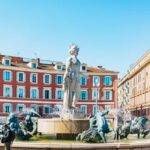
You begin at Fontaine du Soleil in Place Masséna, Nice’s most recognizable square. The red ochre buildings set the stage instantly, and the guide points out what makes the architecture feel like a shared Italian and French space.
This stop is also about how a place becomes a center. You’ll hear how Place Masséna evolved from a river crossing into the beating heart of Nice, and you’ll learn the story behind the seven statues that light up the square each evening. It’s a fast start—about 10 minutes—but it helps your brain map the city.
Practical note: the central fountain area can be a strong gathering point. If you like photos, this is the moment to get oriented before you head into the tighter lanes.
Cours Saleya (Marche aux Fleurs): Where You’ll Actually Feel Local Life
Next comes Cours Saleya, better known as the flower market area of Nice. This is where you’ll see the daily rhythms: fresh flowers, regional produce, and Niçois specialties, with the guide showing you what to look for and what ingredients matter in the local style of cooking.
What I like here is that the tour doesn’t treat the market like a backdrop. You get the cultural role of the market—how it has shaped everyday life for over a century, and how it even inspired artists like Matisse and Chagall. That makes the stroll through stalls feel meaningful, not just pretty.
Because this is a quick stop (about 15 minutes), go light. If you plan to buy snacks or flowers, you’ll want to leave time in your own schedule afterward so the guide’s walk stays smooth.
Palais de la Préfecture: The Building That Holds Political History

At the Palais de la Préfecture (now the Palace of Justice), you get a different kind of sightseeing. Instead of medieval lanes, you stand in front of neoclassical architecture and hear how it connects to Nice’s shifting political identity.
The 1860 story is a key point here: Nice voted to become part of France, and the guide explains how this building witnessed that transition. If you care about European borders and how they affect culture, this stop is worth your attention. It’s also a useful reset between the busy market and the narrower streets ahead.
This leg is short—about 10 minutes—so it works best if you listen for the “why it matters” details, not just the dates.
The Old Town Lanes: Pirates, Courtyards, and a Mixed Dialect

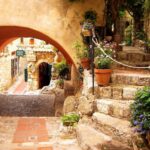
Now you enter the medieval core of Nice, where narrow cobblestone streets fold into each other. The guide leads you through alleys that you might miss on your own, sharing stories of pirates along the coast and the residents who defended the city.
Two parts of this are especially practical for you:
1) You’ll learn where hidden courtyards are, and how they can feel like time has slowed down.
2) You’ll hear about the local Niçois dialect—a blend of French and Italian—so the place starts to sound like it belongs to the people who live there.
This stop stretches the most (about 45 minutes), so it’s where the tour can change depending on your interests. If you like architecture, you’ll notice traditional building details and local shops. If you like stories, you’ll get the street-level “how it worked day to day” version of history.
One consideration: Old Town streets can be uneven. Even if you don’t think of yourself as a “walking-tour person,” this is still manageable for most people, but good shoes reduce fatigue.
You can also read our reviews of more private tours in Nice





Sainte-Réparate Cathedral: Baroque Details You Can Actually See

At Cathedrale Sainte-Reparate, you step into Nice’s baroque world. The guide connects the cathedral to the city’s patron saint, Saint Reparata, and shares the legend of this young Christian martyr tied to Nice’s spiritual story.
The architecture is the star: ceiling frescoes, ornate altars, and stained glass windows. The guide helps you slow down just enough to spot the craftsmanship, and you learn why the cathedral has been a place of worship and community gathering for over 350 years.
This stop is brief (about 10 minutes), so it’s not a museum-hours kind of visit. If you want extra time inside, this is a good place to ask the guide how to extend your visit after the tour.
Saint-Jacques-le-Majeur: The Optical Illusion Ceiling

Right after, you visit Eglise Saint-Jacques-le-Majeur, another baroque church with major artistic pull. The highlight is the trompe-l’oeil ceiling—an optical illusion that makes the space seem taller than it is.
You’ll also hear how the Jesuit order influenced Nice, plus stories behind gilded altars, ornate decorations, and precious artworks. If you enjoy religious art, you’ll like this stop because it’s specific: you aren’t just looking at “baroque,” you’re learning what to look for.
Like the cathedral, this is about 10 minutes. It’s a fast-but-focused hit of artistry that keeps you moving while still feeling like you learned something.
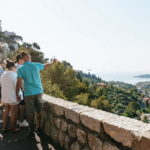
Colline du Château: The Big 360° Payoff and Where to Stand

This is the viewpoint moment: Colline du Château. The climb is the physical price of admission, and it’s the part you should plan for with comfortable shoes and a steady pace.
Once you’re up there, the tour turns into photo planning. The guide leads you to strong picture spots while sharing the hill’s history: fortress ruins that protected Nice from invaders, remnants of an 11th-century cathedral, and even traces of Greek and Roman settlements dating back about 2,000 years.
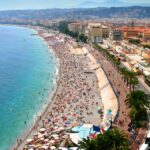
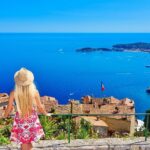
The view is what you’ll remember: the Baie des Anges, the red rooftops of the Old Town, and the snow-capped Alps on clear days. If you’ve ever wondered why people keep returning to Nice—this is where the answer comes together.
Timing matters. In the real-world feedback, Aram is known for adjusting the start time so you can catch golden light and sunset from Castle Hill. If sunsets are your thing, ask for an earlier start when booking.
Rue Pairolière: The Street Name That Makes You Smile
On the way out of the densest Old Town lanes, you walk down Rue Pairolière, also called the Street of Lost Hats. It’s one of those small Nice moments that feels like a local wink.
The guide shares the legend behind the name and points out architectural details along the façades. You also learn how the street connects the Old Town with the port, linking the medieval zone to the city’s working edges.
This stop is short (about 10 minutes), so don’t expect it to replace the churches or the viewpoint. Instead, use it as a breather between “big sites” and the harbor story.
Port Lympia: Colorful Buildings, Real Water Traffic
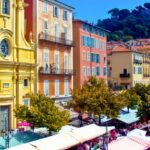
Then you reach Port Lympia, Nice’s picturesque harbor. The contrast is immediate: colorful buildings reflecting in calmer water, with luxury yachts alongside traditional fishing boats.
The guide explains the port’s history—from 18th-century construction tied to the Kings of Sardinia to its modern role as a gateway toward Corsica and Mediterranean islands. You’ll also hear how surrounding architecture takes inspiration from ports of Genoa and Turin, reinforcing that cross-cultural theme the tour has been building from the start.
This stop is only about 10 minutes, but it’s valuable because it grounds the city. Nice isn’t only churches and squares—it’s also work, trade, and maritime life. If you enjoy watching daily motion, you’ll find this part satisfying even in a short visit.
Notre-Dame du Port and Place Garibaldi: Iberian and Sardinian Threads
In the late stretch, you visit Eglise Notre-Dame du Port, known for its Iberian-style architecture. The guide connects it to Spanish and Portuguese influences and points out distinctive features that set it apart from other churches in Nice.
You’ll also learn its role in the port community, where it served sailors, fishermen, and maritime workers. That matters because it shifts the church story from art and legend to everyday needs—people showing up for support tied to their jobs.
Then you finish at Place Garibaldi, Nice’s oldest square and a major design statement of Sardinian urban planning. The guide shares the story of Giuseppe Garibaldi, an Italian hero born in Nice, and explains why the square acts like a gateway between Old Town and modern Nice.
Expect elegant yellow ochre buildings with arcades, and a final reinforcement of the tour’s central idea: Nice sits at the crossroads of European cultures. The tour ends here, though you can also finish where you’re comfortable.
Timing, Pace, and Photo Strategy (So You Don’t Feel Rushed)
This is a 2 to 4 hour private walk, and the best part is that the guide can adjust. In feedback, Aram offered earlier timing so people could see more in daylight and catch sunset views. That flexibility is more than a nice gesture; it can change your entire experience.
Here’s how to think about pacing:
- Plan for the Castle Hill climb as the main effort.
- Treat church stops as quick art lessons—bring a curious eye, not a “speed through” mindset.
- Use the squares and harbor areas for “reset moments” where you can breathe and take photos.
If you’re photo-focused, front-load your best shots. Place Masséna and Colline du Château are your anchors. Rue Pairolière and Port Lympia are excellent secondary stops, especially for building textures and reflections.
Is This Private Tour Good Value at About $96.92 Per Person?
At $96.92 per person for a private tour, you’re paying for three things that add up: a real guide, a tight route through multiple major areas, and time saved by not having to figure out what matters.
This becomes great value when:
- You want a private pace (your questions, your photos, your timing).
- You care about context, not just sightseeing. The explanations at Place Masséna, the Palais de la Préfecture, and the viewpoint history are the kind of details that are hard to piece together on your own quickly.
- You’ll benefit from pickup and a clean start/end without navigating meeting points.
It may be less compelling if you’re a “do it all myself” planner who only needs a map. But if you like your walking tours with stories and guidance—this is the kind that feels worth the ticket.
Should You Book This Mysterious Old Town and Castle Hill Tour?
I think you should book it if you want Nice to make sense. This route connects squares, markets, churches, and viewpoints into one story about how Nice became the place it is today. You’ll also appreciate the private setup if you’d rather ask questions than read plaques.
Book it especially if you’re aiming for sunset or you don’t want the Old Town chaos to eat your time. With Aram’s style of adjusting timing and tailoring the walk to your interests, you can get both the big highlights and the small details that make a city feel personal.
If you hate stairs and steep slopes, you might want to skip the climb or book something flatter. But if you can handle a hill for those 360° views, this tour is a smart, memorable way to get your bearings fast.
FAQ
How long is the private walking tour?
The tour is listed as 2 to 4 hours, depending on timing and pace.
What is the starting and ending point?
You start at Fontaine du Soleil, 3 Pl. Massena, Nice, and you end at Place Garibaldi, Place Garibaldi, Nice. You can also finish where you’d be comfortable during the tour.
Is pickup available?
Yes. Flexible pickup is offered, and you meet in the hotel lobby or at a point you specify in advance.
What language is the tour offered in?
The tour is offered in English.
Are there admission tickets you need to pay for the stops?
The itinerary notes admission ticket free for the listed stops.
Is this tour private?
Yes. It is a private tour/activity, so only your group participates.
Is service available for travelers who need it (like service animals)?
Service animals are allowed, and the tour is near public transportation. Most travelers can participate.
Is there free cancellation?
Free cancellation is available up to 24 hours in advance for a full refund.