REVIEW · KAYSERSBERG VIGNOBLE
From Strasbourg: Private Alsace Classic Wine Tour
Book on GetYourGuide →Operated by Alsace Wine Tours · Bookable on GetYourGuide
Alsace’s wine country is best understood one family cellar at a time. This private eight-hour tour takes you from Strasbourg to three very different wineries, with tastings, vineyard views, a stop in Kaysersberg, and lunch in a traditional winstub. Guide Jean has a knack for adjusting the day to your interests, which matters if you care as much about winemaking as you do about pretty villages.
I like the mix of serious wine tasting and local food. I also like that the wineries are not treated as interchangeable photo stops: one is close to a typical village, another looks toward the Grands Crus of Mambourg and Furstentum, and the last is a multigenerational family vineyard. The main drawback is the price, especially for only two people, and lunch costs extra.
In This Review
- Key points at a glance
- Why this private Alsace tour works
- The morning drive from Strasbourg to the vineyards
- First winery: a family estate near a typical village
- Kaysersberg and lunch in a traditional winstub
- Second winery: the view toward Mambourg and Furstentum
- Third winery: a multigenerational family vineyard
- What the wine tasting is really like
- Transport, pace, and practical limits
- Who should book this wine route
- Final decision: is the $1,094 private tour worth it?
- FAQ
- Where does the Alsace wine tour begin and end?
- How long does the tour last?
- How many wineries do you visit?
- Which wines can you taste?
- Is lunch included?
- Do you visit Kaysersberg?
- What languages can the guide speak?
- Is the tour private?
- Is the tour suitable for children?
- What should I bring?
Key points at a glance
- Three family-run wineries: Taste estate wines and speak with winemakers about grape varieties, methods, and local soil.
- Alsatian classics in the glass: Expect Riesling, Gewurztraminer, Pinot Noir, and other wines selected from the estates.
- Kaysersberg included: Walk through the center of one of Alsace’s most appealing wine villages before lunch.
- A real winstub meal: Budget at least €25 per person for a traditional Alsatian lunch, not included in the tour price.
- Private attention from Jean: The day can suit both serious wine collectors and curious first-time visitors.
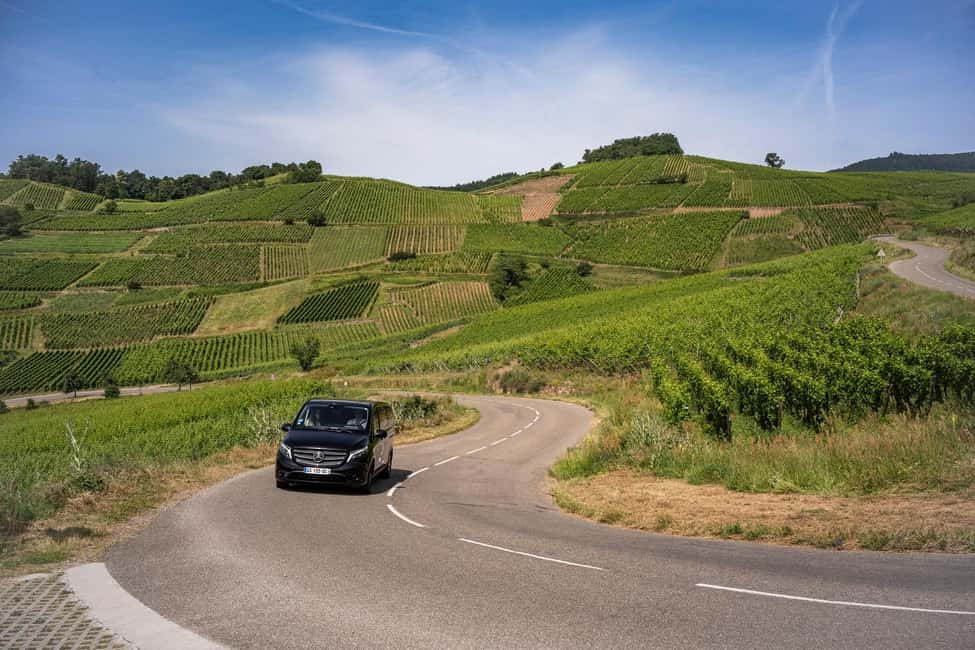
- Hotel pickup in Strasbourg: Transport is in a comfortable, air-conditioned minivan, with bottled water provided.
Why this private Alsace tour works
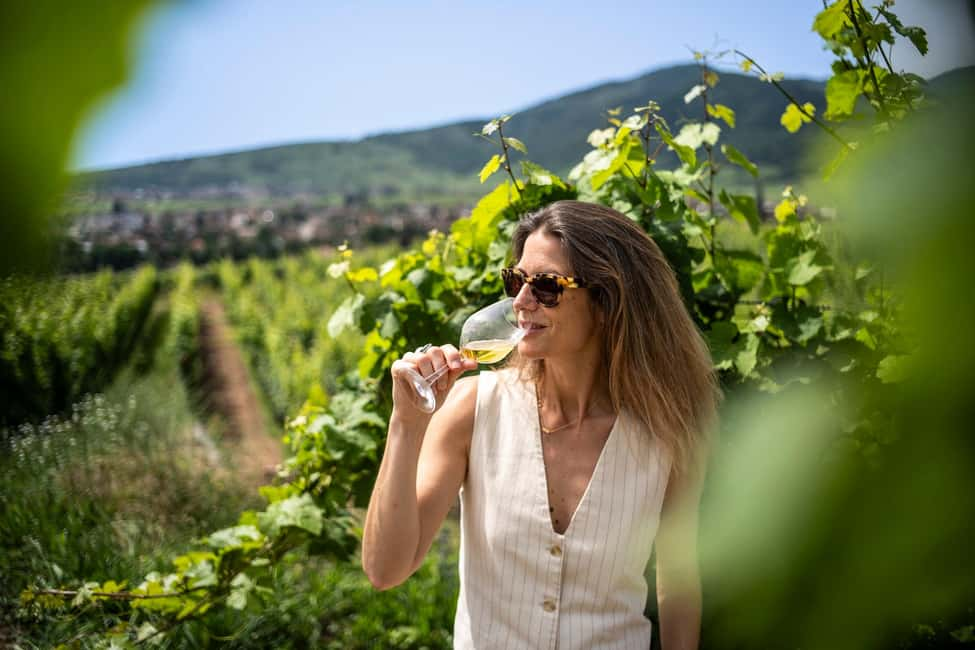
The best feature here is not the number of tastings. It is the way the day connects wine to place. Alsace wine can seem simple when you only see bottles on a restaurant list. Once you visit several estates, walk near the vines, and compare wines from different sites, the region begins to make sense.
You will spend the day with your own group rather than joining a large coach tour. That gives you more room to ask questions, linger over a tasting, or tell Jean that you would rather focus on dry Riesling than sweet wines. The tour is priced at $1,094 for a group of up to two, so this is a premium choice for couples or friends who value privacy and personal attention.
That price becomes easier to judge if you compare it with the pieces included: private pickup and return to your address or hotel, an air-conditioned minivan, a guide for the full day, entrance fees, tasting fees, wine, and bottled water. Lunch is the main extra cost, at a suggested budget of €25 per person.
If you are traveling alone, the price is harder to justify. For two people who would otherwise pay separately for transport, tastings, and a full-day guide, the package offers a more practical value than the headline figure first suggests.
The morning drive from Strasbourg to the vineyards
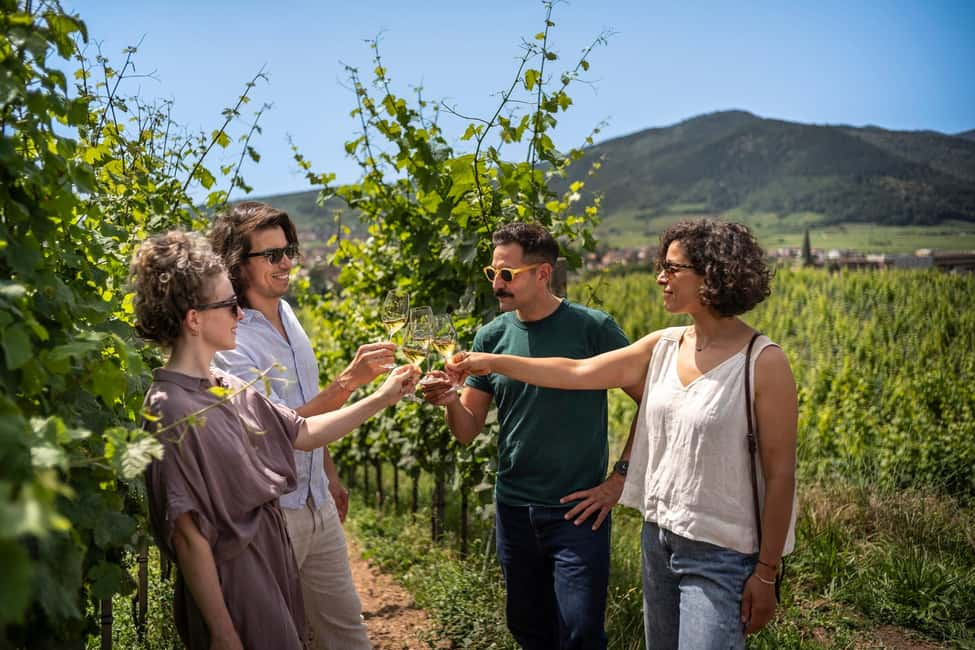
Your day begins with pickup at your private address or hotel in Strasbourg. From there, you leave the city for the Alsace wine region in a comfortable minivan. The exact starting time depends on availability, so check before booking if you need to fit the tour around another reservation.
The drive is part of the experience, but the schedule can change with traffic, weather, and the opening hours of the estates. That flexibility is normal on a private wine tour. It also means the three wineries may not always follow the same order described here.
Your guide is with you all day and can speak English, French, or German. Jean is specifically associated with this experience, and his role goes beyond driving between tastings. He helps shape the visits around your interests and can explain how grape variety, site, and winemaking choices affect the wine in your glass.
That personal approach is particularly useful in Alsace, where a label may tell you the grape but not always explain the full character of the wine. Ask about sweetness, aging, vineyard location, and food pairings. A private format gives you the chance to ask the same question in several cellars and compare the answers.
First winery: a family estate near a typical village
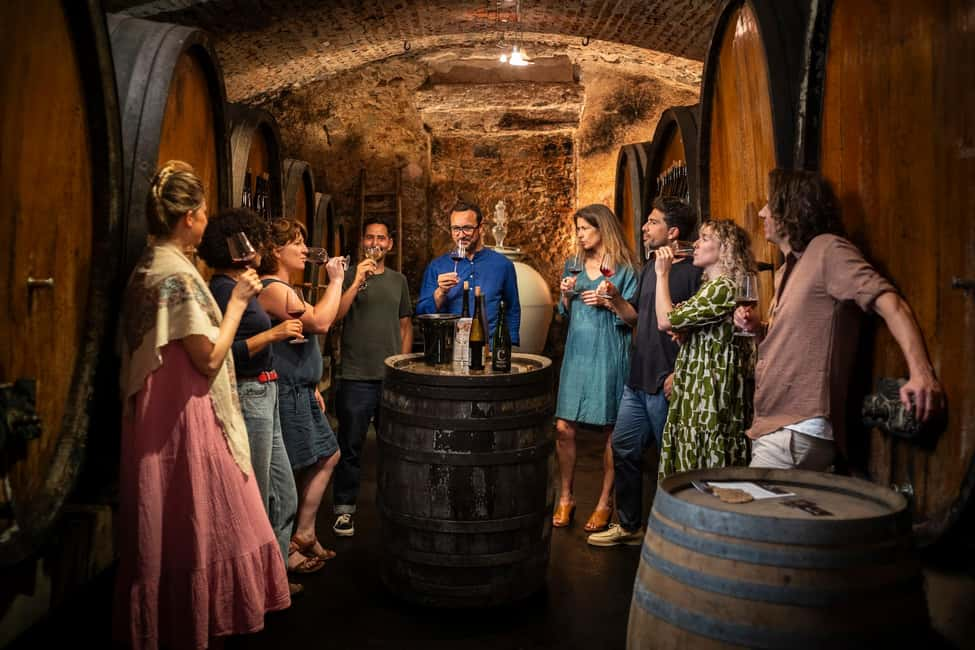
The first stop is a family estate close to a traditional Alsatian village. You will see the vineyards, visit the estate, and taste some of its best vintages. This is a strong opening because it places the wine in a working family setting rather than beginning with a broad regional lecture.
Family estates are central to the character of Alsace wine country. The visit gives you a chance to hear how one producer approaches the vines and the cellar, then compare that approach with the two estates later in the day. The key value is contrast. Three wineries can teach you more than one large tasting room if each producer has a distinct point of view.
The tasting may include Riesling, Gewurztraminer, and Pinot Noir. Riesling is often the first grape many people associate with Alsace, while Gewurztraminer is known for its strongly scented style. Pinot Noir gives you a red wine comparison in a region better known for whites.
You do not need to arrive as a wine expert. If you are curious but unsure what to ask, start with simple questions: Which wines are dry? Which vineyard site produced this bottle? What would you order with local food? Jean can help turn those questions into a useful conversation.
The visit involves walking, so wear comfortable shoes. The tour operates in all weather, and vineyard paths may feel very different on a cool, wet day than on a bright afternoon. Bring a camera if you want to record the villages and vines, but dress for conditions rather than for a polished tasting-room photograph.
Kaysersberg and lunch in a traditional winstub
After the first winery, the tour continues to the center of Kaysersberg. This gives the day a welcome change of pace. You are not simply moving from one cellar to the next, and the village stop lets you see the built setting that gives the wine route much of its appeal.
The visit is focused on the center of Kaysersberg, not a full guided sightseeing program throughout the town. You should expect time to walk and get a feel for the place, while the exact length depends on the day’s timing and traffic.
Lunch takes place in a winstub, the traditional Alsatian bistro known for a friendly setting and local dishes. Lunch is not included, so budget from €25 per person. That extra cost is worth planning for because the meal gives you a chance to test the wines with food instead of tasting them on their own.
A winstub is also a more grounded choice than a formal restaurant. The point is local flavor and convivial dining, not an elaborate midday production. Ask Jean for help with the menu if needed, especially if you want to match your meal with a Riesling, Gewurztraminer, or Pinot Noir from the day’s tastings.
Because lunch is separate, check whether your preferred menu fits your budget before ordering. The tour price covers wine tastings and wine, but not the meal or personal purchases. If you want to buy bottles, leave room in both your budget and your luggage.
Second winery: the view toward Mambourg and Furstentum
The second winery sits in the middle of a village and offers a view toward the Grands Crus of Mambourg and Furstentum. This is where the tour puts more emphasis on terroir, the French idea that a wine reflects its growing site as well as the producer’s decisions.
You will taste the estate’s wines and consider how the place affects what you drink. The value here is not just scenic. Seeing the named Grands Crus gives you a physical reference for a concept that can otherwise sound abstract. You can look toward the slopes, then discuss how exposure, soil, and vineyard position may shape the wine.
The wording about terroir should not lead you to expect a technical classroom session lasting all afternoon. This remains a relaxed private tour. Still, it is a useful stop for anyone who wants more than a basic introduction to Alsatian grape names.
This winery also adds variety to the day. The first estate is presented as a family property near a typical village. The second brings a different setting and a stronger focus on the relationship between vineyard site and wine. That progression helps you build a mental map of the region instead of tasting a random series of bottles.
If you are a serious collector, this may be the point where you get the most from Jean’s guidance. One reviewer who had visited wine regions in France, Italy, Spain, and the United States described the tour as useful for both serious wine fans and people who were simply curious about Alsace. That is a good sign of the tour’s range, though your enjoyment will still depend on how much time you want to spend discussing wine.
Third winery: a multigenerational family vineyard
The final stop is another family operation, with a vineyard that has remained in the family for many generations. You will meet or speak with the winemaker about how the wine is made and which grape varieties he prefers.
This kind of conversation can be the most personal part of the day. Instead of hearing only a regional explanation, you get one producer’s habits, priorities, and tastes. Ask what he drinks at home, how he decides when to harvest, and which wines best express the estate. The supplied details do not promise answers to those exact questions, but they are sensible topics for the conversation.
The third estate also rounds out the tour. You have seen one family property, considered the setting of important Grands Crus, and then finished with a vineyard shaped by several generations of the same family. The result is a useful picture of Alsace as a region built around small producers and long-running agricultural traditions.
You will taste more wines here, with the day’s full selection likely including the major Alsatian varieties. Tasting fees and wine are included, but personal expenditure is not. If a bottle catches your attention, ask about transport and storage before buying, particularly if you have more stops ahead in France.
What the wine tasting is really like
This is not a quick stop for one token sample. The tour includes tastings at three wineries and access to the estates’ best vintages. That gives you enough range to compare producers, grape varieties, and vineyard sites.
The most useful way to approach the tasting is to pay attention to differences. Riesling may show a sharper, fresher profile than a fuller Gewurztraminer. Pinot Noir changes the rhythm by bringing a red wine into the lineup. You do not need to memorize technical terms. Notice what you like, what feels dry or sweet, and which wines seem suited to food.
The included tastings make the price more reasonable. If you booked a private driver and arranged three separate winery visits yourself, you would also need to manage appointments, transport, language, and timing. Here, Jean handles the structure while you concentrate on the wines.
Still, do not confuse an included tasting with unlimited drinking. The day lasts eight hours, and you need to remain comfortable during the drives and village walks. Drink water, eat lunch, and tell your guide if you want the pace adjusted.
Transport, pace, and practical limits
Pickup and drop-off at your Strasbourg hotel or private address remove one major nuisance. You do not need to find a rural winery, coordinate public transport, or limit yourself to a single glass because you are driving. Bottled water and air conditioning are included.
The tour is private, but the group limit is only stated as up to two people for the advertised $1,094 price. Confirm the cost if you are booking for more than two, since the listed amount is specifically for a group of two.
Expect a full day with walking at wineries and in Kaysersberg. This tour is not suitable for people with mobility impairments, and children under 18 are not allowed. Pets and smoking are also not allowed.
Weather will not automatically cancel the outing. The tour runs in all weather, and the route may change with conditions, traffic, or estate opening hours. Bring weather-appropriate clothing and comfortable shoes. A camera is useful for the village and vineyard views, but good footwear matters more.
Free cancellation is available up to 24 hours before the start for a full refund. You can also reserve now and pay later, which helps if your Strasbourg plans are still shifting.
Who should book this wine route
I would choose this tour for a couple who wants a private day and cares about the difference between producers. It also suits people who have already seen Strasbourg’s city center and want a full day in the wine region without renting a car.
It is a particularly good match for:
- Wine collectors who want conversations with family producers
- First-time visitors who want wine explained without joining a large group
- Couples seeking private transport and a flexible pace
- People who want Kaysersberg and a traditional lunch included alongside tastings
- Visitors who speak English, French, or German
I would look elsewhere if you want a cheap tasting excursion, a half-day outing, or a tour aimed mainly at sightseeing. This experience gives a lot of attention to wine, and its price reflects the private vehicle, guide, and three estate visits.
It may also be a poor fit if you dislike walking, have limited mobility, or want to bring children. The age restriction is 18 and older, and the day is built around alcohol tastings rather than general family sightseeing.
Final decision: is the $1,094 private tour worth it?
Book it if you want a personal introduction to Alsace wine rather than a checklist of villages. The strongest parts are the three contrasting family estates, the chance to talk with winemakers, the view toward Mambourg and Furstentum, and Jean’s ability to shape the day around your interests.
The cost is high for two people, but the inclusions are meaningful. Private pickup, return transport, a full-day guide, estate entries, tastings, and wine save you from arranging several separate pieces. Add at least €25 per person for lunch, plus anything you spend on bottles or other personal items.
My practical advice is to book this when wine is one of the main reasons you came to Alsace. If you mainly want castles, churches, and famous villages, a sightseeing day trip will likely give you more for less. If you want to understand why Alsace wines taste different from one village and estate to another, this private route gives you the right setting, pace, and access.
FAQ
Where does the Alsace wine tour begin and end?
The tour includes pickup and drop-off at your private address or hotel in Strasbourg.
How long does the tour last?
The tour lasts eight hours. Starting times depend on availability.
How many wineries do you visit?
You visit three different wineries during the full-day tour.
Which wines can you taste?
The tour includes a variety of Alsatian wines, including Riesling, Gewurztraminer, and Pinot Noir. You also taste wines selected from the estates.
Is lunch included?
No. Lunch is not included, and you should budget from €25 per person. Lunch takes place at a traditional Alsatian winstub.
Do you visit Kaysersberg?
Yes. The itinerary includes a visit to the center of Kaysersberg before lunch.
What languages can the guide speak?
The live guide can conduct the tour in English, German, or French. Jean is the guide named in the available tour information.
Is the tour private?
Yes. It is a private group experience. The listed price of $1,094 covers a group of up to two people.
Is the tour suitable for children?
No. The tour is not suitable for children under 18.
What should I bring?
Bring comfortable shoes, a camera, and clothing suited to the weather. The tour operates in all weather conditions and includes walking.