REVIEW · EVIAN LES BAINS
Evian-les-Bains : Walking Guided Tour
Book on GetYourGuide →Operated by LEMANVISITES · Bookable on GetYourGuide
Evian-les-Bains owes much of its fame to water, but this tour shows you the town before and after the mineral springs made it fashionable. In 90 minutes, you move from the parish church and medieval remains to grand Belle Epoque buildings, with a guiding architect explaining how the town changed.
I like the private format, which keeps the pace personal for groups of up to 10, and the focus on architecture rather than a quick list of photo stops. I also like that Emanuele can guide in four languages. The main drawback is the walking itself: steep or uneven sections may make this a poor fit for wheelchair users or anyone with mobility limits.
In This Review
- Key points to know before you book
- Start at Notre-Dame and meet old Evian
- The mineral water story changes the town
- Buvette Cachat and the architecture of spa culture
- Palais Lumière gives the walk a clear finish
- What the private group format is worth
- How much walking and preparation you need
- Why first-time visitors may get the most from it
- Booking value, cancellation, and timing
- Should you book the Evian walking tour?
- FAQ
- How long does the Evian-les-Bains walking tour last?
- Where does the tour begin?
- Where does the tour end?
- What languages are available?
- How many people can join the private group?
- Is the tour suitable for wheelchair users?
- What should I bring and wear?
Key points to know before you book
- The story runs from medieval Evian to the Belle Epoque, so you see more than the famous water brand.
- Buvette Cachat is a major stop, linking the town’s mineral-water boom with its neoclassical style.
- The tour begins at Notre-Dame de l’Assomption and ends at Palais Lumière, giving the walk a clear route.
- A guiding architect leads the experience, with historical, geographical, and architectural context.
- Private groups can include up to 10 people, making the $200 group price easier to assess.
- Comfortable shoes matter, and the route is not suitable for wheelchair users or people with mobility impairments.
Start at Notre-Dame and meet old Evian
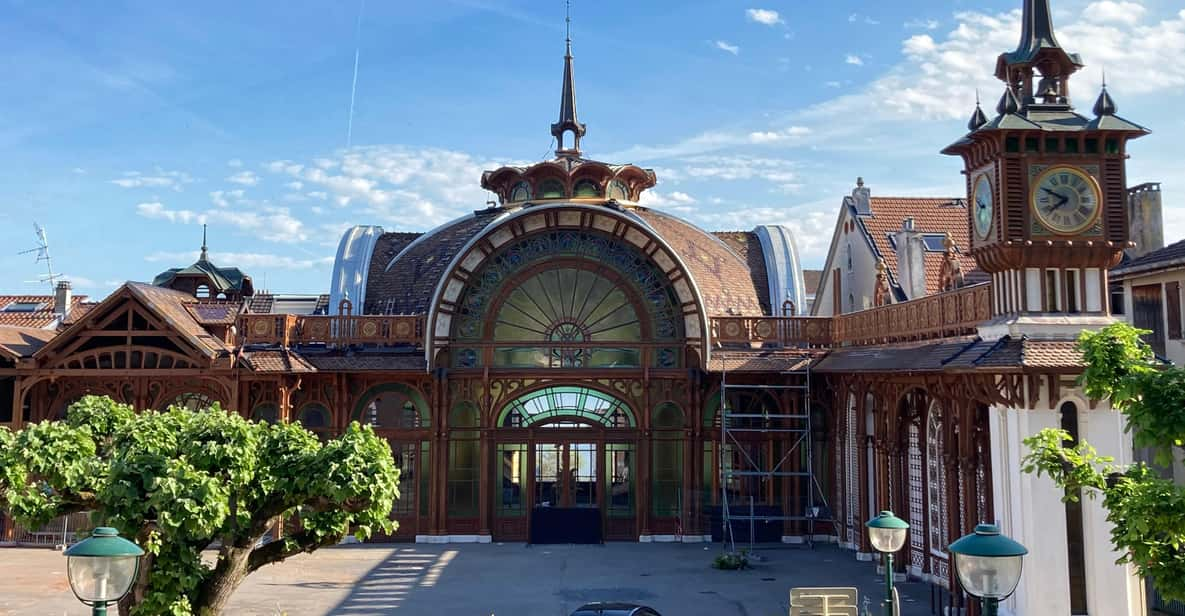
Your meeting point is in front of the parish Church of Notre-Dame de l’Assomption. Look for the guide holding a sign marked LEMANVISITES.COM. This is a useful landmark in a town where streets and buildings can feel unfamiliar at first.
The tour opens with an introduction to Evian’s history and geography, including its setting beside Lake Geneva. That opening matters because the town’s identity is tied to both. Evian is not simply a spa town with pretty facades. Its location by the lake helped shape its growth, while the mineral springs gave it an international reputation.
From Notre-Dame, you explore the vestiges of medieval Evian. The supplied details do not promise a long museum visit or a preserved medieval quarter, so keep your expectations sensible. This is an outdoor walking explanation of the old town, not a full archaeological tour. Still, starting here gives the later buildings a useful contrast.
I like this sequence. You first see the older town, then understand why a new Evian developed around the water trade and spa culture. Without that link, the Belle Epoque buildings can look like a disconnected collection of grand places.
The mineral water story changes the town
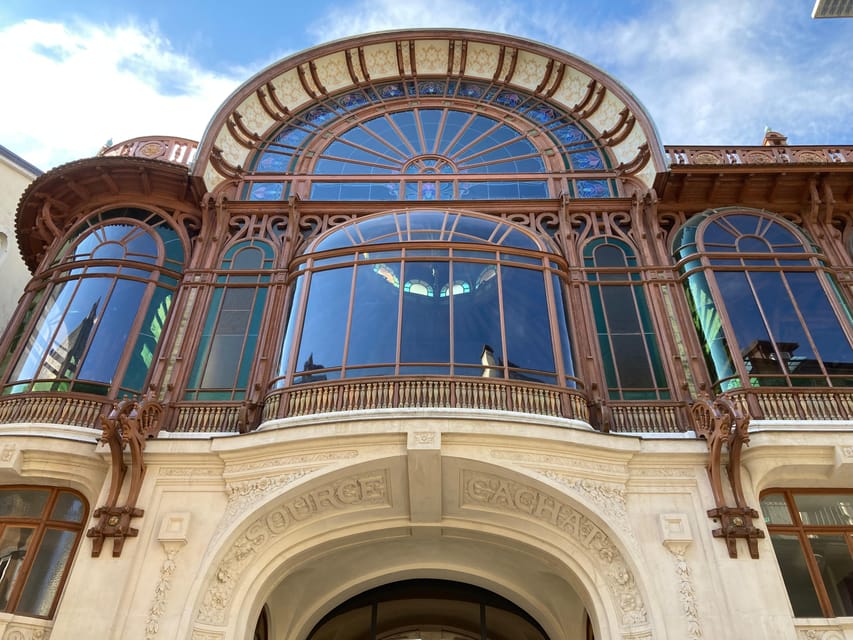
The key turning point comes at the end of the 18th century, when mineral water was discovered in the region. The town had gone through a dormant phase before this change. The tour explains how water helped restart Evian’s development and brought new attention to the area.
That story is more interesting than simply hearing that Evian produces bottled water. It shows how a natural resource can reshape a town’s economy, public buildings, and image. The springs affected not only commerce but also architecture. Once Evian became associated with health and fashionable spa life, it needed buildings suited to that new role.
This is where the guiding architect’s perspective should be most useful. You are not only told what a building is called. You are shown how neoclassical and Belle Epoque styles reflect the town’s period of expansion. The design language becomes part of the story: formal, decorative, and made for a place eager to present itself as refined.
The water theme also gives the tour a strong thread. You can follow it from the regional springs to the public drinking facilities and the grand buildings that helped turn Evian into a destination.
Buvette Cachat and the architecture of spa culture
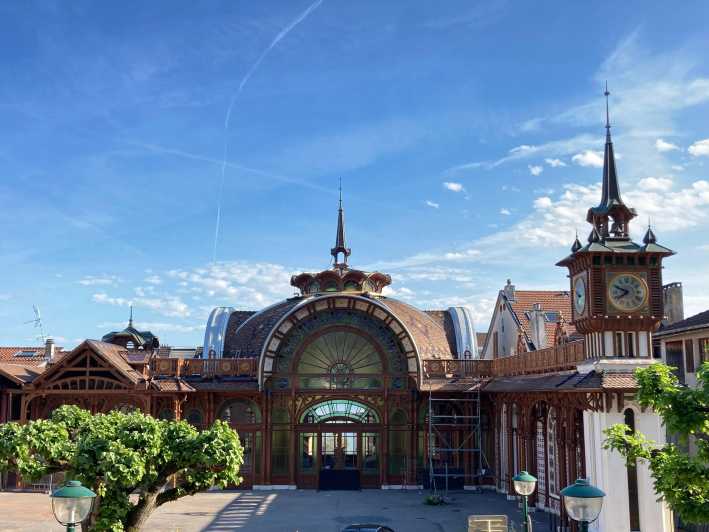
Buvette Cachat is one of the tour’s most important stops. The name refers to a drinking pavilion associated with Evian’s mineral-water tradition. It is the sort of building that makes the town’s history visible. Water was not just collected and bottled. It was part of a public ritual and a health-focused social life.
Here, pay attention to the relationship between use and style. A mineral-water pavilion had a practical purpose, but its design also had to impress. The building helped create a setting in which drinking the water felt like part of a refined cure.
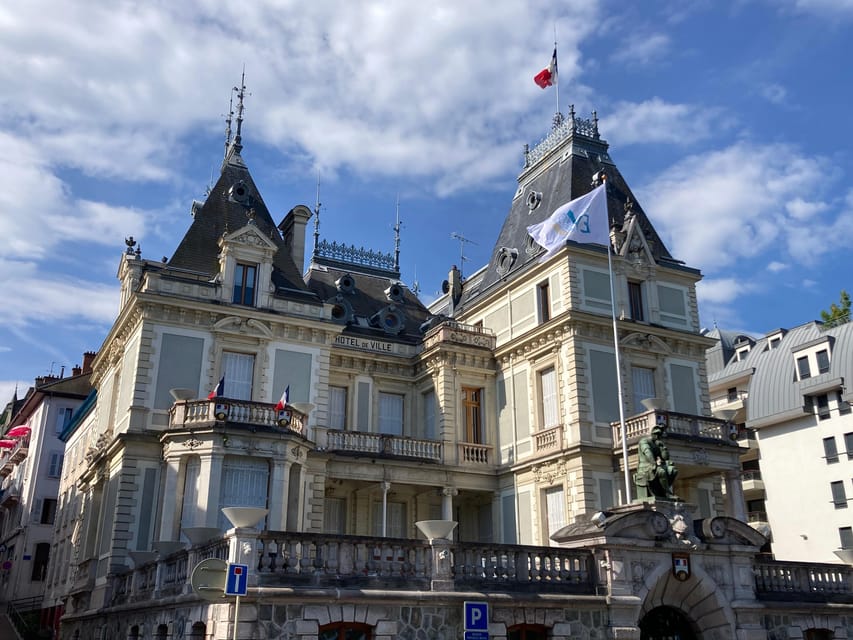
The tour includes several buildings in this same architectural conversation. You see Palais Lumière, Villa Lumière, the casino, and the theatre. Each helps explain the town’s move from a quieter settlement to a fashionable resort.
The supplied details do not provide interior access to these buildings, so expect exterior architecture and guide commentary rather than a series of indoor visits. That is not a serious flaw if you enjoy looking closely at facades, public spaces, and the way buildings fit into a town’s story. It does matter if you are booking because you want extensive interior touring.
Palais Lumière gives the walk a clear finish
The tour ends in front of Palais Lumière. This makes a practical endpoint for the route and gives the experience a strong visual finish. Rather than circling back to the starting point, you cross the town’s story and finish at one of its major Belle Epoque landmarks.
Palais Lumière is especially meaningful after the earlier stops because you can now read it as part of Evian’s period of renewed prosperity. The building is not presented in isolation. It belongs to the same transformation that brought grand villas, entertainment venues, and public water facilities to the town.
Villa Lumière, the casino, and theatre add different pieces to that picture. Together, they suggest how a spa town needed more than springs. It needed places for people to stay, socialize, be entertained, and display their status.
I find this kind of route more useful than a walk that focuses only on one famous monument. You get a sense of the town’s development, not just a list of attractive buildings. The 90-minute duration also keeps the subject focused. You receive a solid introduction without giving up an entire morning or afternoon.
What the private group format is worth
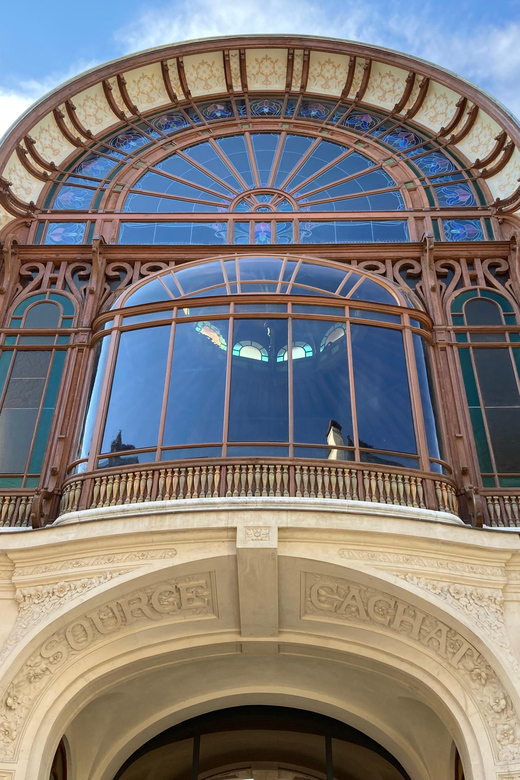
The price is $200 per group for up to 10 people. That is not a cheap solo activity, but it can be a fair deal for a family or small group. At the maximum size, the cost works out to $20 per person. A group of five would pay $40 per person, while two people would feel the price much more sharply.
The private format is the main reason to consider the cost. You are not joining a large group with a fixed pace and limited time for questions. You can book the experience for your own party, with a licensed guide-lecturer providing the historical, geographical, and architectural explanation.
The tour is offered in English, French, German, or Italian. That flexibility is valuable for mixed-language groups or for anyone who wants to hear architectural details in a language they understand easily. The guide connected with the positive feedback is named Emanuele, described as interesting, pleasant, and thoughtful. One booking from Switzerland specifically praised the personal nature of the tour and recommended it for first-time visitors to Evian.
The strongest praise centers on the guide’s manner and the way the history and architecture are connected. Another booking, made in France during the off-season, appreciated discovering the town through those two subjects. That is a useful clue: this tour is not dependent on summer crowds or a lively event calendar. Its value comes from the explanation.
How much walking and preparation you need
This is a walking tour, so wear comfortable shoes. You should also check the forecast and dress for the weather. Bring a water bottle, even though the town’s mineral-water history is one of the main topics.
The route is not suitable for wheelchair users or people with mobility impairments. The information provided does not specify the exact amount of elevation, the surface of every street, or the number of steps. Because of that, you should not assume the route will be easy simply because it lasts 90 minutes.
Smoking is not allowed during the activity. The walk is otherwise straightforward to prepare for: arrive at Notre-Dame, find the LEMANVISITES.COM sign, and be ready to stay outdoors as the route moves through the town.
The meeting and ending points also affect your plans. You begin at Notre-Dame de l’Assomption and finish at Palais Lumière, so you should account for the fact that the walk does not end where it starts. The provided information does not include transportation between the points, and none is needed as part of the tour itself.
Why first-time visitors may get the most from it
I would put this tour near the start of an Evian visit. The opening historical and geographical explanation helps you understand what you are seeing afterward. Once you know about the medieval town, the mineral springs, and the Belle Epoque expansion, later walks through Evian should make more sense.
It is also a good choice if architecture interests you but you do not want a technical lecture. The experience combines building styles with the practical reasons those buildings appeared. You learn why a mineral-water town developed pavilions, villas, a casino, a theatre, and an imposing Palais Lumière.
The tour may suit couples, families, and small friend groups who want a private introduction. Groups of up to 10 can share the same price, which improves the value when several people book together. A private tour also gives your group a more direct connection with the guide.
I would be less likely to choose it if you want a long indoor sightseeing program, a food-focused experience, or a full-day excursion around Lake Geneva. None of those are promised. This is a compact town walk focused on local history, mineral water, and architecture.
Booking value, cancellation, and timing
The tour lasts 90 minutes, with starting times depending on availability. That makes it easy to fit around other plans, although you will need to check the date and time offered when booking.
You can reserve now and pay later, which is helpful if your schedule is still taking shape. Free cancellation is available up to 24 hours in advance for a full refund. These terms reduce the risk of booking ahead, especially when weather could affect a walking activity.
The perfect timing depends on your priorities. A first-time visitor can take the tour early in a stay and use the guide’s orientation for later exploring. You can also book it during a quieter period, since the experience does not depend on seasonal entertainment or large public events.
The rating is 5 out of 5 from three verified bookings, with praise focused on the personal guide service, the historical and architectural content, and the pleasant experience with Emanuele. That is a small sample, so I would not treat it as proof that every departure will be identical. It does, however, fit the design of the experience: a private walk led by a guide who explains the town rather than rushing through it.
Should you book the Evian walking tour?
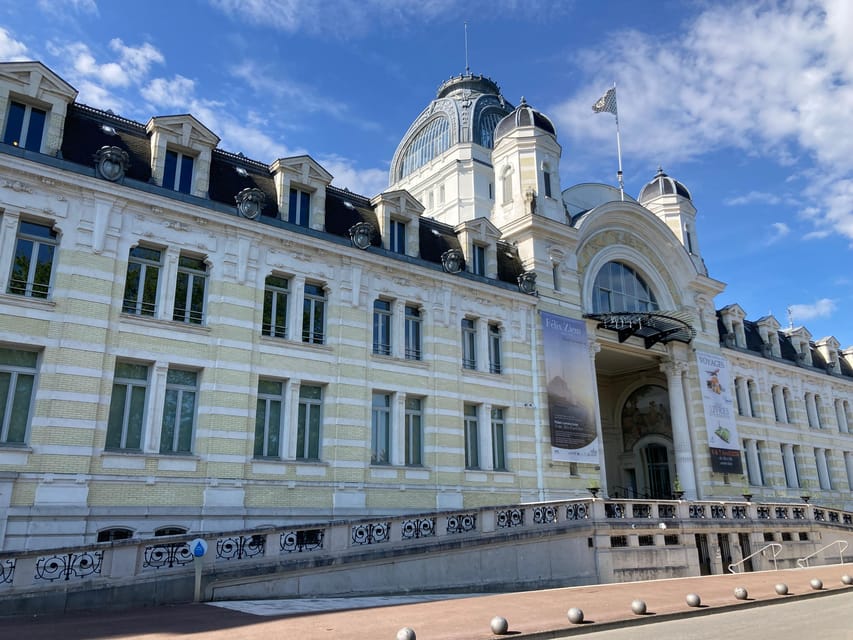
Book it if you want a short, private introduction to Evian’s past and buildings, especially on your first visit. The route gives you a clear story, from Notre-Dame and medieval Evian through the mineral-water breakthrough to Buvette Cachat, Villa Lumière, the casino, theatre, and Palais Lumière.
The $200 price makes the most sense for a group of several people. Solo visitors and couples should compare it with other local options, but the private format and four-language choice add real value. Choose it for context and personal guidance, not for extensive indoor access or a gentle, fully accessible route.
FAQ
How long does the Evian-les-Bains walking tour last?
The tour lasts 90 minutes.
Where does the tour begin?
The meeting point is in front of the Notre-Dame church of Evian, officially the parish Church Notre-Dame de l’Assomption. The guide waits with a sign marked LEMANVISITES.COM.
Where does the tour end?
The walk ends in front of Palais Lumière.
What languages are available?
The live tour guide can conduct the experience in English, French, German, or Italian.
How many people can join the private group?
The private group can include up to 10 people.
Is the tour suitable for wheelchair users?
No. The activity is not suitable for wheelchair users or people with mobility impairments.
What should I bring and wear?
Wear comfortable walking shoes, check the weather forecast, dress appropriately, and bring a water bottle. Smoking is not allowed during the activity.